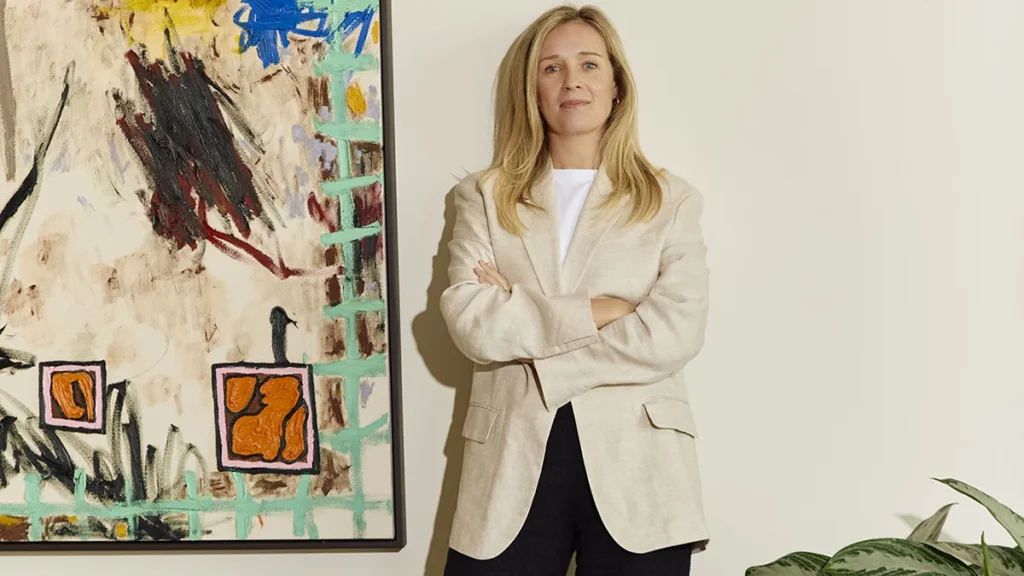
In the rarefied world of ultra-high-net-worth (UHNW) services, the term "concierge" has long been synonymous with access. For decades, the industry model was built on a simple premise: a gatekeeper who could secure the impossible—a last-minute reservation at a three-Michelin-starred restaurant, a front-row seat at a sold-out gala, or a hard-to-find luxury timepiece. However, as the demands of the global elite evolve, the limitations of the "generalist" concierge model have become increasingly apparent.
London-based Calder and Co, founded by industry veteran Laura Fursdon in 2021, is leading a quiet revolution in this sector. After years of operating outside the traditional constraints of the concierge archetype, the firm has announced a formal shift: it is officially shedding the "concierge" label to reposition itself as a "private office." While the change in nomenclature may appear subtle to the uninitiated, it marks a fundamental pivot in the philosophy of high-end personal management, moving away from transactional fulfillment toward long-term, hyper-personalized advisory.
Main Facts: A New Era of Private Management
The core of Calder and Co’s proposition is the abandonment of the single-point-of-contact model. Instead of relying on one generalist to field a disparate array of requests, the firm provides its members with a "personal board" of experts. Each advisor is a specialist in a distinct field, ranging from aviation, yachting, and automotive logistics to haute cuisine, global culture, and holistic well-being.
"If we’re thinking about the early 2000s, it was very much about access," says Laura Fursdon, who brings two decades of experience in the UHNW sector to the role. "But, as time has gone on, we feel that it’s less about access and more about what’s right for a particular person."

This distinction is crucial. In a world where capital can buy almost anything, the scarcity is no longer the ability to secure a booking, but the ability to curate an experience that aligns with the specific, nuanced needs of the individual. By acting as a private office rather than a service desk, Calder and Co embeds itself into the lifestyle ecosystem of its clients, providing strategic advice rather than merely executing tasks.
A Chronology of Evolution: From Concierge to Private Office
The trajectory of Calder and Co mirrors the broader maturation of the luxury lifestyle management industry.
- 2000s (The Era of Access): The industry was defined by the "black card" mentality—who you knew and how quickly you could get someone into a restricted venue. It was a reactive, transactional model.
- 2021 (The Founding): Laura Fursdon established Calder and Co with a vision to break the mold. Recognizing that UHNW clients were growing weary of generic service, she implemented a team-based approach, prioritizing domain-specific expertise over generalist speed.
- 2021–2024 (Operational Refinement): Over the last three years, the firm quietly demonstrated that by utilizing a board of specialists, they could solve complex, multi-layered logistical challenges that typical concierge firms struggled to manage.
- 2026 (The Rebrand): With a proven, high-retention model, the firm has decided to formalize its identity. By rebranding as a "private office," Calder and Co is signaling to the market that it is moving into the realm of family-office-adjacent support, offering a level of continuity and strategic oversight that traditional concierge services lack.
Supporting Data: The Anatomy of Hyper-Personalization
The success of the private office model is best illustrated through its application. A case study involving a client—a successful entrepreneur and self-proclaimed "petrolhead"—demonstrates how the firm operates at the intersection of logistics and psychology.
When the client requested a weekend to "recharge," the team did not default to a luxury spa or a five-star hotel. Instead, they performed a deep dive into the client’s personality and pain points. They sourced a secluded villa in Mallorca, but the centerpiece of the trip was the placement of the client’s favorite motorcycle in the villa’s driveway upon arrival. By integrating the client’s passion for automotive engineering into a wellness-focused getaway, the team provided a form of rejuvenation that a generic travel agent could never have conceived.

Similarly, the firm is currently orchestrating a multi-city "Deep South" road trip for another client. This project requires the simultaneous synchronization of automotive transport, private dining reservations at off-market venues, and high-level cultural access, including behind-the-scenes recording studio tours and pre-gig artist meet-and-greets. This requires a level of internal collaboration—aviation experts talking to cultural curators—that is the hallmark of the private office structure.
Official Responses and Strategic Vision
The transition to a private office model is not merely a marketing exercise; it is a response to the way UHNW clients are managing their lives. Fursdon notes that the line between personal lifestyle management and family office administration is becoming increasingly porous.
"Members might come to us for advice on who should run or manage their jets and their yachts, and that feeds into the family office support," Fursdon explains. "So we do work very closely with family offices in that way, but we stay clear of our members’ actual investments."
By positioning themselves as the "lifestyle arm" of a family’s support structure, Calder and Co avoids the risks of financial mismanagement while becoming an indispensable partner in the operational side of a family’s wealth. Their membership model reflects this exclusivity. With annual fees starting at £25,000 (approximately $33,700), the firm does not utilize a cold vetting process. Instead, they engage in a "conversation" to assess the compatibility of the client’s needs with their service capabilities.

"We chat through their passions, what’s on their wish list that they haven’t been able to realize, we discuss the family, we discuss the frustrations, pain points, and then we come up with a plan for them individually," Fursdon says.
Implications: The Future of High-End Service
The implications of Calder and Co’s shift are significant for the broader luxury industry. We are witnessing a clear divergence:
- The Commoditization of Generalism: Standard concierge firms that rely on broad, shallow access will likely face increasing price pressure. As digital tools and AI become better at handling basic bookings, the value of a "generalist" human assistant diminishes.
- The Rise of Bespoke Advisory: Firms that adopt the "private office" model will likely see higher loyalty and higher margins. By acting as a curated board of advisors, these firms become "sticky"—the more they know about a client’s history, preferences, and pain points, the harder they are to replace.
- The Holistic Integration: The successful service providers of the future will be those who can seamlessly blend disparate worlds—aviation, art, family management, and health—into a single, unified strategy for their clients.
The high renewal rate among Calder and Co’s current members serves as the ultimate validation of this model. It suggests that while the wealthy are always looking for the next exclusive experience, what they truly crave is a partner who can filter the noise of the world and curate a life that is not just luxurious, but deeply and authentically personal.
In renaming themselves a "private office," Calder and Co has not just changed a title; they have set a new benchmark for what it means to serve the modern elite. As Fursdon puts it, their "ethos is being experts in our members." In an era of digital noise, that level of human-centric expertise is the ultimate luxury.