

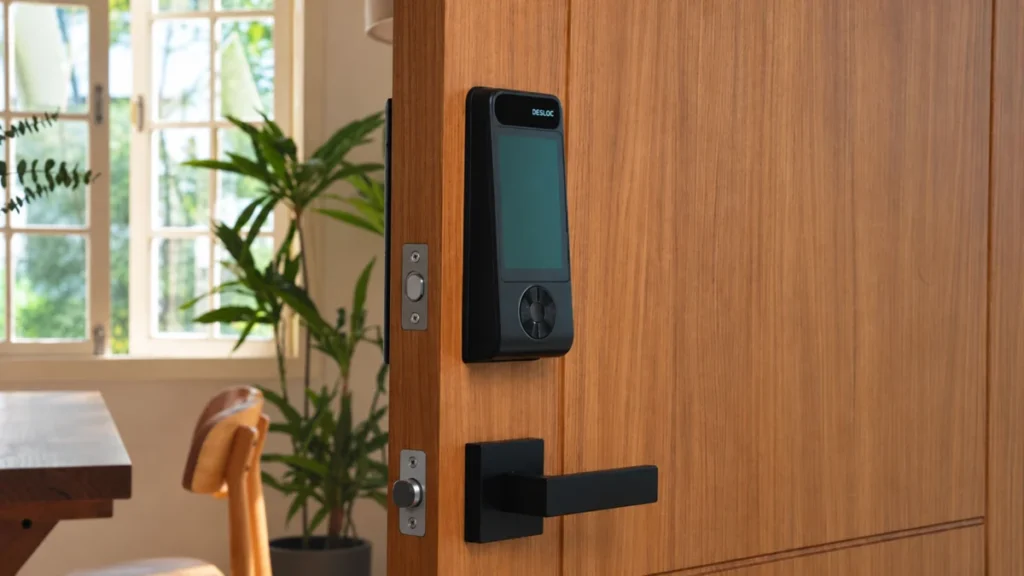
In the rapidly expanding ecosystem of the modern smart home, the front door has long been the final frontier. While thermostats have learned our temperature preferences and lighting systems adapt to our circadian rhythms, the primary point of entry—the smart lock—has often remained a source of frustration. For years, the industry has relied on flat-surface capacitive fingerprint sensors, a technology ported directly from smartphone designs. However, the realities of a front porch are vastly different from the controlled environment of a phone in your palm.
The Desloc V150 Plus enters the market not merely as a piece of hardware, but as a direct challenge to the "idealized user" fallacy that has plagued biometric security. By introducing a proprietary curved-glass sensor module, Desloc is shifting the focus from technical perfection to human-centric usability.
The Core Facts: Bridging the Biometric Gap
The Desloc V150 Plus is a high-performance smart lock designed to reconcile the gap between high-tech biometric security and the messy, unpredictable nature of daily life. Its flagship feature, the GPTfinger 2.0, utilizes a 3D curved-glass surface that mirrors the natural anatomy of a human fingertip.
Unlike traditional sensors that require a flat, firm, and precise press, the V150 Plus is engineered for the "ordinary" user: the parent struggling with groceries, the senior with thinning ridge patterns, or the child whose biometric data is still in development. The system operates on a deep-learning AI model that adapts to the user’s habits over time, ensuring that the lock becomes more reliable the more it is used.
Beyond the sensor, the device boasts an impressive suite of features:
- 3D Face Recognition: Adding a secondary layer of seamless biometric authentication.
- Integrated Wi-Fi Connectivity: Eliminating the need for external hubs or bridges.
- Solar-Assisted Longevity: A power management system that provides up to eight months of battery life on a single charge.
- Accessibility-First Design: Targeted specifically at demographics previously marginalized by standard biometric scanners.
A Chronology of Innovation: From Smartphones to Doorsteps
To understand why the V150 Plus is a significant milestone, one must look at the evolution of biometric technology over the last decade.
2013–2017: The Smartphone Era
The ubiquity of fingerprint sensors began with smartphone integration. During this period, the technology was refined for the "perfect press"—a clean, dry thumb placed deliberately on a flat surface. These sensors were designed for the static user who has the luxury of holding their device in a comfortable, predictable position.
2018–2022: The "Smart Lock" Transition
Manufacturers began incorporating these smartphone-derived sensors into residential door locks. However, the transition was problematic. Door locks operate in a "high-entropy" environment. Users arrive at their homes with wet hands from rain, dirty hands from gardening, or distracted minds while carrying heavy loads. The industry largely ignored these variables, leading to widespread consumer complaints regarding "read failure" and "unresponsive sensors."
2023–2026: The Rise of Context-Aware Biometrics
The current era, spearheaded by developments like the Desloc V150 Plus, marks a pivot toward context-aware security. Recognizing that the "flat-sensor" paradigm was failing a significant portion of the population, engineers moved toward 3D contouring. The development of GPTfinger 2.0 represents the culmination of this shift, utilizing hardware that respects the geometry of the human hand rather than forcing the hand to adapt to the machine.
Supporting Data: Why Flat Sensors Fall Short
The reliance on flat sensing pads is a fundamental engineering mismatch. When a human finger—which is naturally convex—is pressed against a flat surface, the contact patch is often incomplete.
The Geometry of Failure
Research into biometric failure rates indicates that flat-surface sensors struggle with three primary user groups:
- The Manual Laborer: Older adults or those in trades often have "worn" fingerprints, where the friction ridges are shallower and less defined.
- The Developing User: Children and young teenagers often have smaller, less dense ridge patterns that flat sensors frequently misread as noise.
- The Environmental User: Individuals dealing with ambient moisture (dish soap, rain, humidity) find that flat glass creates a suction effect or a glare that disrupts the capacitive reading.
By moving to a curved sensor, Desloc increases the "effective contact area" by nearly 40% compared to standard flat sensors. This larger surface area allows the lock to capture multiple points of data simultaneously, significantly reducing the probability of a "false reject" event.
The AI Backend: Learning the User
The hardware is only half the story. The Desloc V150 Plus utilizes a specialized AI model that functions differently from standard biometric databases. Traditional systems often compare a scan against a static image stored during setup.
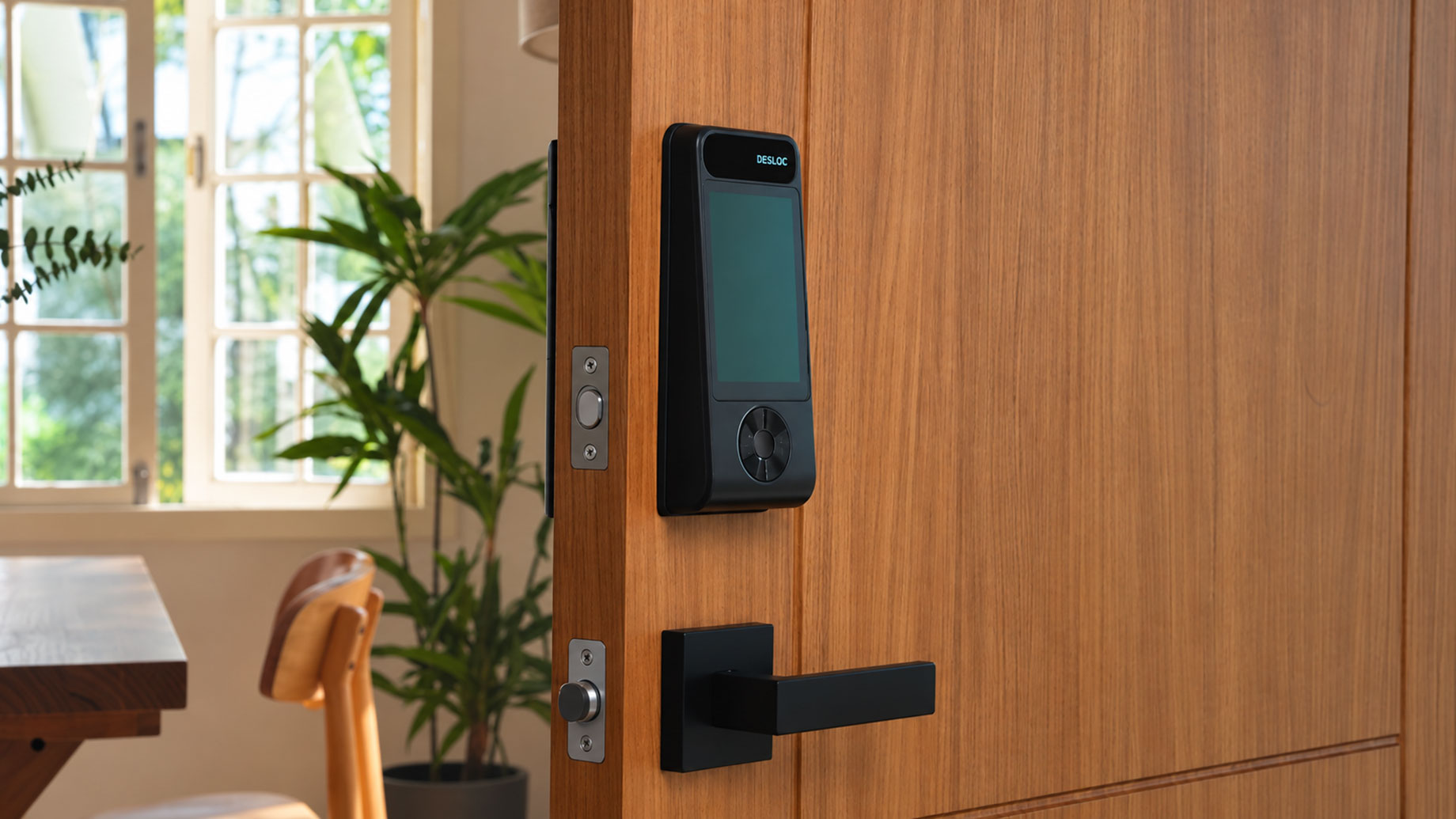
In contrast, the V150’s AI is a dynamic, adaptive system. It employs:
- Ridge Reconstruction: If a user presses their finger at an awkward angle or with a slight smudge, the AI uses predictive algorithms to reconstruct the partial scan against the saved profile.
- Adaptive Sensitivity: The system monitors the "success" metrics of every entry. If a user’s fingerprint changes slightly due to seasonal dryness or skin abrasion, the AI subtly updates the reference file, preventing the lock from becoming obsolete as the user’s hands change over time.
This ensures that the lock isn’t just "smart" at the moment of installation, but remains an effective part of the household infrastructure for years.
Official Perspectives: A Shift in Industry Philosophy
In discussions regarding the V150 Plus, Desloc representatives emphasize that the goal was never to create the most "futuristic" lock, but the most "reliable" one.
"We stopped looking at test lab data and started looking at front porches," says a lead engineer for the project. "In a lab, you have a perfect volunteer with pristine skin. In reality, you have a grandmother who just washed the dishes. If a smart lock doesn’t work for the grandmother, it isn’t a smart lock—it’s a barrier. Our objective was to remove the barrier."
The integration of solar-assisted charging further underscores this philosophy. By extending battery life to eight months, Desloc addresses another major pain point: the anxiety of a "dead" smart lock. The design is intended to be "install and forget," providing security without the burden of constant maintenance.
Implications: The Future of Smart Home Inclusivity
The implications of the Desloc V150 Plus reach far beyond the hardware itself. As the smart home becomes a standard for aging-in-place and family living, the demand for accessible technology will only grow.
1. The Death of the "Tech-Native" Requirement
For too long, smart home tech has been built for the "tech-savvy" demographic. The V150 Plus proves that high-end security can be inclusive, accommodating users regardless of age or physical capability.
2. Redefining Reliability as a Premium Feature
In a market saturated with cheap, unreliable smart locks, Desloc is positioning reliability as the ultimate luxury. When a lock works on the first try, every single time, it ceases to be a gadget and becomes a utility—a fundamental requirement for the home.
3. The End of the "Hub" Dependency
By building Wi-Fi connectivity directly into the lock, Desloc is signaling the end of the clunky, multi-device setups that have deterred many homeowners from upgrading their security. A streamlined, all-in-one approach is likely the blueprint for the next generation of home security devices.
Conclusion: A Practical Investment
The Desloc V150 Plus is not trying to be a showpiece; it is trying to be a servant. By focusing on the nuances of the human fingerprint—and the reality of how we actually use our front doors—the company has created a product that solves the most nagging problem in the smart home space.
For those considering an upgrade to their home security, the V150 Plus represents a rare synthesis of high-level AI and grounded, common-sense engineering. It is a reminder that the best technology is that which understands the people it serves, rather than demanding they change their habits to accommodate the device.
For those looking to secure their home with a system that prioritizes reliability for every member of the family, the Desloc V150 Plus is currently available.
Readers can use the code PRV150 to receive an exclusive $30 discount, bringing the final price to $229.99—a competitive entry point for a device that prioritizes longevity and inclusive design.



