

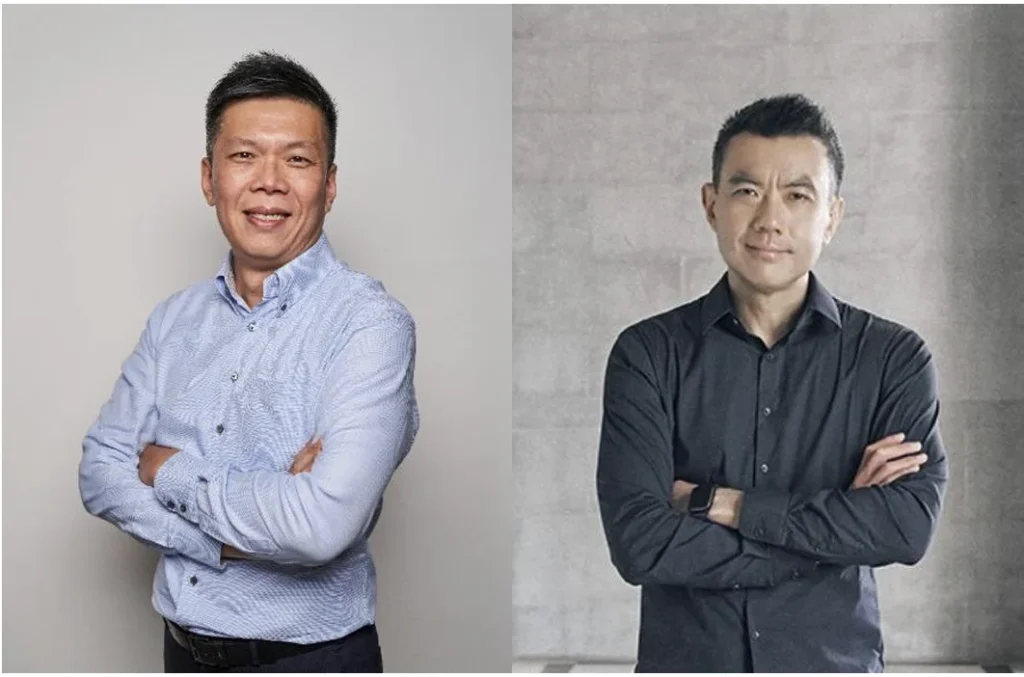
The leadership structure of Singapore’s premier visual arts institutions is set for a significant realignment. On January 1, 2027, Eugene Tan, who has served in the dual capacity of CEO and director for both the National Gallery Singapore (NGS) and the Singapore Art Museum (SAM), will conclude his dual-role tenure.
Under the new administrative framework, Tan will pivot his full attention to the Singapore Art Museum, an institution he has helmed as director since 2018. Simultaneously, Chng Hak-Peng—a seasoned arts administrator and former CEO of the Singapore Symphony Orchestra (SSO)—will step into the role of CEO at the National Gallery Singapore. This strategic bifurcation of leadership marks the end of an era of integrated management and signals a new phase of specialized focus for two of the nation’s most influential cultural pillars.
A Strategic Transition: The Roadmap to 2027
The transition is designed with a deliberate emphasis on stability and continuity. While Chng’s official tenure at the National Gallery begins on New Year’s Day 2027, the institutional handover will commence well in advance. Beginning October 1, 2026, Chng will assume the title of "CEO-Designate."
This three-month overlap with Eugene Tan is intended to facilitate a seamless transfer of institutional knowledge, strategic vision, and operational oversight. In a joint statement released by both the NGS and SAM, the institutions emphasized that the separation of roles does not signal a decoupling of their professional relationship. Rather, they underscored a commitment to continued collaboration and the shared utilization of resources, ensuring that the visual arts ecosystem in Singapore remains cohesive even as the two institutions move toward more independent leadership structures.
Chng Hak-Peng: A Profile of Leadership and Cultural Stewardship
The appointment of Chng Hak-Peng to the National Gallery is viewed by industry observers as a calculated move to blend rigorous management expertise with a profound personal commitment to the arts.
Chng’s professional background is distinctively multifaceted. A Stanford-educated electrical engineer, he initially made his mark in the high-stakes world of global consulting, spending a decade at the prestigious management firm Bain & Company. However, it was his long-term involvement with the Singapore Symphony Orchestra (SSO) that cemented his reputation as a transformative leader in the arts sector.
A Chronology of Service: From Volunteer to CEO
Chng’s journey with the SSO began in 2008 as a volunteer advisor on strategy and organizational design. His ability to modernize the orchestra’s operational framework led to increasingly significant responsibilities. By 2015, he was appointed CEO, a position he held until 2022. During his seven-year tenure as CEO, Chng was instrumental in elevating the orchestra’s international profile.
In a farewell missive penned upon his departure from the SSO, Chng reflected on the milestones achieved under his watch. Among the most notable were the orchestra’s inclusion in BBC Music magazine’s 2022 list of the 21 best orchestras in the world and a prestigious third-place ranking in Gramophone magazine’s "Orchestra of the Year" awards. These achievements are frequently cited as evidence of his ability to marry institutional excellence with global artistic prestige—a skill set he is expected to translate to the visual arts.
Beyond his corporate and orchestral experience, Chng possesses a deep-seated connection to the museum sector. He has served as a longtime volunteer docent at local museums, a role that suggests a grassroots understanding of audience engagement. Currently, he is pursuing a PhD in history at the National Museum of Singapore, an academic pursuit that underscores his intellectual dedication to the preservation and interpretation of Singaporean heritage.
The Future of the National Gallery: Building on Legacy
As Chng prepares to take the helm at the National Gallery, he enters an institution that has become the definitive custodian of Southeast Asian visual arts. In his initial public comments, Chng expressed deep respect for the foundations laid by his predecessors.
"NGS has established itself as a leading visual arts institution in the region," Chng stated. "It is uniquely positioned to tell the stories of Singapore and Southeast Asia through art. I hope to build on these strong foundations and continue the path forged by Eugene Tan and his predecessor, Chong Siak Ching. I look forward to working with everyone at NGS and across the visual arts community to build a Gallery that Singapore continues to love and be proud of."
His focus appears to be two-fold: maintaining the high academic and exhibition standards of the Gallery while deepening its social impact. Chng has explicitly stated his intention to "strengthen the role that the arts play in our society," suggesting a mandate that prioritizes public accessibility, community outreach, and the continued democratization of art.
The Evolution of the Singapore Art Museum (SAM)
While the National Gallery prepares for a new CEO, Eugene Tan’s return to a singular focus on the Singapore Art Museum is equally significant. Since taking on the dual role, Tan has been the primary architect behind the strategic integration of both institutions. By focusing exclusively on SAM—an institution currently undergoing its own evolution as it expands its physical presence and programmatic scope—Tan will be able to dedicate his expertise to SAM’s specific mission: the exploration of contemporary art and its intersection with global discourse.
The institutional decision to separate the roles reflects the maturing needs of both museums. As NGS has scaled its international reach and SAM has diversified its contemporary art programming, the complexity of managing both entities under a single executive office had arguably reached a saturation point.
Implications for the Singaporean Art Ecosystem
The appointment of a leader with a background in classical music and management consulting to the helm of a visual arts institution is indicative of a broader trend in cultural administration: the preference for "polymathic" leadership. The modern museum director is expected to be part fundraiser, part diplomat, part academic, and part corporate strategist.
1. Strategic Resource Sharing
The joint statement confirming the continuation of resource sharing is a crucial detail for the local arts sector. With both museums occupying significant real estate and competing for public and private funding, a "siloed" approach could be detrimental. By maintaining an alliance, the institutions can share best practices in conservation, digital archiving, and international exhibition logistics, effectively stretching the national arts budget.
2. A Focus on Narrative and Identity
Under Chng, the National Gallery is likely to continue its push into the "stories of Southeast Asia." As he brings his academic background in history to the role, stakeholders may see an increase in interdisciplinary programming—where art is not merely displayed as an aesthetic object, but as a historical document that informs the regional identity of the ASEAN collective.
3. Professionalization of the Arts
Chng’s background at Bain & Company and the SSO suggests that the "business" of the arts will remain a priority. In an era where government funding is increasingly balanced by the need for self-sustainability, corporate governance and strategic planning are vital. Chng’s proven track record in organizational transformation will be an asset as the Gallery navigates the economic realities of the post-pandemic art market.
Conclusion: A New Era of Specialization
The upcoming transition in January 2027 represents more than just a personnel change; it is a structural evolution intended to provide both the National Gallery Singapore and the Singapore Art Museum with the focused leadership required for their next chapters of growth.
As Eugene Tan focuses on the contemporary frontier at SAM and Chng Hak-Peng brings his managerial rigor and historical focus to the NGS, the Singaporean art scene enters a period of refined specialization. For the public, the transition promises an continuity of excellence, as the institutions remain anchored by the same collaborative spirit that has made them the pride of the nation’s cultural landscape. With the "CEO-Designate" period beginning this October, the transition serves as a model for institutional stability, ensuring that the stories of Singapore and the broader region continue to be told with precision, passion, and professional stewardship.



