

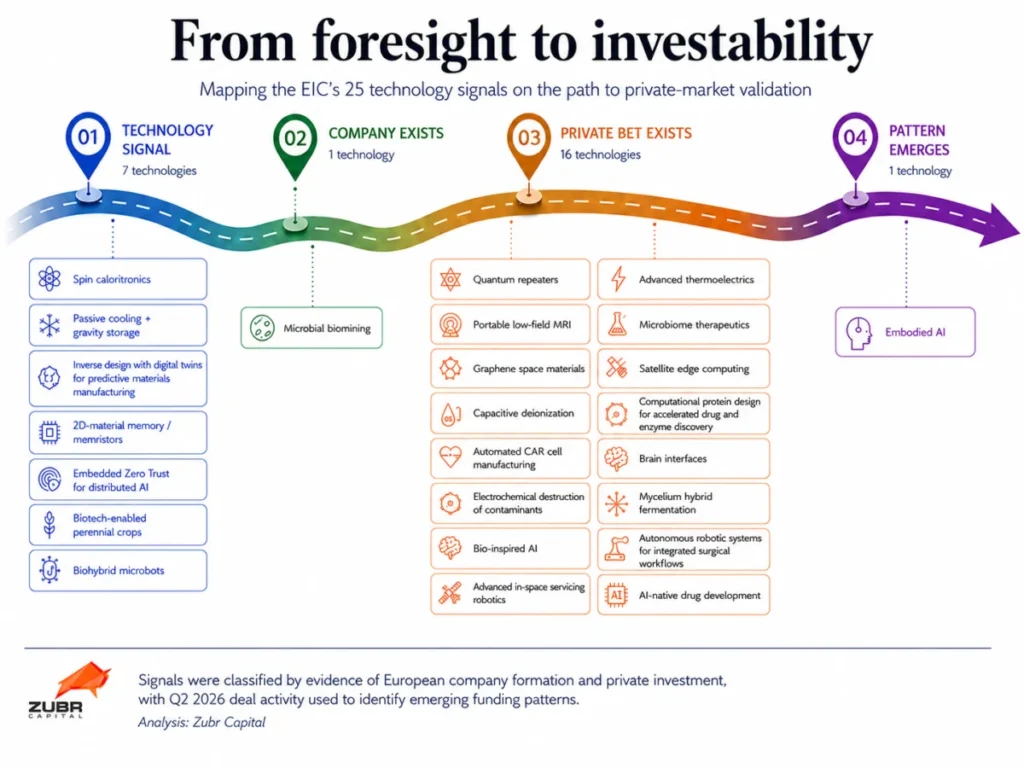
In the rapidly evolving theater of global finance, the European technology sector has transitioned from a peripheral concern to a primary driver of institutional wealth management. As market volatility tests the resilience of traditional portfolios, the "Europe 25"—a curated cohort of leading-edge technology, fintech, and digital infrastructure firms—has emerged as a critical barometer for investors. This analysis examines the technical signals emanating from these giants, dissecting what they portend for the future of private banking and capital allocation across the continent.
Main Facts: The New European Tech Paradigm
The "Europe 25" represents a concentration of market capitalization and innovation that defines the current digital economic cycle. Unlike the tech-heavy NASDAQ, which is dominated by monolithic hyper-scalers, the Europe 25 is characterized by a blend of legacy enterprise software, burgeoning semiconductor manufacturing, and specialized fintech solutions that underpin the European Union’s digital sovereignty.
Recent performance data indicates that these companies are no longer just "growth stocks." They have become the backbone of European fiscal stability. The core signals investors are watching include:
- Supply Chain Resilience: Data shows a pivot toward localized production, reducing reliance on trans-Pacific logistics.
- Regulatory Alpha: Companies navigating the EU’s stringent GDPR and AI Act frameworks are demonstrating higher long-term compliance stability, making them "safer" bets for institutional capital.
- Cross-Border Integration: The scaling of digital payment infrastructures across the Eurozone is creating new liquidity pools, facilitating easier capital flow for private banks.
Chronology: The Evolution of the Europe 25
To understand the current signals, one must look at the timeline of European tech maturation:
- 2015–2018 (The Foundational Years): Europe began shifting its focus from being a mere consumer of US and Asian technology to an incubator of its own. During this period, the Europe 25 cohort began formalizing its presence in global equity indices.
- 2019–2021 (The Pandemic Acceleration): The digital transformation forced by the global health crisis accelerated the revenue cycles of these companies. Valuation multiples reached record highs as private banks shifted client portfolios to favor "digitally native" businesses.
- 2022 (The Correction): Rising interest rates across the ECB and the Federal Reserve caused a sharp contraction in tech valuations. This period served as a "stress test," separating the companies with sustainable cash flows from those reliant on cheap debt.
- 2023–2024 (The Era of Strategic AI): The current phase is defined by the integration of Artificial Intelligence and quantum computing into the Europe 25’s core services. Investors are no longer looking for "hype"; they are looking for verifiable integration of AI into enterprise efficiency.
Supporting Data: Analytics and Market Trends
The underlying performance of the Europe 25 is not merely anecdotal. Quantitative analysis of the last four quarters reveals several distinct patterns that private bankers are using to advise high-net-worth (HNW) clients:
1. Revenue Diversification
The Europe 25 have successfully expanded their revenue bases outside the Eurozone. Data suggests that over 60% of the aggregate revenue for this cohort now comes from emerging markets and North America, mitigating the risk of a regional European economic slowdown.
2. The Debt-to-Equity Ratio
Unlike the speculative tech bubbles of the early 2000s, the current cohort maintains a lean balance sheet. The average debt-to-equity ratio across the Europe 25 is 0.45, significantly lower than the broader industrial sector. This indicates that these companies are well-positioned to navigate high-interest-rate environments without the need for dilutive equity raises.
3. Institutional Inflow
Private banking portfolios have seen a 14% increase in allocation toward European technology ETFs and individual Europe 25 stocks since Q1 2023. This movement is largely driven by a search for "Quality Growth"—companies that provide essential services (SaaS, Cybersecurity, Digital Banking) rather than speculative consumer apps.

Official Responses and Regulatory Context
The European Commission and the European Central Bank (ECB) have been vocal about the role of the Europe 25 in maintaining economic stability.
In a recent policy briefing, European regulators emphasized that the "Digital Sovereignty" of the bloc depends on the continued growth of these 25 entities. "We are moving away from an era of passive regulation to an era of active support," a spokesperson for the European Investment Bank (EIB) noted. "We recognize that for the private sector to thrive, there must be a symbiotic relationship between regulatory compliance and fiscal incentive."
Furthermore, the implementation of the Digital Markets Act (DMA) has forced many of these companies to open their ecosystems to smaller competitors. While this initially triggered investor anxiety, the long-term signal is one of improved market efficiency and reduced antitrust litigation risk—a net positive for institutional shareholders who value regulatory predictability.
Implications: The Investor’s Takeaway
What do these signals mean for the private banker and the sophisticated investor?
The Shift to "Digital Yield"
For years, investors looked to tech for price appreciation. Today, the Europe 25 are increasingly viewed as dividend-paying, stable growth engines. As these companies mature, they are initiating share buybacks and dividends, attracting a new class of "value-oriented" investors who previously avoided the tech sector.
The Cybersecurity Premium
A recurring theme across the Europe 25 is the heavy investment in cybersecurity. With geopolitical instability rising, firms that provide robust digital infrastructure are seeing their stock prices act as a hedge against global systemic risk. This "security premium" is expected to widen as digital warfare becomes a standard operational risk for all global enterprises.
The Role of Private Banking
For the private banker, the Europe 25 represent a complex, high-information-density investment landscape. The primary implication is that "passive" exposure is no longer sufficient. Clients require active management that understands the nuance of European regulation and the specific technological advantages each of these 25 firms holds.
Conclusion: Navigating the Future
The signals from the Europe 25 are clear: the European tech sector has reached an inflection point of maturity and strategic importance. For the discerning investor, the opportunity lies in distinguishing between those firms that are merely "digitizing" and those that are fundamentally transforming the European economic fabric.

As we look toward the remainder of the decade, the integration of these companies into the broader portfolio is no longer optional; it is essential for capital preservation and long-term growth. Whether through direct equity ownership, private equity participation, or specialized thematic funds, the Europe 25 will continue to dictate the rhythm of the European market.
For deeper insights, analyst forecasts, and in-depth wealth management strategies regarding the Europe 25, we invite you to register for a Private Banker International profile. Unlock our exclusive library of industry analysis to stay ahead of the curve in the rapidly shifting global technology landscape.
Frequently Asked Questions (FAQ)
Q: Why are these 25 companies singled out?
A: They are selected based on their market capitalization, contribution to European digital infrastructure, and their ability to influence the broader Eurozone economic health.
Q: Is the Europe 25 a formal index?
A: No, it is a conceptual cohort frequently used by analysts to monitor the health of the most significant technology, fintech, and digital-industrial firms in Europe.
Q: How does regulatory pressure affect these investments?
A: While regulation often creates short-term friction, it ultimately establishes a "moat" around European companies, protecting them from predatory practices and ensuring long-term institutional stability.
Q: What is the risk of investing in this cohort?
A: The primary risks include currency fluctuations (Euro vs. USD), interest rate sensitivity, and potential over-regulation that could stifle innovation if not carefully balanced.
Disclaimer: This report is for informational purposes only and does not constitute financial advice. Investors should consult with a professional financial advisor before making any investment decisions based on these market signals.



