“You’ve been wearing more suits lately,” a colleague remarked to me a couple of years ago. His tone hovered somewhere between genuine intrigue and bewilderment. He wasn’t wrong. For the better part of a decade, my sartorial signature had been what I affectionately call "middle-aged skater"—a rotation of plaid overshirts, crisp white tees, relaxed trousers, and pristine sneakers. It was a uniform born of comfort and the pervasive, low-stakes aesthetic of the modern creative office.
Yet, something had shifted. I found myself reaching for tailored jackets and structured trousers with increasing frequency. When asked why, my initial response was a platitude about convenience: “It’s just another uniform. You put it on, and you don’t have to spend your morning wondering what goes with what.” While true, it was a superficial explanation. The reality was more nuanced.
We have entered a fascinating era where the suit has been liberated from the boardroom. No longer a corporate requirement, the suit has evolved into a medium for self-expression—a deliberate, almost rebellious act in a world that has largely surrendered to the ease of athleisure.
The Evolution of the American Silhouette: A Chronology
To understand why the suit is making a comeback, one must first recognize its recent history. For much of the 21st century, the "American Suit" was synonymous with stiff, boxy, and often joyless corporate attire. It was a uniform of conformity, intended to blend into the gray-scale landscape of cubicles and conference rooms.
- The Casual Pivot (2000s–2010s): As Silicon Valley culture permeated every sector of the workforce, the "suit-and-tie" standard began to collapse. Hoodies and sneakers became the new symbols of power. Tailoring was relegated to the closet, saved only for weddings and funerals.
- The Sartorial Vacuum (2015–2020): During this period, menswear hit a plateau. Without the need for formalwear, the industry struggled to define what "dressed up" actually meant.
- The Tailoring Renaissance (2021–Present): Post-pandemic, a reaction occurred. As offices reopened and social events returned, men began to crave the transformative power of a garment that offered structure. The suit returned, but not as a tool of professional obligation—rather, as a tool of aesthetic agency.
The Anatomy of Rebellion: Why Men Are Returning to Tailoring
The shift is not about a return to the rigid rules of the past. As Ryan Devens, founder of San Francisco’s Tailors’ Keep, aptly puts it, the modern suit is “a rebellious garment.” In a landscape dominated by “endless casual Friday,” choosing to wear a tailored jacket is an act of subversion.
It is no longer office furniture; it is swagger, art, and theatre. It is the joy of wearing a finely crafted garment on an otherwise unremarkable Tuesday. This "rebellion" is fueled by the realization that we have lost the art of dressing for ourselves. By opting for a suit, the modern man is reclaiming his personal style from the algorithms of convenience.
The New Vanguard: American Tailoring’s Diversity
American tailoring is currently enjoying a golden age of diversity. Unlike the rigid regional styles of Europe, American makers are borrowing from everywhere, resulting in a unique, eclectic synthesis of global techniques.
- J. Mueser (New York): By blending the soft, unstructured ease of the Neapolitan school with a sharp, downtown New York edge, Mueser represents the modern cosmopolitan suit.
- Haitch (USA): Taking a more architectural stance, Haitch focuses on structural integrity. Their use of longer jackets and powerful, square shoulders offers a silhouette that commands the room without being overly aggressive.
- Angel Ramos (New York): Ramos is a master of the "Southern Italian ease." His work channels the bravado of Golden Age Hollywood, bringing a sense of romance and movement back to the American wardrobe.
- Richfresh (Los Angeles): Perhaps the most radical of the bunch, Richfresh challenges the very definition of a suit. By applying the rigorous language of bespoke tailoring to scuba-fabric, color-blocked tracksuits, they prove that "tailoring" is a philosophy of fit, not just a historical garment.
Supporting Data: The Shift in Consumer Behavior
Market trends indicate that this is not merely a niche hobbyist movement. Retail data from the past 24 months suggests a sustained increase in sales for semi-formal and "soft" tailoring among men aged 25–45.
According to industry analysts, the "unstructured jacket" has become the best-selling category in high-end menswear. The data shows that men who have no professional mandate to wear a suit are purchasing them for social engagement. This shift reflects a broader societal move toward "effortful style"—the desire to look polished without appearing as though one is heading to a corporate merger.

Official Perspectives: The Philosophy of the Fit
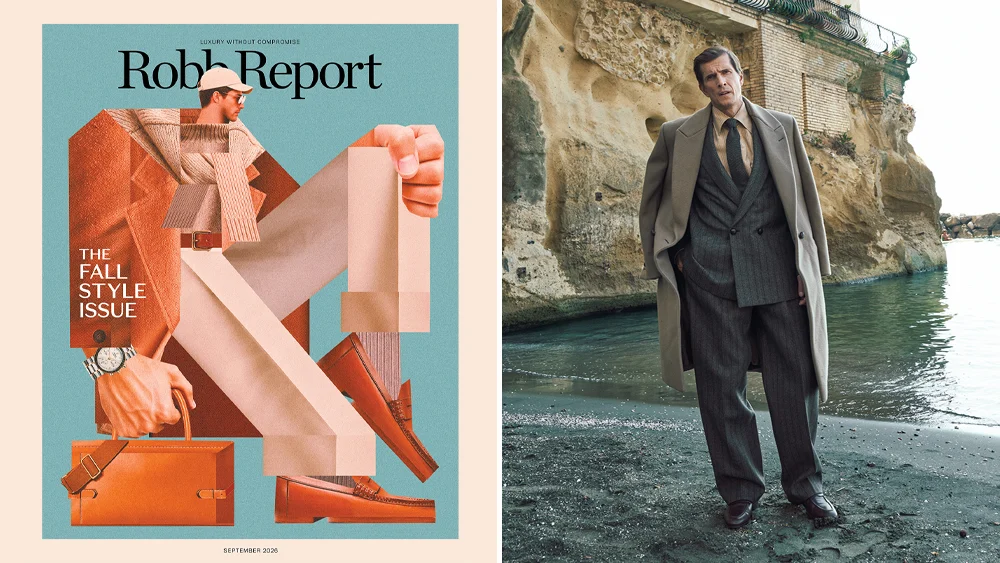
When we look at the broader global context, the influence of Naples remains the gold standard. Neapolitan tailoring has been refined over generations to offer "easy elegance." It is a look that manages to be sophisticated without looking forced.
However, American makers are notably un-precious about these traditions. They are remixing the Neapolitan shoulder, the English drape, and the Italian waist. This lack of a singular, dogmatic "American style" is, in itself, the most American aspect of the industry. It is a melting pot of sartorial philosophy.
Beyond the Jacket: The Rise of Statement Knitwear
As the suit reclaims its place, we are seeing a parallel evolution in how men approach casual wear. The jacket is no longer the only way to make a statement. Our current fashion portfolio highlights a shift in knitwear—sweaters that refuse to play a supporting role.
Luxury houses like Louis Vuitton, Kiton, and Canali are pushing the boundaries of traditional patterns. Fair Isle, Nordic designs, and cable knits are being reinvented with bold, graphic color palettes. These aren’t layering pieces; they are the centerpiece of the outfit.
Implications: The Future of the Wardrobe
What does this mean for the future of men’s fashion? We are moving toward a "curated wardrobe" model. The binary of "work clothes" versus "weekend clothes" is dissolving. Instead, men are investing in versatile pieces that can be dressed up or down.
- Versatility is King: A well-tailored navy blazer is now expected to look as good with a graphic tee and denim as it does with an oxford shirt and wool trousers.
- The Death of the "Corporate Suit": The era of the mass-produced, ill-fitting corporate uniform is effectively over. The modern consumer values fit, fabrication, and the narrative behind the maker.
- Self-Expression through Craft: As tailoring becomes more accessible, men are becoming more educated. They are learning about canvassing, lapel widths, and fabric weights. This education fosters a deeper appreciation for the garment, moving the suit from a commodity to an investment.
Conclusion
The resurgence of the suit is not a return to the past; it is a refinement of our future. Whether it is the soft, unstructured shoulders of a Neapolitan-inspired jacket or the innovative, scuba-fabric creations of an LA atelier, the suit has once again become a canvas for personal identity.
In a world of fast-fashion and ephemeral trends, the choice to wear a suit is a choice to be deliberate. It is an acknowledgment that how we present ourselves matters—not for the sake of the office, but for the sake of the individual. As we continue to navigate a complex, often chaotic world, the suit offers a small, structured, and profoundly stylish rebellion.
It is time to embrace the jacket, the trousers, and the craft. After all, if you’re going to show up, you might as well look the part.