

By Kaarin Moore
Published Sept. 25, 2026
In the world of retail branding, few symbols are as instantly recognizable as the vibrant, high-contrast red of a Target storefront. For decades, the "Target Red" has served as a beacon for suburban shoppers across the United States. However, as the retail giant expands its footprint into affluent, architecturally sensitive enclaves, it is demonstrating a newfound willingness to trade its trademark color palette for local aesthetic harmony.
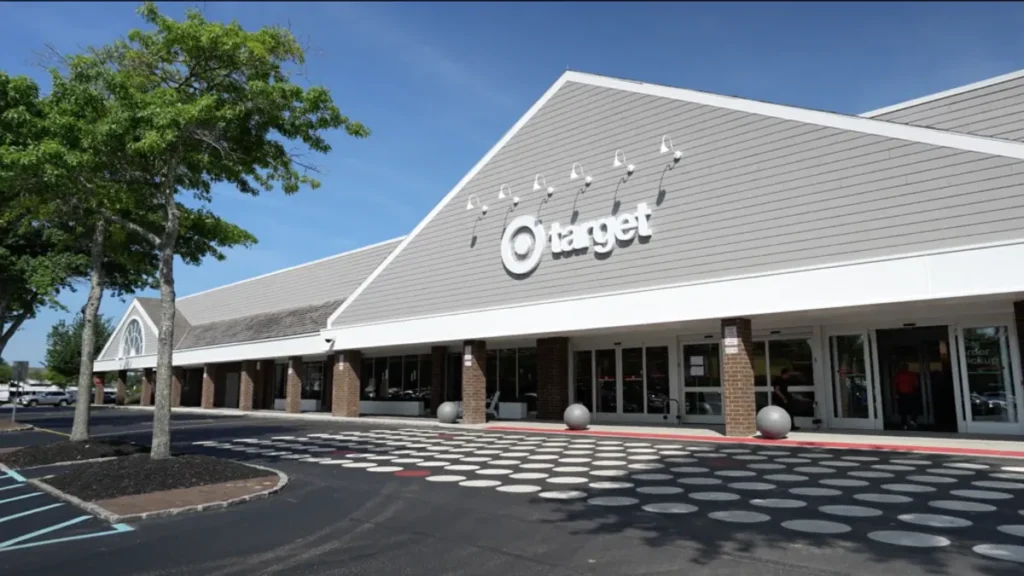
The most recent—and perhaps most striking—example of this pivot is the brand’s newest location in Bridgehampton, New York. Situated in the heart of the Hamptons, the store eschews the company’s signature crimson for a muted, coastal-inspired gray, signaling a sophisticated shift in how the big-box retailer approaches community integration.
Main Facts: A Subdued Entrance for a Retail Giant
Scheduled to open on October 11, 2026, the Bridgehampton Target represents the 109th location for the retailer in New York State. Spanning approximately 90,000 square feet, the store is designed to offer the full suite of Target’s modern convenience services, including CVS Pharmacy, a Starbucks Café, Drive Up, Order Pickup, and same-day delivery.
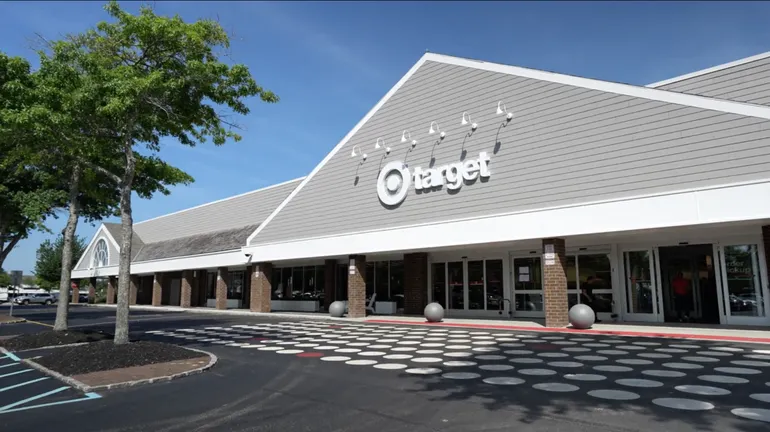
However, the physical structure tells a story that diverges from the standard corporate playbook. Upon arrival, shoppers will notice a complete absence of the iconic red bollards that typically guard Target entrances; instead, they are replaced by a neutral gray. The exterior facade, rather than screaming for attention in primary colors, features a white Target wordmark and the classic bullseye logo. Even the lighting has been altered to comply with local ordinances; the signage is not internally illuminated, but instead lit from above to minimize light pollution and maintain the aesthetic character of the Bridgehampton Commons shopping center.
Chronology: From Kmart Legacy to Modern Retail Hub
The transformation of the Bridgehampton site is particularly poignant for retail historians. The building, located within the Bridgehampton Commons, formerly served as the final stand-alone Kmart in the continental United States. For years, the site stood as a monument to a fading era of retail, before finally closing its doors and paving the way for a top-to-bottom renovation.
The conversion process, managed by the EW Howell Construction Group, was extensive. To bring the site into the modern era, construction crews implemented significant structural upgrades. These include the installation of prefabricated fitting rooms, fully modernized and upgraded restrooms, a complete redesign of the back-of-house stock room to facilitate faster omnichannel fulfillment, and a total reconfiguration of the parking lot to accommodate the high-volume traffic expected in a seasonal, upscale destination.
This project represents the culmination of a broader real estate strategy that began years prior, as Target identified the Hamptons as a critical market for its expansion, despite the significant regulatory hurdles involved in opening a large-scale store in such a design-conscious community.
Supporting Data: Scaling the Footprint
The Bridgehampton location is not an isolated experiment. It is a key component of a larger, aggressive growth phase. It stands as one of eight new store openings slated for October 2026, marking the final wave of the 30 new brick-and-mortar locations the retailer committed to opening this year.
This expansion is part of a much larger, decade-long strategic roadmap. Target has set a target (pun intended) to construct over 300 new stores by 2035. This long-term growth is supported by massive financial backing. In recent months, the company announced a $1 billion operational investment aimed at elevating the guest experience—a move they claim will result in "more changes within all stores than any year in the last decade." This capital injection follows a previous $5 billion investment announced last fall, which focused on store remodels, technological integration, and artificial intelligence-driven inventory management.

Official Responses: Respecting the "Coastal Vibe"
The departure from traditional branding was not a haphazard decision, nor was it a rebranding effort. According to a company spokesperson, the change was a deliberate attempt to align with local sensibilities.
"We worked closely with the town to ensure the store’s exterior and signage fit naturally within the surrounding community and Bridgehampton Commons," the spokesperson said in an email to Retail Dive. The company emphasized that the gray color scheme was chosen specifically to reflect the "coastal vibes" of the Hamptons, proving that even a retail titan with billions in revenue must bow to the power of local municipal guidelines.
This is not the first time Target has modified its look. The company has previously adapted its branding for specific regional contexts, such as the Silverthorne store in the Colorado Rockies and the South Lake Tahoe location in California. In those instances, as in Bridgehampton, the retailer prioritized integration over rigid adherence to brand identity, suggesting that "Target" as a brand is evolving from a one-size-fits-all model to a context-aware approach.
Implications: The Future of "Local-First" Retail
The Bridgehampton opening raises a significant question for the retail industry: Is the era of the uniform, neon-lit big-box store coming to an end?
The "Context-Aware" Retail Strategy
As retail companies face increasing pushback from local zoning boards and community groups, the "cookie-cutter" approach is becoming a liability. By demonstrating flexibility in design, Target is effectively bypassing the "big-box retailer" stigma that has hampered other chains. This strategy allows them to enter affluent, design-conscious, or historically sensitive markets that would otherwise reject a traditional big-box store.

Operational Efficiency Meets Aesthetic Harmony
The modifications are not merely cosmetic. The decision to use external lighting and non-traditional colors is balanced by the internal efficiency of the store. The fact that the Bridgehampton location contains the latest in logistical technology—including improved parking and stock room layouts—suggests that Target is finding a balance between "looking the part" for the community and "operating the part" for the balance sheet.
The $6 Billion Question
With $6 billion in total recent investment dedicated to store-level improvements, Target is signaling that the physical store remains the heart of its business. The "Bridgehampton Model" suggests that the future of retail is a hybrid: high-tech, high-efficiency, but architecturally humble.
As the company marches toward its goal of 300 new stores by 2035, the industry will be watching to see how many more "Red-less" Targets emerge. Will this become the new standard for the brand? Or is it a luxury afforded only to the most high-profile, high-rent zip codes?
For now, the shoppers of Bridgehampton will experience a Target that looks a little different than the one they might visit in a suburban strip mall in Ohio. It is a testament to the fact that, in the evolving landscape of 2026, the most successful brands are those that can bend their identity to fit the neighborhood, without breaking the fundamental promise of convenience that built their empire.
Peyton Bigora of Grocery Dive contributed to this report.



