

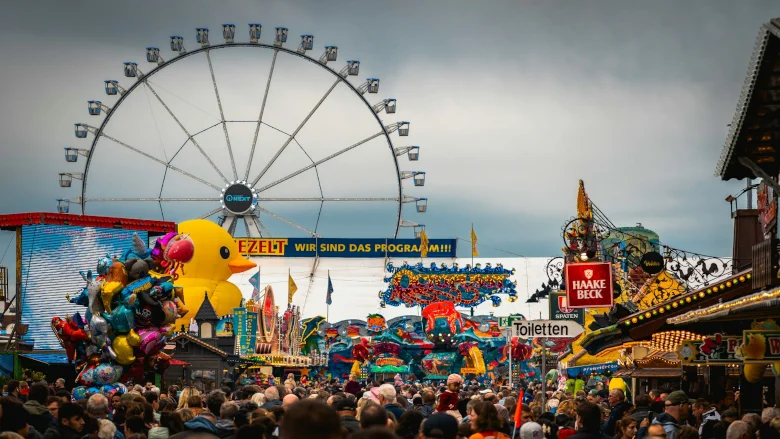
MUNICH, Germany — The festive atmosphere of Munich’s world-renowned Oktoberfest turned to profound sorrow this week following a fatal workplace accident that claimed the life of a veteran security officer. Aleksandar Spasic, 52, died on Monday night after being struck by a carriage on the "Hangover" amusement ride, a high-velocity attraction that serves as one of the festival’s most prominent features.
The incident, which occurred during the final hour of the festival’s operations, has sent shockwaves through the local community and ignited a complex investigation into the safety protocols governing one of the world’s largest and most densely populated public events. As authorities work to piece together the final moments of Mr. Spasic’s life, his family, colleagues, and the public are left grappling with the question of how such a tragedy could occur in a high-security environment.
The Incident: A Final Shift Cut Short
The tragic sequence of events unfolded at approximately 9:50 p.m. on Monday. According to preliminary reports from local authorities, Mr. Spasic was performing his duties as a security guard at the festival grounds when he was struck by the descending carriage of the "Hangover" ride.
The "Hangover," a free-fall tower ride, is known for its intense velocity, capable of reaching speeds of up to 56 miles per hour during its descent. While investigators have yet to determine the exact speed of the ride at the precise moment of impact, the sheer physics of the machinery involved underscores the catastrophic nature of the collision.
Emergency medical personnel were on the scene within minutes of the accident. They initiated life-saving measures, including cardiopulmonary resuscitation (CPR), and were able to briefly revive Mr. Spasic before rushing him to a nearby hospital. Despite the best efforts of the trauma team, Mr. Spasic succumbed to his injuries shortly after his arrival.
The timing of the accident has added a layer of grief for his loved ones; Mr. Spasic was reportedly just 10 minutes away from concluding his shift when the incident occurred.
A Reputation for Diligence and Safety
In the days following the accident, the narrative surrounding Mr. Spasic’s character has been defined by his professional rigor and commitment to safety. His wife, Adrijana, and their son, Lazar, have spoken publicly to refute any suggestion that the veteran guard would have acted recklessly.
"My father was a man who prioritized safety above all else," Lazar Spasic stated in a recent interview. "He understood the risks associated with this line of work and never took unnecessary chances."
To illustrate this, Lazar recounted an incident that took place only 24 hours prior to his father’s death. While working near another ride, a visitor had dropped a personal item in a restricted area. Although pressured to retrieve it, the elder Spasic refused, citing the potential danger of entering the machinery’s operational zone.
"He was not the type of person to wander into a restricted area without a very good reason," Lazar emphasized. While the family acknowledges that it is possible his father may have entered the restricted zone in an attempt to assist a visitor or address a potential safety hazard, they remain adamant that his entry was not a result of negligence.
Investigation and Accountability
The Munich police department has launched a comprehensive investigation into the circumstances surrounding the death. Spokesperson Thomas Schelshorn indicated that the scope of the inquiry is broad, aimed at determining "whether someone can be held responsible" for the security failure.
The investigation is expected to focus on several key areas:
- Site Security Protocols: Reviewing the established boundaries and restricted zones for security staff near high-speed rides.
- Operational Safety Standards: Examining whether there were mechanical failures or safety sensor malfunctions on the "Hangover" ride at the time of the collision.
- Communication Chains: Investigating whether Mr. Spasic was dispatched to the area by a supervisor or if he was acting on his own initiative to address an unfolding situation.
- Human Factors: Assessing the fatigue levels and workload of security personnel during the peak hours of Oktoberfest.
As of this writing, there has been no official statement from the ride operators or the festival organizers regarding the specific cause of the breach of the safety perimeter. The ride remains closed as forensic teams analyze the scene and review surveillance footage to corroborate witness accounts.
The Broader Implications for Event Security
The death of Aleksandar Spasic serves as a sobering reminder of the hazards inherent in managing mass-gathering events. Oktoberfest, which draws millions of visitors from across the globe, requires a Herculean effort from security staff to maintain order, protect property, and ensure the safety of the public.
The Balancing Act of Security and Public Safety
Security guards at festivals like Oktoberfest are tasked with a dual mandate: they must be approachable enough to assist visitors with routine inquiries, yet vigilant enough to manage dangerous mechanical environments. Experts in industrial safety suggest that when these two roles overlap, the potential for error increases.
"When you have high-speed, high-kinetic energy machinery operating in the same space as tens of thousands of pedestrians, the margin for error is non-existent," said one safety consultant, who requested anonymity. "The training for security personnel in these environments must be as rigorous as the training for the ride operators themselves."
The "Safety-First" Culture
The testimony of Mr. Spasic’s family highlights a broader conversation within the security industry: the pressure to provide "customer service" versus the mandate to enforce "hard safety." Often, security officers are pressured to assist visitors in ways that may distract them from their primary function of perimeter security. The industry is now facing calls to implement stricter "no-entry" policies that explicitly forbid security staff—regardless of their experience—from entering active mechanical zones under any circumstances, even to assist visitors.
Community Response and Mourning
The local Munich community has been deeply affected by the loss of a man who was, by all accounts, a fixture of the festival’s behind-the-scenes operations. Memorials have begun to appear near the festival grounds, with colleagues and members of the public leaving flowers and tributes to honor his memory.
For the Spasic family, the focus remains on the ongoing investigation. They are looking for clarity, closure, and, ultimately, a commitment from organizers that such a tragedy will never happen again.
"We don’t just want to know how it happened; we want to ensure that the industry learns from this," Lazar said. "If there was a breakdown in procedure, or if the environment was unsafe, we need to know that changes are being made so that no other family has to go through this."
Looking Ahead: The Future of Oktoberfest Safety
As the investigation continues, the festival organizers face mounting pressure to provide a transparent account of the incident. In the coming weeks, a formal report is expected to be released by the Munich public prosecutor’s office. This report will likely dictate not only the legal outcome of the case but also the future safety protocols for all mobile amusement attractions operating in Germany.
For now, the "Hangover" remains a silent, dark structure amidst the vibrant lights and noise of the fairgrounds—a stark symbol of the dangers that linger behind the facade of celebration. The industry, the public, and the grieving family of Aleksandar Spasic wait for the findings of the investigation, hoping that the truth will provide the foundation for a safer future for all those who work to make public events possible.
The loss of Mr. Spasic is more than a statistic; it is a profound professional and personal tragedy. As his family prepares to lay him to rest, the legacy of his commitment to his work will undoubtedly influence the way security is perceived and executed at future iterations of Oktoberfest. His death is a grim call to action for event organizers worldwide to prioritize the physical safety of their workers with the same fervor they apply to the entertainment of their guests.



