

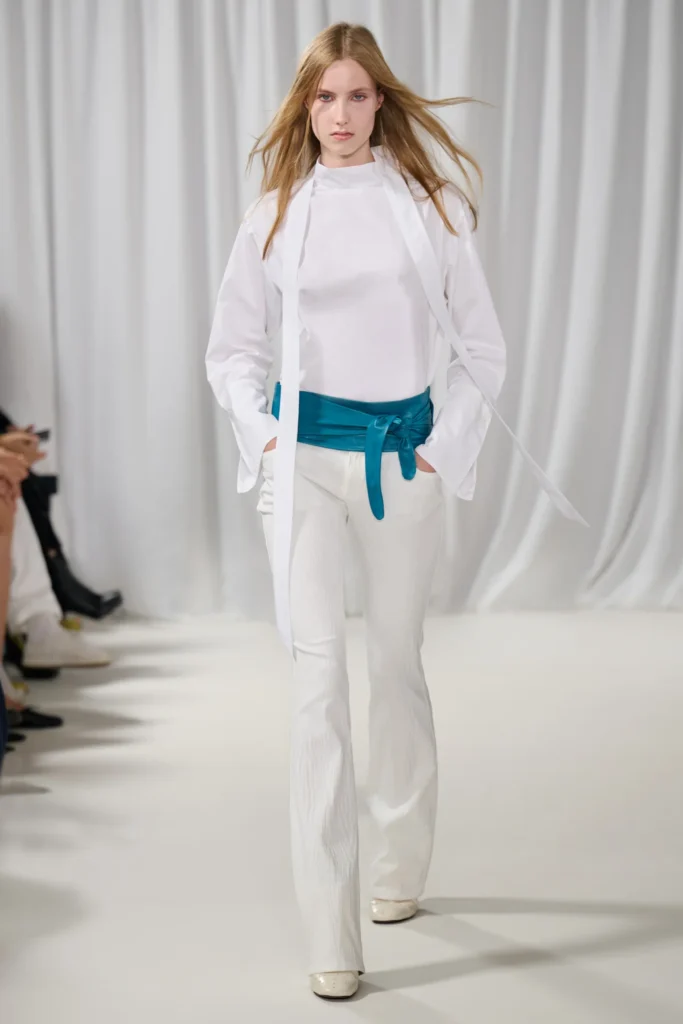
In the fast-paced ecosystem of London Fashion Week, where the pressure to reinvent oneself every six months often leads to chaotic, trend-chasing collections, Talia Byre has carved out a different path. Her latest showcase, held within the storied, classical walls of London’s Hellenic Centre, was not merely a presentation of garments; it was a meditation on the philosophy of the "evolving wardrobe." Byre, a designer who has rapidly become a beacon for thoughtful, sustainable luxury, opened her Saturday show with a breezy, ethereal collection that signaled a deliberate departure from the high-octane saturation of her previous work.
The Genesis of the Collection: A Departure into Light
The starting point for this season was, in Byre’s own words, a "cleansing." After years of leaning into a vibrant, often aggressive color palette, the designer entered her studio this season with a singular directive: an all-white and cream narrative.
This pivot was not arbitrary. It grew directly from the designer’s burgeoning bespoke bridal practice. Working closely with brides-to-be offered Byre a unique insight into the emotional weight of fabric and the transformative power of a monochromatic, light-drenched palette. She described the shift as a desire for something "fresh"—a sartorial palate cleanser that allows the wearer to focus on silhouette, texture, and construction rather than the distraction of pigment.
"I wanted to strip everything back," Byre told WWD following the runway presentation. "There is a power in simplicity that I think we often overlook in the rush to produce newness."
Chronology of the Showcase: Art, Architecture, and Atmosphere
The show was more than a runway; it was a multi-disciplinary installation. Byre has made it a tradition to accompany her shows with an annual zine, and this year, she collaborated with ten diverse artists to create a tangible artifact of the collection’s inspiration.
Central to the set design were two large-scale "Placebo Paintings" by artist Dillwyn Smith. These works, crafted from the superposition of colorful, translucent fabrics, provided a hauntingly beautiful backdrop to the Hellenic Centre’s neoclassical architecture. The interplay of light filtering through Smith’s translucent layers mirrored the technical execution of the clothing on the runway.
As the models moved through the space, the "Placebo" concept became the collection’s central metaphor. Just as Smith’s paintings played with the perception of color and depth, Byre’s clothing was designed to act as a "placebo for confidence." Byre explained that she is less interested in the fast-fashion cycle of "buying into a new self" each season, and more interested in the intimacy of a loyal customer adding a single, well-considered piece to a pre-existing, beloved wardrobe.
Supporting Data: The Anatomy of the Collection
The lineup was a masterclass in the marriage of structure and fluidity. Byre utilized a recurring set of design codes that established a clear, recognizable vocabulary for her brand:
- Tailoring and Moiré: The bedrock of the collection remained sharp, architectural tailoring. Long, boot-cut trousers paired with precision-cut jackets, rendered in lustrous moiré, provided a sophisticated counterpoint to the softer elements of the show.
- Bias-Cut Fluidity: Byre demonstrated her mastery of the bias cut through a series of halter dresses. These pieces, crafted from sheer paisley, were held together by delicate grosgrain ties, showcasing a commitment to intricate detail that feels both heirloom-quality and modern.
- Bridal Codes in the Wild: The influence of her bridal work was woven throughout the collection, though it was "softened for everyday life." She juxtaposed stiff, structured cottons against diaphanous, transparent fabrics, creating a tension that felt both intellectual and wearable.
- The Edge of Contrast: Black leather was introduced in select pieces, cutting through the collection’s dominant sweetness with a sharp, urban edge. This served as a reminder that while the aesthetic may be "softer," the Talia Byre woman is not fragile.
The inclusion of shearling vests—a piece already adopted as a uniform by the designer’s own studio team—further grounded the collection in reality. It was a nod to the "real-life" application of the designs, suggesting that the most successful fashion is that which is worn, lived in, and repeated until it becomes a part of the wearer’s identity.
Official Perspectives and Creative Intent
The creative process behind this season was a collaborative exercise. Byre’s decision to involve ten different artists in the production of her zine reflects her desire to place fashion within the broader context of contemporary art. By engaging with Dillwyn Smith’s work, she was able to bridge the gap between abstract art and the tactile experience of dressing.
"Fashion is often treated as a disposable commodity," Byre noted. "My goal is to shift that perception. If a woman feels more confident because of the way a garment is cut, or because it fits into her life seamlessly, that is the most important success I can have."
The designer’s insistence on "continuity" is a direct critique of the industry’s obsession with constant change. By designing pieces that sit comfortably alongside items from her previous collections, Byre is effectively proposing a "slow fashion" model that is both economically viable and aesthetically consistent.
Implications for the Industry
The success of the Talia Byre show has significant implications for the future of London’s independent designers. In a market dominated by massive conglomerates and relentless seasonal shifts, Byre’s approach offers a viable alternative: the "collectible wardrobe."
- The Shift Toward Longevity: Byre’s focus on building a wardrobe over time, rather than a single seasonal look, aligns with the growing consumer demand for sustainability. By encouraging customers to "add one piece a season," she creates a deeper bond between the brand and the wearer, fostering long-term loyalty that is immune to the whims of fleeting social media trends.
- The Rise of Cross-Disciplinary Fashion: The collaboration with artists like Dillwyn Smith highlights a trend where fashion shows are becoming cultural events rather than mere retail presentations. This blurring of lines between art galleries and runways allows for a richer storytelling experience that elevates the brand’s intellectual profile.
- Refining Bridal for the Everyday: The success of translating high-end bridal techniques into everyday ready-to-wear is a strategic move. It allows Byre to maintain a high level of craftsmanship while expanding her customer base. The "bridal-adjacent" aesthetic—characterized by high-quality fabrics, precise tailoring, and a focus on white/neutral tones—is clearly resonating with a demographic looking for timeless elegance rather than novelty.
Conclusion: A Cleansing for the Future
As the final models walked through the Hellenic Centre, it was clear that Talia Byre had achieved her goal of creating a "cleansing" moment. The show was a quiet, confident assertion that fashion does not need to shout to be heard.
By embracing a monochromatic palette, leaning into the continuity of her design language, and fostering a relationship with her customers that prioritizes longevity over novelty, Byre has positioned herself as a designer to watch. Her "Placebo" collection serves as a reminder that the most powerful thing a garment can do is simply make the person wearing it feel like the best version of themselves—a feeling that, unlike a trend, never goes out of style.
As London Fashion Week continues, the resonance of Byre’s "softer take on change" will likely linger. It is a philosophy that encourages us all to look at our own closets with a fresh eye, to appreciate the pieces we have, and to invest only in those items that carry enough soul to last for many seasons to come. In an industry that is often accused of being shallow, Talia Byre has proven that there is a deep, intellectual beauty in staying true to one’s own evolving narrative.



