
By Editorial Staff
September 14, 2026
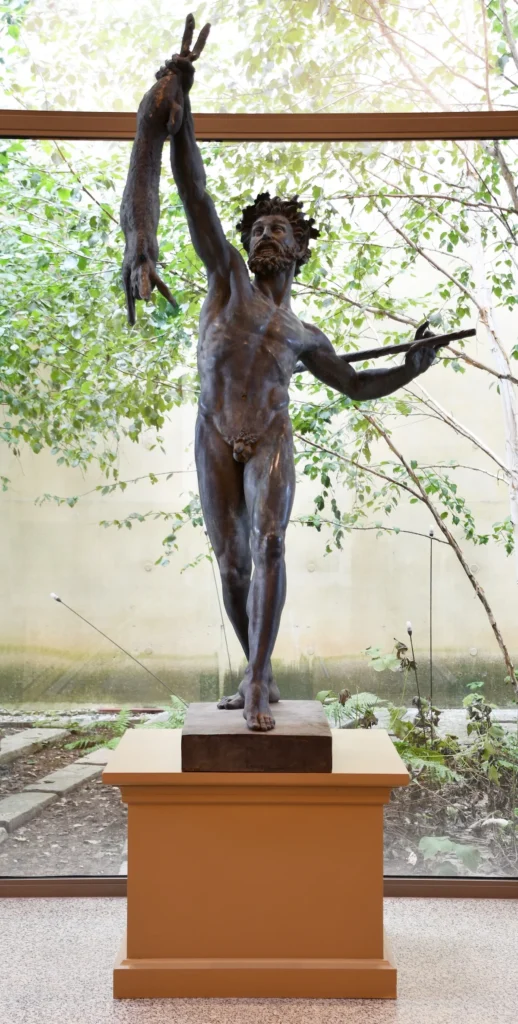
In a rare victory for the international art community, a 19th-century bronze sculpture that vanished into the illicit global trade three decades ago has finally been recovered. Alfred Lepère’s Faune Chasseur (1864), which was brazenly stolen from a zoo in Northern France in 1993, has been successfully repatriated. The work is now back in its rightful home, currently on display at the Musée de Picardie in Amiens, marking the end of a long, trans-Atlantic journey that underscores both the vulnerabilities of public art and the efficacy of modern due-diligence protocols.
The Main Facts: An Unlikely Recovery
The recovery of Faune Chasseur was not the result of a high-stakes police raid or an undercover operation, but rather the silent, rigorous work of the Art Loss Register (ALR). The London-based organization, which maintains the world’s largest private database of stolen, missing, and looted art, identified the sculpture during a standard due-diligence check.
The sculpture, a monumental bronze figure depicting a faun holding a rabbit, had been consigned to a U.S. auction house by an individual unaware—or claiming to be unaware—of its troubled provenance. When the auction house ran the item through the ALR database as part of their routine pre-sale verification, the system flagged the object as stolen property. The discovery effectively halted the sale and triggered a multi-agency effort to confirm the sculpture’s identity, confirm its ownership by the French State, and organize its transport back to France.
Chronology of a Disappearance
The story of Faune Chasseur is a testament to how easily cultural heritage can slip through the cracks of the global art market.
- 1863: The French State commissions Alfred Lepère to create the work, a significant piece intended for the national collection.
- 1864: The sculpture is completed.
- Late 20th Century: The work is placed on public display at the Amiens Zoo, where it became a familiar sight to visitors.
- 1993: The sculpture is stolen under the cover of night. At the time, such thefts of outdoor bronze statuary were relatively common, with many fearing the works would be melted down for their raw metal value.
- 1993–2026: For 33 years, the trail went cold. The sculpture disappeared into private hands, likely circulating among collectors who were either complicit or remarkably negligent in verifying the item’s history.
- 2026 (Early): The sculpture surfaces in the United States, having traveled over 4,000 miles from the site of its original theft.
- September 2026: Following a successful verification process, the piece is officially returned to the Musée de Picardie, where it is restored to the public eye.
The Mechanics of Provenance and Due Diligence
The recovery of the Lepère bronze highlights the critical role that specialized databases play in the modern art market. Charlotte Chambers-Farah, business development and client manager at the Art Loss Register, emphasized that the recovery was a "textbook example" of why auction houses must exercise extreme caution.
"Despite the considerable weight and size of this monumental sculpture, its whereabouts were unknown for more than 30 years," Chambers-Farah noted. "When it appeared in a U.S. auction catalogue, there were no obvious indications to the auction house that it had a problematic provenance. It looked like any other consignment. However, by checking the work against our global database, its hidden past was established before it could be sold."
This incident highlights a growing shift in the art world. As private collectors and galleries face increasing pressure to prove the legality of their holdings, the "blind spots" that once allowed stolen art to circulate are shrinking. The use of digital databases, high-resolution photography, and international cooperation between institutions like the Musée de Picardie and the ALR has created a much more difficult environment for traffickers.
Official Responses and Cultural Significance
The French State, represented by the Centre National des Arts Plastiques (CNAP), which manages the national collection, expressed profound relief at the return of the statue. For the Musée de Picardie, the return of Faune Chasseur is more than just the recovery of an asset; it is the restoration of a piece of local history.

Cultural historians have praised the recovery as a rare glimmer of optimism. In an era where "art crime" is becoming increasingly sophisticated—often involving forgery, money laundering, and the exploitation of conflict zones—the successful return of a work stolen during a relatively low-tech era provides a roadmap for future investigations.
"At a time when thefts in public institutions are once again targeting items for their material value, this recovery offers grounds for hope," Chambers-Farah added. "It proves that the disappearance of an object over a prolonged period does not necessarily mean that it has been melted down for scrap. It remains out there, waiting for the right set of eyes to recognize it."
Implications for the Global Art Market
The Faune Chasseur case holds several major implications for the future of art collection and law enforcement:
1. The "Material Value" Threat
While Faune Chasseur survived, the threat of melting down remains a primary concern for bronze sculptures. Because the metal itself has commodity value, thieves often target statues for quick cash. This recovery serves as a warning to dealers: if an item of this size can surface after 33 years, there is a high probability that other "missing" works are hiding in plain sight in private collections worldwide.
2. The Responsibility of Auction Houses
The fact that the auction house in question performed the check willingly indicates a shift in industry standards. Increasingly, auction houses are viewing the Art Loss Register not as an optional service, but as a mandatory component of their legal liability protection. Any auction house that fails to perform such checks in the future will find itself increasingly vulnerable to lawsuits and significant reputational damage.
3. International Cooperation
The repatriation of this work required seamless cooperation between French authorities and U.S. entities. As cross-border art trade continues to expand, the harmonization of international laws regarding stolen property will become even more critical. The successful return of the Lepère sculpture serves as a template for how inter-institutional communication can bypass the legal gridlock that often prevents the return of looted cultural property.
4. Public Awareness and Advocacy
Finally, the recovery brings attention to the "forgotten" thefts of the late 20th century. Many museums and public institutions have works in their records that were stolen decades ago and have since been written off as lost. The Faune Chasseur case encourages these institutions to re-examine their catalogs and ensure that their records are digitized and registered with international databases.
Conclusion: A Future for the Past
As Faune Chasseur stands once again in the halls of the Musée de Picardie, it carries with it the scars of its journey—a journey that lasted nearly a third of a century. It stands as a reminder that cultural heritage is resilient, but only when protected by the vigilance of the institutions that curate it and the markets that trade it.
The recovery is not merely a bureaucratic success; it is a cultural victory. It ensures that the work of Alfred Lepère remains accessible to the public, rather than serving as a decorative piece in a private home or, worse, being lost to history entirely. In the ongoing battle to preserve the world’s art, the return of this bronze faun serves as a powerful beacon, signaling that even after 33 years of silence, the truth can still be unearthed.