

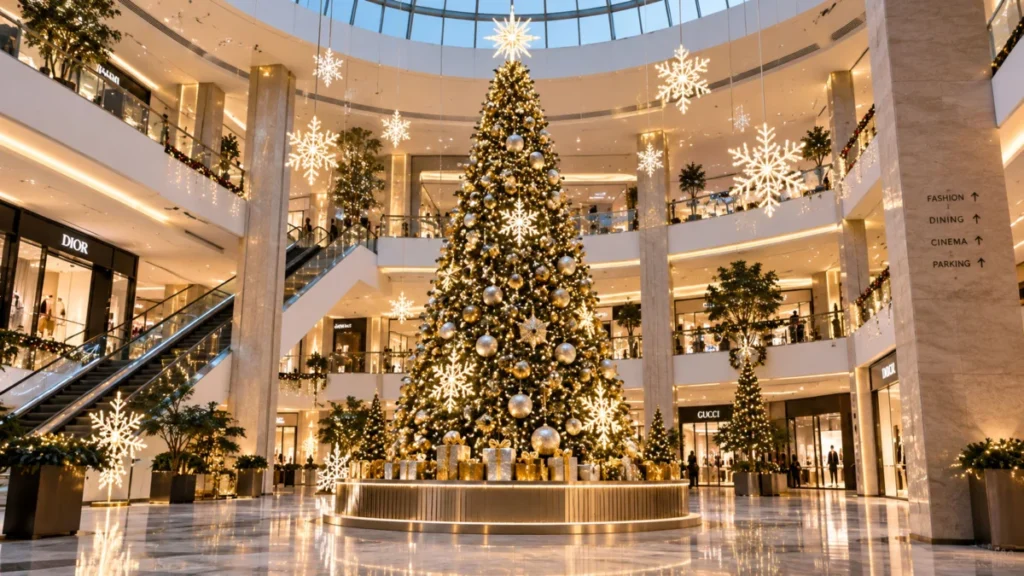
As the holiday season approaches, the pressure on commercial property managers to deliver a visually stunning, safe, and operationally seamless festive display intensifies. For high-end hotels, luxury shopping malls, and corporate office complexes, a Christmas tree is far more than a seasonal decoration; it is a primary marketing asset that defines the guest experience, influences foot traffic, and reinforces the property’s brand identity.
However, the transition from a vision of festive grandeur to a standing, illuminated reality is fraught with logistical complexities. Selecting the perfect tree requires a synthesis of aesthetic ambition and rigorous spatial engineering. Success depends not on picking the tallest model from a catalog, but on understanding the building’s unique architectural language and operational constraints.
The Strategic Foundation: Beyond the Catalog
For property managers and design teams, a successful installation begins with a detailed project brief. This document serves as the bridge between creative aspiration and technical execution. A professional brief must account for architectural sightlines, existing traffic patterns, and the logistical realities of the installation team.
Analyzing the Spatial Context
A tree placed in a hotel lobby must accommodate the constant flow of arriving guests, luggage, and staff, while a mall atrium installation must contend with multi-level sightlines, fire egress routes, and the needs of retail tenants.
To achieve a harmonious integration, professionals should:
- Conduct a Visual Audit: Walk the site from the perspective of a visitor. Map out the primary approach routes—from the main entrance to the reception queue and lounge areas.
- Document Sightlines: Use photographs taken from various vantage points—including upper-level balconies—to determine how the tree will be perceived from different elevations.
- Floor Plan Integration: Always mark the proposed location on current floor plans. A high-ceilinged atrium can be deceptive; while the vertical space may seem infinite, the floor footprint, load-bearing capacity, and proximity to electrical outlets are the true limiting factors.
Aesthetic Curation: Aligning Design with Brand Identity
The aesthetic choice of a tree—whether it is a traditional, foliage-dense model or a modern, light-led architectural silhouette—must be a deliberate extension of the building’s existing interior design.
Matching Form to Environment
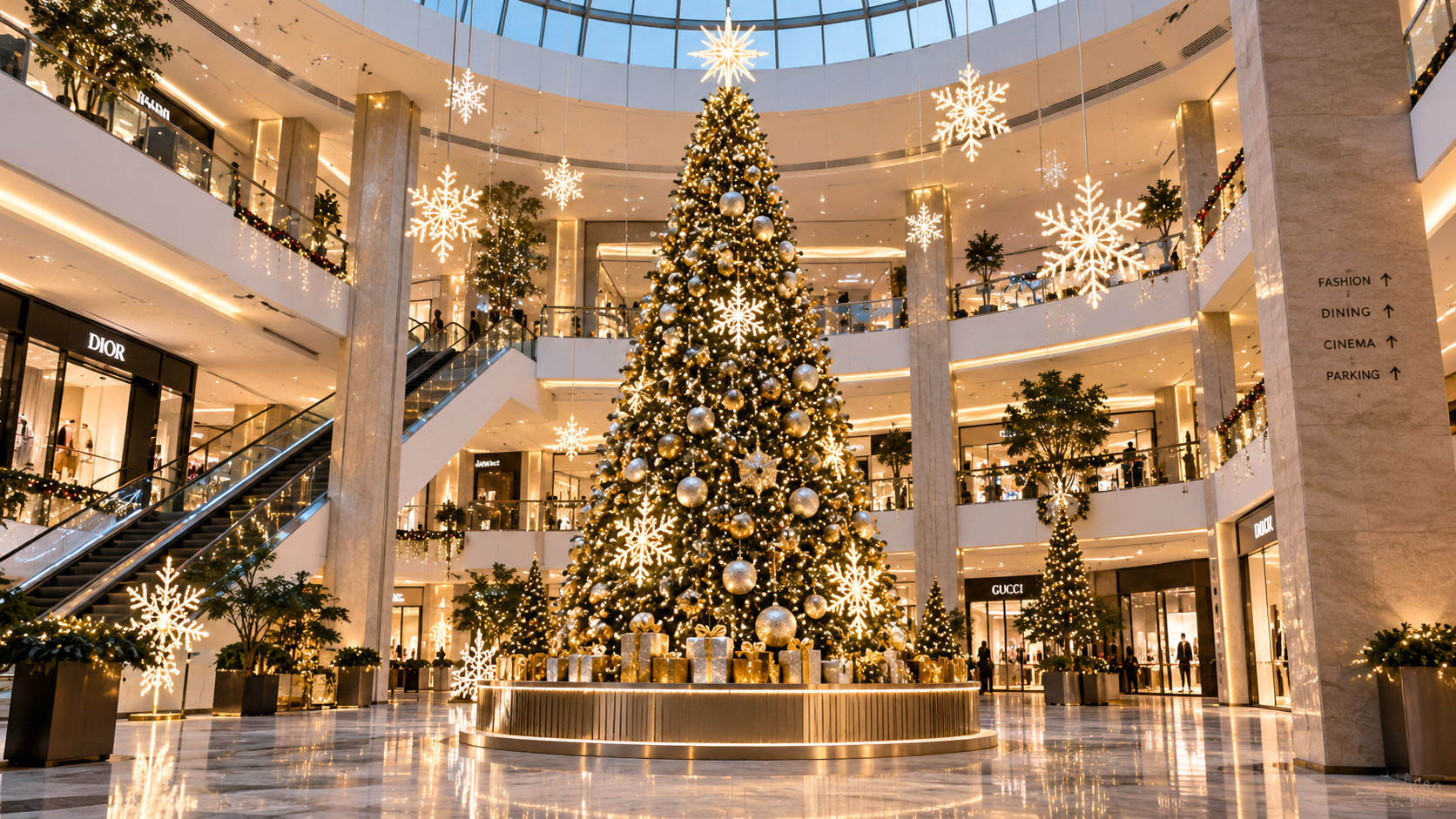
- The Traditional Approach: Full-shaped trees with classic branches allow for a traditional ornament palette and warm, ambient lighting. These are often best suited for spaces with warm wood tones, stone finishes, or luxury heritage properties where comfort and nostalgia are the desired emotional outcomes.
- The Architectural Approach: Light-led, minimalist silhouettes offer a sleek, contemporary profile. These are increasingly popular in modern, high-tech retail environments where the focus is on programmable lighting effects, color-changing capabilities, and a futuristic, "wow-factor" aesthetic.
Before settling on a design, managers should request both macro and micro views. A wide-angle shot shows how the tree dominates the room, while a close-up detail shot reveals the quality of the materials—an essential consideration for luxury properties where guests will be viewing the installation at close range. Suppliers like HYCLight offer a wide range of commercial-grade options, but these should serve as a starting point for a conversation about custom dimensions and specific decorative schemes, rather than a final selection.
Chronology of an Installation: From Brief to Breakdown
To avoid the chaos of last-minute adjustments, the installation process should follow a structured timeline.
Phase 1: Planning and Procurement (Late Summer)
The project starts with the creation of the formal brief. This includes dimensions, desired aesthetic direction, and a clear statement of the intended visitor experience. Procurement teams should identify vendors capable of providing not just the hardware, but also the structural engineering support required for larger installations.
Phase 2: Logistics and Assembly (October–November)
Once the design is locked, the focus shifts to the installation plan. This involves:
- Component Identification: Ensuring that every branch, light string, and structural element is labeled and accounted for in the manifest.
- Factory-to-Site Transition: If the tree is large, pre-assembly at the factory—or at least the creation of a "mock-up" section—is essential to identify potential mechanical issues before the installation crew arrives on-site.
- Site Prep: Coordinating with facilities management to ensure that access equipment (scaffolding, scissor lifts) is reserved and that power supply lines are sufficient for the lighting load.
Phase 3: The Festive Window (December)
Once installed, the display enters its operational phase. This includes daily maintenance, such as checking for burnt-out bulbs, ensuring the surrounding floor area remains clear of debris, and monitoring crowd flow during peak hours.
Phase 4: Dismantling and Storage (January)
A professional installation is marked by its exit. Proper dismantling involves systematic labeling of components, careful packing to prevent damage, and the creation of an "End-of-Season Report." This document should note any issues encountered during the run—such as electrical fluctuations or damage to ornaments—to ensure the next season starts with a clean slate.
Supporting Data: The Technical Requirements of Grand Installations
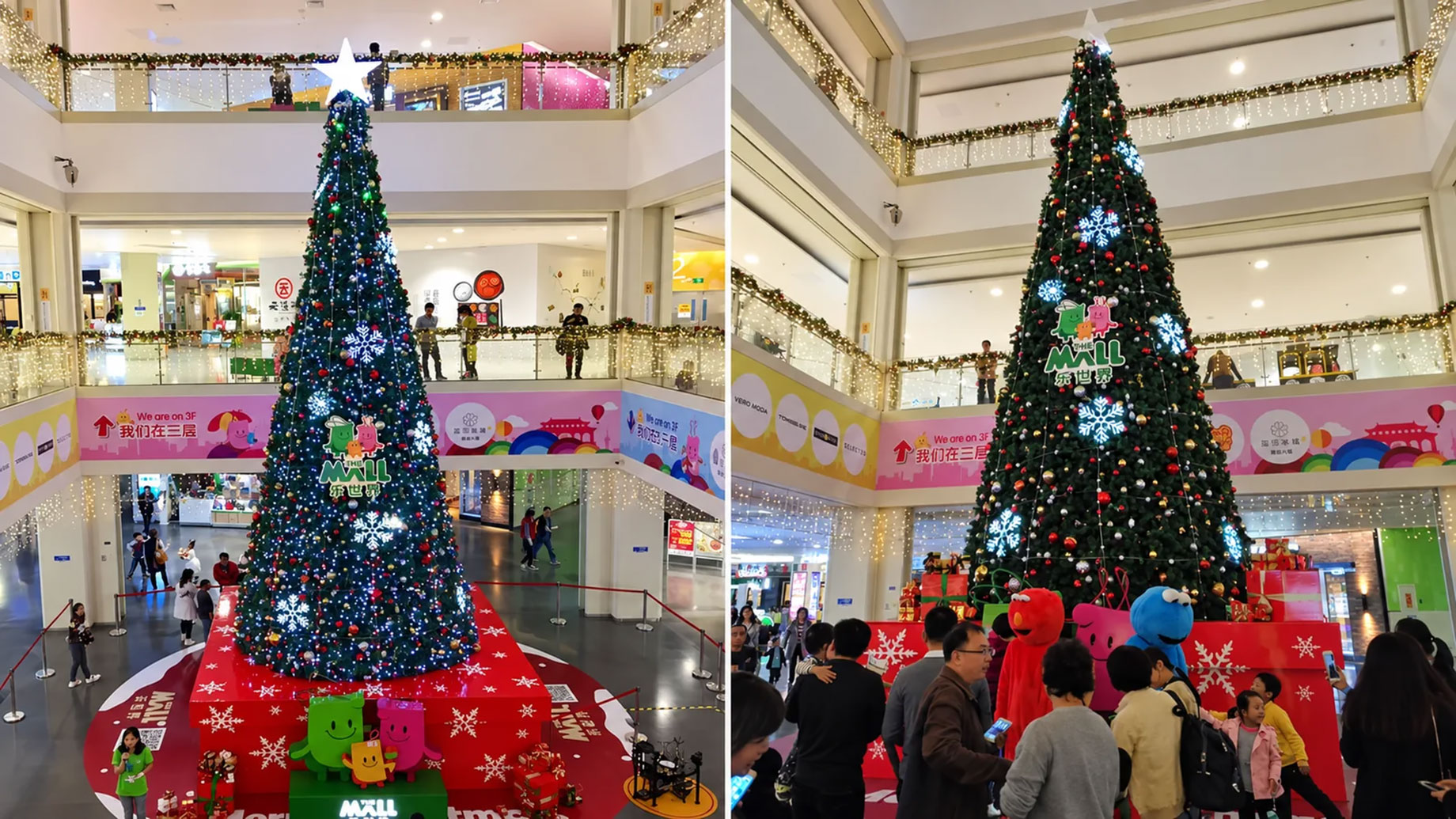
Large-scale commercial trees are not just decorations; they are engineered structures. Data provided by manufacturers and engineering consultants often highlights critical, yet overlooked, requirements:
- Weight Distribution: A 30-foot tree, when fully decorated, can exert significant pressure on specific points of a floor. In some older or luxury properties, floor reinforcement or the use of specialized base plates may be required to prevent damage to flooring materials like marble or polished concrete.
- Electrical Loads: Advanced lighting schemes require specialized controllers. A common pitfall is the failure to account for the electrical draw of thousands of LED bulbs. Managers must confirm that the building’s power grid can support the installation without tripping circuits or requiring unsightly, external extension cables.
- Environmental Stability: In indoor environments, HVAC systems can cause dry air, which may affect certain synthetic materials or cause static buildup. Ensuring the tree is placed away from direct heat vents is vital for both the longevity of the decoration and the safety of the display.
Official Perspectives: What Experts Advise
Industry professionals emphasize that "more is not always better." The most effective holiday installations are those that create a coherent focal point rather than competing with the surrounding architecture.
- The "Coordinated Treatment" Principle: Design teams often recommend that the tree serves as the "anchor," with surrounding decorations (wreaths, garlands, or floor displays) acting as a supporting chorus. If the tree is highly ornate, the surrounding area should be more restrained to avoid visual clutter.
- The Role of Interactive Design: Modern installations are increasingly incorporating interactive elements—such as photo-op zones at the base of the tree. By formalizing these areas in the design brief, managers can control visitor movement and ensure that the "selfie culture" of modern guests enhances the space rather than obstructing it.
Implications: The Return on Investment (ROI)
While the cost of a high-end commercial holiday installation is substantial, the implications for property value and brand perception are significant. A well-executed display provides:
- Increased Dwell Time: By creating a destination-worthy visual, shopping malls and hotels encourage visitors to stay longer, which historically correlates with higher spending in retail and dining areas.
- Social Media Capital: In the digital age, a "photogenic" Christmas tree is a marketing engine. When guests share photos of a luxury display, they are providing organic, high-value social proof for the property.
- Tenant Retention: For corporate and retail properties, a festive atmosphere signals a well-managed building. It demonstrates that the management team is invested in the culture and environment of the property, which can be a deciding factor for high-end tenants when negotiating lease renewals.
Conclusion: Building a Clearer Supplier Conversation
For any commercial property, the objective is to procure a seasonal feature that feels like a permanent, intentional part of the building’s soul. This requires moving beyond a transactional relationship with suppliers.
The most successful projects are built on a foundation of transparency. When a property manager brings a brief to a supplier—complete with venue photographs, exact dimensions, preferred lighting specifications, and a clear understanding of the installation timeline—they move the conversation from "what can you sell me" to "how can we solve this design challenge together."
By prioritizing the interplay between the tree and its environment, and by managing the installation with the same rigor applied to building maintenance, property managers can turn a standard seasonal obligation into an unforgettable, branded experience that resonates long after the lights are packed away.