
Introduction: The Invisible Shield of Global Trade
The global maritime industry serves as the lifeblood of the modern economy, with over 80% of the world’s goods transported by sea. Yet, beneath the veneer of tranquil oceans lies a persistent and evolving threat: maritime piracy and armed robbery. For over three decades, the International Maritime Bureau (IMB) Piracy Reporting Centre (PRC) has functioned as the industry’s primary guardian, standing as a 24-hour bulwark against those who seek to disrupt the freedom of navigation.
Since its inception in 1991, the PRC has evolved from a nascent reporting desk into a sophisticated intelligence-gathering and coordination hub. By bridging the gap between vulnerable vessels, naval task forces, and regional law enforcement, the Centre has become the single most important resource for shipmasters navigating the world’s most dangerous waters.
The Genesis and Evolution: A Chronology of Maritime Vigilance
1991: The Foundation of Accountability
In the early 1990s, the international shipping community faced an uptick in opportunistic piracy, particularly in Southeast Asian waters. Recognizing that individual ship owners were often left to fend for themselves, the ICC International Maritime Bureau established the PRC. The objective was clear: to create a centralized, independent body that could collect data, identify trends, and provide real-time assistance to ships in distress.
2000s: The Shift Toward Proactive Response
As piracy patterns shifted toward the Gulf of Aden and the coast of Somalia, the PRC’s mandate expanded. The mid-2000s saw the Centre integrating satellite-based tracking and automated warning systems. The PRC moved beyond passive reporting, becoming an active participant in crisis management. By broadcasting alerts to nearby vessels and liaising directly with international navies, the Centre proved that information parity—sharing intelligence between the private sector and public military forces—was the key to survival.
2010s to Present: Digital Transformation and Global Coverage
In the current decade, the PRC has transitioned into a high-tech intelligence hub. Today, it utilizes sophisticated algorithms to analyze historical incident data, allowing it to predict high-risk zones and advise on "best management practices" (BMP) for vessels transiting sensitive areas. The Centre’s role has solidified as the definitive source for maritime security data, cited by the United Nations, insurers, and national governments alike.
Supporting Data: Mapping the Modern Threat
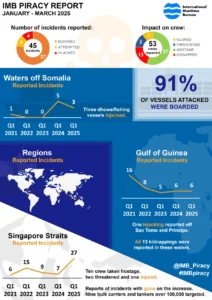
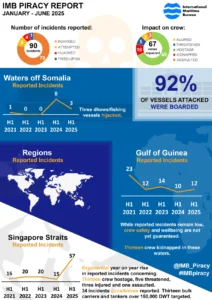
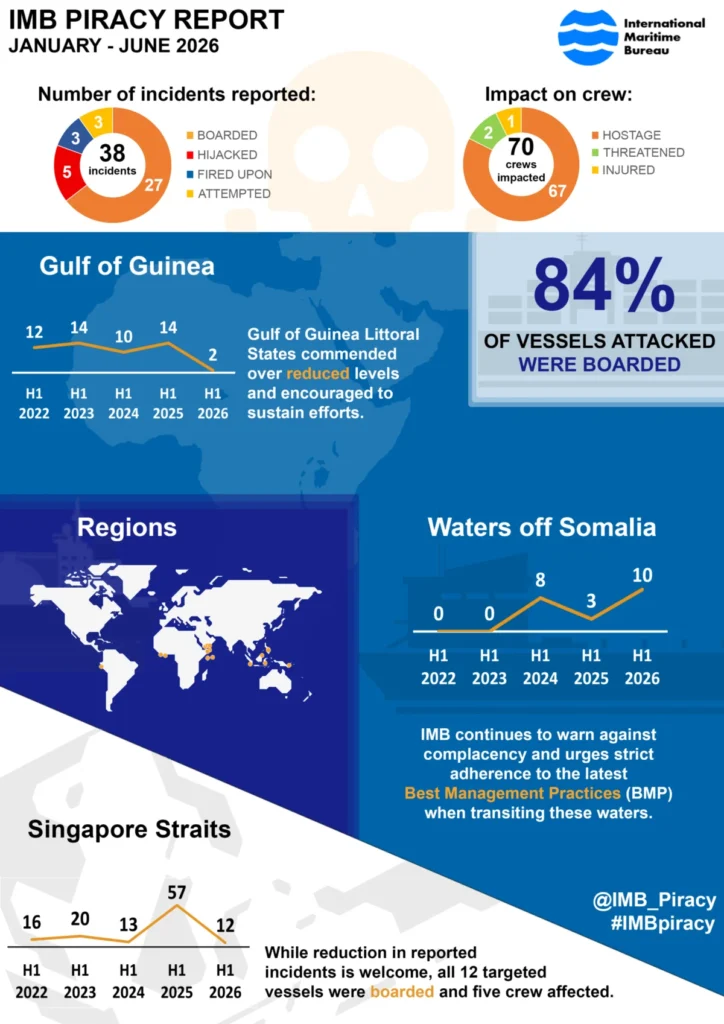
The IMB’s data collection efforts provide the backbone for global maritime security policies. By cataloging every reported incident—whether an actual boarding, an attempted attack, or a suspicious sighting—the PRC creates a forensic map of maritime crime.
Why Data Transparency Matters
- Resource Allocation: When the PRC reports a cluster of incidents in a specific region, international naval coalitions can recalibrate their patrols. Without this data, navies would be operating blindly, leading to inefficient resource deployment.
- Insurance and Risk Premiums: The data provided by the PRC is instrumental for underwriters. Accurate reporting helps define "War Risk" zones, ensuring that insurance premiums reflect the actual, rather than the perceived, threat levels.
- Policy Formulation: International bodies, including the International Maritime Organization (IMO), rely on the PRC’s annual reports to draft international conventions and regional cooperation agreements.
The statistics gathered by the PRC act as a deterrent. Pirates operate on the principle of anonymity and lack of enforcement; by documenting every incident, the PRC strips away that anonymity, forcing governments to acknowledge and address threats in their territorial waters.
The Mechanics of Protection: How the PRC Operates
The IMB Piracy Reporting Centre operates as a 24-hour nerve center. Its operational philosophy rests on three pillars:
- Immediate Response: When a vessel reports an incident, the PRC serves as the primary communications relay. It instantly contacts local authorities and regional maritime coordination centers, ensuring that the distress signal is not lost in bureaucratic red tape.
- Warning Dissemination: Utilizing an automated broadcast system, the PRC sends out alerts to vessels in the vicinity of a reported attack. This "neighborhood watch" approach empowers shipmasters to take evasive maneuvers, harden their defenses, or alter their routes long before they fall into a trap.
- Intelligence Analysis: The Centre’s staff are not merely administrators; they are maritime security experts who analyze the modus operandi of different pirate syndicates. They look for patterns in weapon types used, the timing of attacks, and the size of boarding parties, providing actionable advice to ship operators.
Official Responses: The Call for Collective Responsibility
Michael Howlett, Director of the ICC International Maritime Bureau, has consistently emphasized that the PRC’s effectiveness is directly proportional to the participation of the shipping industry.
"The Piracy Reporting Centre is a vital first step," Howlett states. "However, its success depends entirely on the transparency of our partners. We encourage all shipmasters and owners to report not just the successful attacks, but all actual, attempted, and even suspected incidents. Under-reporting is the greatest gift we can give to maritime criminals. When we receive accurate data, we can ensure that the right resources are allocated by the authorities to tackle these threats at the source."
The International Chamber of Commerce (ICC), as the parent organization of the IMB, views this as a core component of its mission. With over 45 million member companies, the ICC champions the belief that "business works for everyone." By protecting the supply chain, the PRC is essentially protecting the global economy, ensuring that the cost of goods remains stable and that the lives of seafarers are prioritized over the interests of criminal entities.
Implications: The Future of Maritime Security
The implications of the PRC’s work extend far beyond the immediate safety of a ship and its crew. As the world faces geopolitical instability, the security of maritime "choke points"—such as the Strait of Malacca, the Bab al-Mandab, and the Gulf of Guinea—becomes increasingly critical.
The Human Element
Beyond the economic cost, there is a profound human cost to piracy. Seafarers are often subjected to psychological trauma, violence, and in extreme cases, kidnapping for ransom. The PRC’s focus on proactive warning systems is, at its heart, a humanitarian effort aimed at ensuring that those who facilitate global trade can return home to their families safely.
The Role of Technology
As we look toward the future, the PRC is expected to leverage further advancements in AI and satellite imagery. The goal is to move toward a "predictive security" model, where emerging threats are identified before a vessel even enters a danger zone. This will require continued support from the shipping industry, both in terms of financial backing and data sharing.
A Global Standard
The IMB Piracy Reporting Centre serves as a template for what private-public cooperation should look like. It proves that when industry associations take the lead in intelligence gathering, they can compel government action where it might otherwise be stalled by diplomatic hurdles.
Conclusion: A Call to Action
The maritime industry remains a challenging environment, but it is not a lawless one, provided that stakeholders remain vigilant. The IMB Piracy Reporting Centre is more than just a reporting office; it is the industry’s collective voice against maritime violence.
For ship owners, masters, and operators, the message from the IMB is clear: report early, report often, and stay informed. By contributing to the global pool of data, every vessel owner plays a part in securing the high seas, ensuring that the oceans remain open, safe, and prosperous for the 45 million companies—and the billions of consumers—that rely on them every single day.
Contact Information for Reporting and Inquiry
To report an incident or to seek further information regarding maritime security protocols, stakeholders are encouraged to reach out to the IMB Piracy Reporting Centre:
- Director: Michael Howlett
- Organization: ICC International Maritime Bureau
- Phone: +44 207 423 6960
- Email: [email protected]
The International Chamber of Commerce (ICC) remains committed to promoting international trade through responsible business conduct and global advocacy. For more information on the ICC’s broader mission, visit their official channels to learn how they are working to make business work for everyone, everywhere.