

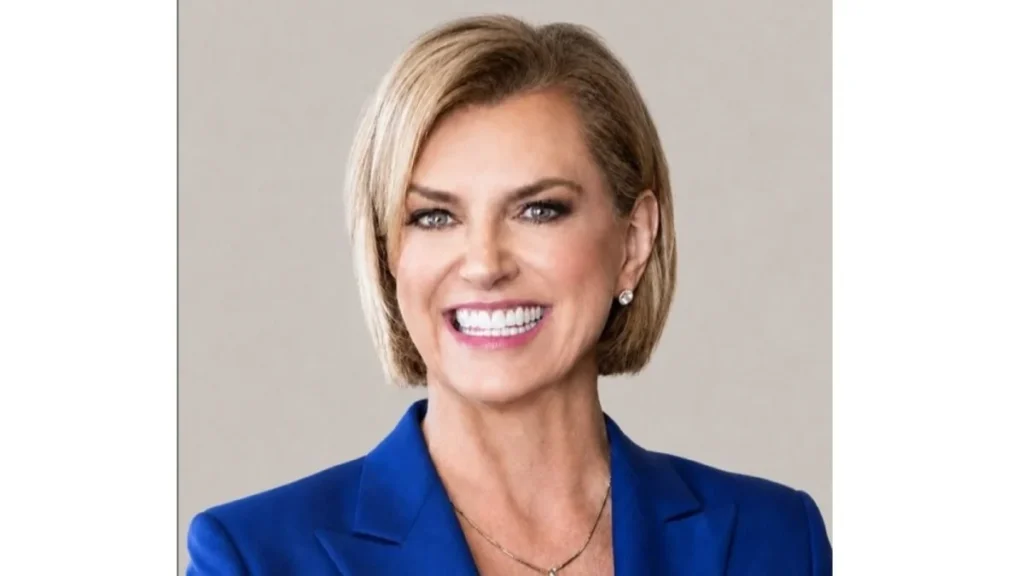
In a significant move to consolidate its footprint in the Southeastern United States, Citi Private Bank has announced the appointment of veteran financial executive Teresa Radzinski as a private banker based in Jacksonville, Florida. This strategic hire underscores the institution’s ongoing commitment to scaling its wealth management division by securing high-caliber talent capable of navigating the complexities of ultra-high-net-worth (UHNW) and institutional portfolios.
Radzinski, a seasoned professional with over three decades of experience, is set to focus on the bank’s most sophisticated client segment: individuals and family offices with balance sheets exceeding $500 million. By placing a specialist of her caliber in the Florida market, Citi is positioning itself to capture a larger share of the wealth migration currently reshaping the region’s financial landscape.
A Career Defined by Institutional Excellence
The professional trajectory of Teresa Radzinski is marked by a blend of high-level capital markets expertise and deep-rooted experience in private wealth advisory. Her arrival at Citi follows a tenure at Bank of America Private Bank, where she served as a Managing Director and Private Client and Institutional Advisor.
During her time at Bank of America, Radzinski developed a reputation for managing the intricate intersection of private wealth and institutional finance. Her portfolio included a diverse range of clients, including wealthy families, private foundations, faith-based organizations, and institutions of higher education. This dual expertise—managing personal wealth while addressing the complex capital requirements of non-profits—makes her a unique asset for Citi’s private banking division.
Before her transition to wealth management advisory, Radzinski operated at the center of global finance. As the Managing Director and Co-Head of Financial Institutions Capital Markets and Financing at Bank of America Merrill Lynch, she gained invaluable insight into the mechanics of the market. This background provides her with a holistic view of the financial ecosystem, covering investment strategy, fiduciary responsibility, institutional advisory, and corporate board governance.
Chronology: A Career of Strategic Leadership
To understand the weight of this appointment, one must look at the progression of Radzinski’s career, which spans more than 35 years:
- Early Career (1980s – 1990s): Radzinski entered the financial services industry, building a foundational understanding of corporate finance and market dynamics.
- The Merrill Lynch Era: Her ascent to Managing Director and Co-Head of Financial Institutions Capital Markets and Financing marked a period of intensive work in institutional finance, where she oversaw large-scale capital solutions for some of the world’s most complex institutions.
- The Private Banking Pivot: Recognizing a shift in market needs, Radzinski transitioned to Bank of America Private Bank, applying her institutional knowledge to the needs of UHNW families and philanthropic foundations.
- Present Day (2024-2025): Her appointment at Citi Private Bank marks the latest chapter in a career defined by high-level fiduciary management and a deep commitment to the Jacksonville community and beyond.
Beyond her corporate responsibilities, Radzinski has maintained a rigorous commitment to public service. Her current board roles—including Chair of the Kearney Center/CESC and the Lightner Museum, as well as her role as a board trustee at Flagler College—demonstrate a commitment to the socio-economic fabric of Florida. This community integration is expected to be a key component of her ability to serve the UHNW segment, where trust and local visibility are paramount.
The Broader Citi Wealth Expansion Strategy
Radzinski’s appointment is not an isolated event; it is a critical piece of a much larger, aggressive hiring spree at Citi Wealth. Under the broader restructuring and expansion efforts initiated by Citigroup, the bank has been methodically filling senior leadership roles to drive its "Wealth 2.0" strategy.
This strategy aims to integrate the bank’s various investment platforms and provide a more seamless, data-driven experience for the ultra-wealthy. Recent appointments highlight this trend:

- Wealth Planning Leadership: Last month, Citigroup appointed Adam Clark to lead wealth planning. Replacing the interim leadership of Mike Troth, Clark is tasked with streamlining the firm’s wealth planning capabilities globally. His move to New York in November follows a standard garden leave period, signaling the high-stakes nature of the acquisition.
- Investment Platform Experience: Alex Kokolis was recently named Head of Investments Platform Experience. His role is to bridge the gap between investment product teams and client segment leaders, ensuring that the technology stack aligns with the bespoke needs of UHNW clients.
- Alternatives and Manager Solutions: In a move to capture the growing demand for private market assets, Citi added Elizabeth McElherne as Head of AIMS (Alternatives and Investment Manager Solutions) platform management. This appointment reflects the market’s pivot toward non-traditional assets, a trend that Radzinski will undoubtedly leverage in her new role.
Market Implications: Why the $500M+ Segment Matters
The focus on clients with balance sheets of $500 million or more represents a deliberate move to focus on "Ultra-Wealth." In this tier, the service model shifts from traditional portfolio management to a multi-disciplinary approach that includes tax optimization, legacy planning, private equity access, and philanthropic strategy.
For Citi, attracting talent like Radzinski is a calculated play for market share. As wealth managers compete to serve the "one-percent of the one-percent," the value proposition moves away from simple investment returns and toward integrated advisory. Radzinski’s ability to speak the language of institutional capital markets while simultaneously managing the nuances of family office dynamics makes her a perfect fit for this high-stakes segment.
Furthermore, by anchoring this role in Jacksonville, Citi is tapping into the ongoing shift of wealth from traditional centers like New York and Chicago to emerging hubs in the South. Florida, in particular, has seen a surge in family office formations, creating a heightened demand for the exact type of expertise Radzinski offers.
Implications for the Industry
The hiring of a veteran with such a diverse background signals a maturing of the private banking industry. Firms are no longer looking for "generalists" to handle wealthy clients. Instead, they are seeking "polymaths" of the financial world—advisors who understand the intricacies of a board room, the technicalities of a non-profit foundation, and the volatility of capital markets.
The competitive landscape for talent remains fierce. As Citigroup continues to consolidate its leadership team, other major players in the wealth space, such as J.P. Morgan and Goldman Sachs, are watching closely. The movement of key personnel between these firms is often a leading indicator of where the industry’s strategic priorities lie.
Looking Ahead: The Future of the Citi Wealth Franchise
The appointment of Teresa Radzinski is more than a simple headcount increase; it is an endorsement of Citi’s broader vision. By combining institutional-grade advisory with a hyper-personalized private banking model, the firm is attempting to build a moat around its highest-net-worth clients.
As the financial environment remains volatile, characterized by high interest rates, geopolitical uncertainty, and a complex tax landscape, the demand for sophisticated, human-led advice is at an all-time high. Radzinski’s track record of stability and strategic leadership will be instrumental in maintaining client confidence during these shifting times.
With a robust leadership team now in place, including the recent additions of Clark, Kokolis, and McElherne, Citi is effectively building an engine capable of handling the most complex financial requirements of the modern era. The industry will be watching to see how these leaders integrate their diverse expertise to deliver on the firm’s ambitious growth targets.
In conclusion, Teresa Radzinski’s arrival at Citi Private Bank serves as a microcosm of the bank’s broader aspirations. By bridging the gap between institutional capital and personal wealth, and by embedding itself in regional hubs like Jacksonville, Citi is positioning itself not just as a bank, but as a critical partner to the individuals and entities that define the global economic landscape.