In the horological landscape, few models have garnered as dedicated a cult following as the Tudor North Flag. First unveiled in 2015, it served as a watershed moment for the brand, marking the debut of Tudor’s first proprietary manufacture movement. Its design, inspired by the 1973 Ranger II, offered a sharp, tool-watch aesthetic that prioritized legibility and utility. When the model was quietly retired in 2021, collectors lamented the loss of what many considered one of the most balanced, modern sports watches in the brand’s catalog.
As of September 2026, the silence has been broken. Tudor has officially reintroduced the North Flag, but this is not a mere reissue. The new Tudor North Flag (ref. M9140G1A0U-0001) evolves the platform from a simple power-reserve-equipped field watch into a high-performance, METAS-certified GMT instrument, signaling a strategic shift toward modern, precision-oriented complications.
Main Facts: A Modern Evolution
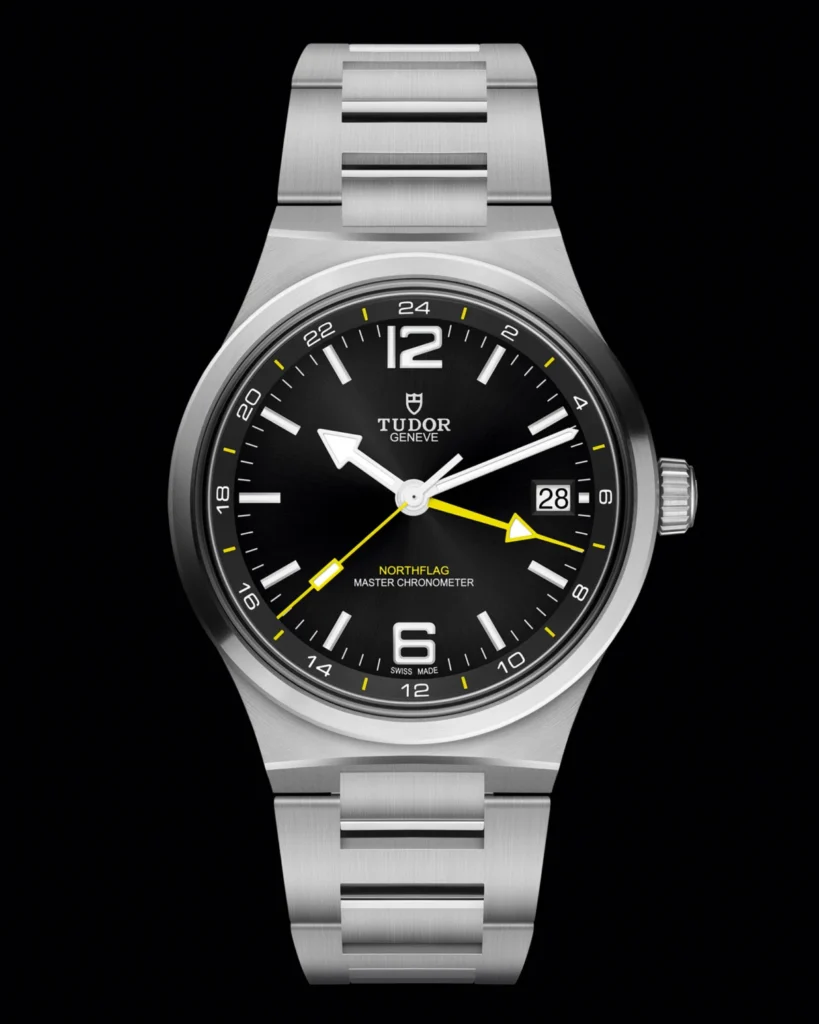
The 2026 iteration retains the soul of its predecessor while upgrading every technical aspect to meet the demands of contemporary enthusiasts. Housed in a robust 40mm 316L stainless steel case, the watch measures 12.7mm in thickness, maintaining the wearable, balanced proportions that made the original so popular.

The aesthetic remains distinctly "North Flag," characterized by a matte black dial punctuated by stark white indices and signature yellow accents. However, the most significant departure is the transition from a power-reserve indicator at 9 o’clock to a highly functional, centrally mounted GMT hand. This yellow-tipped hand tracks a second time zone against a 24-hour scale etched into the angled chapter ring, providing true "flyer" GMT utility.
The watch is anchored by the Manufacture Caliber MT5652-U. Beyond its impressive 65-hour power reserve and 4Hz beat rate, this movement is a Master Chronometer. This certification, overseen by the Swiss Federal Institute of Metrology (METAS), ensures the watch maintains its precision under extreme conditions, including magnetic interference of up to 15,000 gauss.
A Chronology of the North Flag
To understand the significance of the 2026 release, one must look at the timeline of the North Flag’s development:

- 1973: Tudor releases the Ranger II, the spiritual predecessor to the North Flag, featuring an integrated case design and sharp, angular aesthetics.
- 2015: The North Flag debuts at Baselworld. It becomes a historic milestone as the first Tudor watch to house an in-house manufacture movement, setting the stage for the brand’s independence from third-party suppliers.
- 2021: After a six-year production run, the North Flag is discontinued. Its departure left a void for a modern, integrated-bracelet sports watch in the Tudor lineup.
- 2026: Following five years of speculation and persistent requests from the collector community, the North Flag returns with GMT functionality and METAS certification, solidifying its place as a cornerstone of the "new" Tudor era.
Supporting Data: Engineering and Materials
The engineering behind the new North Flag reflects Tudor’s commitment to durability. The watch features domed sapphire crystals on both the front and the display caseback, allowing the wearer to admire the finished Caliber MT5652-U.
The integration of the stainless steel, 2-link (H-link) bracelet is a triumph of ergonomics. It utilizes Tudor’s proprietary "T-fit" clasp, a tool-less micro-adjustment system that has become the gold standard for mid-to-high-end steel sport watches. This allows for a perfect fit regardless of wrist expansion due to temperature or activity.
Furthermore, the legibility has been significantly enhanced. The previous iteration relied on standard lume application; the 2026 version utilizes solid blocks of Super-LumiNova for the hour markers. This choice not only creates a more three-dimensional look on the dial but also ensures that the watch maintains its tactical utility in low-light environments, emitting a distinct blue glow.

Official Perspective and Design Philosophy
While Tudor has remained characteristically understated regarding the specific internal deliberations behind the revival, the technical specifications tell a compelling story. By adopting the "flier" GMT movement—which allows the user to jump the local hour hand in one-hour increments without stopping the seconds hand—Tudor is positioning the North Flag as a "traveler’s watch."
The choice to make the watch a Master Chronometer suggests that Tudor intends for the North Flag to compete directly with high-end tool watches that emphasize reliability over brand prestige alone. By moving away from the power-reserve complication and toward the GMT, the brand is acknowledging a shift in consumer demand: modern collectors want utility that extends beyond the watch face, looking for tools that can bridge the gap between office wear and global travel.
Implications: Where the North Flag Fits in the Market
The return of the North Flag has immediate implications for the secondary market and the broader luxury watch industry.

1. The Death of the "Niche" Tool Watch
For years, the North Flag was viewed as a niche product—an oddity that didn’t quite fit the aesthetic of the Black Bay or Pelagos collections. By re-releasing it as a GMT, Tudor has successfully mainstreamed the model. It now serves as a distinct alternative to the Pelagos FXD, appealing to those who want a GMT function but prefer a more refined, angular aesthetic over the rugged, military-spec look of the FXD.
2. The METAS Standard
The inclusion of METAS certification across the board for new releases is a bold move. It effectively pushes Tudor into a tier of performance previously reserved for more expensive competitors. By certifying the North Flag, Tudor is telling the consumer that "manufacture" is no longer just about who makes the movement—it is about how the watch performs in the real world.
3. Impact on Collector Sentiment
The discontinuation of a watch usually drives prices up on the secondary market. The return of this model serves to stabilize the legacy of the original 2015 reference while giving collectors a "best of both worlds" scenario: the classic look of the 2015 model with the superior technology of 2026. This is expected to drive high demand for the new reference, potentially creating a significant waiting list at authorized dealers.

4. The Future of Integrated Bracelets
With the industry’s continued obsession with integrated-bracelet steel sports watches, the North Flag arrives at the perfect moment. Its 2-link bracelet design offers a distinct silhouette compared to the ubiquitous oyster-style bracelets seen on the Submariner or the Black Bay. This helps distinguish the North Flag as a unique design object rather than a "homage" to other famous models in the Rolex group.
Conclusion
The 2026 Tudor North Flag GMT is a masterclass in product iteration. It respects the history of the original 2015 model while addressing the functional gaps that modern travelers demand. By blending the angular, industrial design of the 1970s with the cutting-edge horological standards of the 2020s, Tudor has resurrected a fan favorite and turned it into a serious contender for the "one-watch collection" title.
Whether it is the METAS-certified precision, the T-fit clasp’s comfort, or the sheer utility of the flyer GMT movement, the North Flag has re-entered the market not as a ghost of its former self, but as a refined instrument for the modern era. For those who waited five years for its return, the wait appears to have been well worth it. The North Flag is back, and it is more capable than ever before.