The East African Rift System (EARS) stands as the world’s most profound natural laboratory for the study of continental breakup. Stretching thousands of kilometers from the Afar Triple Junction in the north to Mozambique in the south, this colossal scar in the Earth’s crust is where a continent is quite literally pulling itself apart. For decades, geologists have operated under a standard model of rifting: as the lithosphere—the Earth’s rigid outer shell—stretches, it should deform perpendicular to the rift axis, like a piece of dough being pulled from opposite ends.
However, recent, high-precision GPS data has unveiled a puzzling anomaly: parts of the region are moving parallel to the rift, a phenomenon that defies conventional tectonic theory. New research, utilizing sophisticated 3D thermomechanical modeling, has finally provided a compelling explanation. The culprit, according to a study published in the Journal of Geophysical Research, is the "African Superplume," a massive, deep-seated upwelling of hot mantle material that is subtly, yet powerfully, reconfiguring the African continent from within.
The Mechanics of a Breaking Continent
To understand why this discovery is so significant, one must first understand the fundamental mechanics of continental rifting. The lithosphere is not a monolithic slab; it is a complex, layered structure comprising the crust and the uppermost portion of the Earth’s mantle. Its behavior is notoriously dualistic, a concept geophysicist D. Sarah Stamps, an associate professor in the Virginia Tech College of Science, illustrates through a simple analogy: Silly Putty.
"If you hit Silly Putty with a hammer, it can actually crack and break," Stamps explains. "But if you slowly pull it apart, the Silly Putty stretches. So on different time scales, Earth’s lithosphere behaves in different ways."
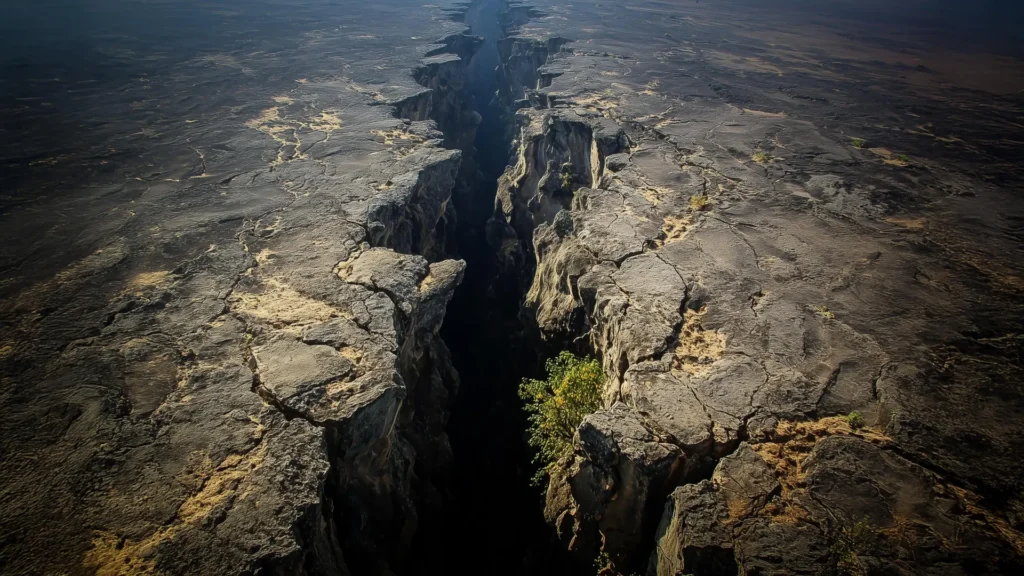
In the context of the EARS, surface-level deformation manifests through brittle fractures, creating the dramatic fault lines and seismic activity that define the rift valley. Deeper down, however, the material is ductile and viscous. When the lithosphere is subjected to tectonic stress, the expectation is that the crust will thin and widen in a predictable, rift-perpendicular direction. For years, this model held up, but as GPS technology evolved, the "standard" picture began to crack.
A Twelve-Year Mystery: The Chronology of a Discovery
The journey to this discovery began more than 12 years ago, when D. Sarah Stamps, then a postdoctoral researcher, began deploying a network of GPS stations across East Africa. These stations, which receive signals from over 30 satellites orbiting at an altitude of approximately 25,000 kilometers, provided unprecedented precision, allowing scientists to track surface motion at the millimeter scale.
As the data accumulated, a pattern emerged that did not fit the textbook definition of rifting. While the expected east-west, perpendicular deformation was present, there was a persistent, anomalous movement running north-south, parallel to the rift. This discovery ignited a decade-long investigation at the Geodesy and Tectonophysics Lab.
The team initially turned to computational simulations to test the prevailing theories of rifting: lithospheric buoyancy and mantle traction. A pivotal 2021 study led by the team confirmed that while buoyancy forces—driven by differences in elevation and crustal density—could account for the perpendicular stretching, they were woefully inadequate at explaining the parallel motion. The "missing link" remained buried deep beneath the surface, hidden in the mantle.
The final piece of the puzzle came from Tahiry Rajaonarison, a postdoctoral researcher at New Mexico Tech and a former Ph.D. student in Stamps’s lab. Using advanced 3D thermomechanical modeling, Rajaonarison was able to simulate the interactions between the lithosphere and the underlying mantle, identifying the African Superplume as the engine driving the anomalous northern drift.
The African Superplume: A Deep-Earth Engine
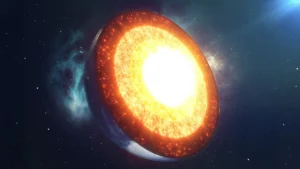
The African Superplume is one of the most enigmatic features of the Earth’s interior. It is a vast, buoyant upwelling of hot mantle material originating deep beneath southwest Africa. As this massive plume rises, it tracks northeastward across the continent, becoming progressively shallower as it nears the surface.
The new modeling data indicates that the "rift-parallel" motion observed by Stamps’s GPS network is a direct consequence of this northward mantle flow. The superplume exerts a shear force on the base of the lithosphere—a process known as mantle traction. Because the lithosphere is not perfectly rigid, this deep-seated drag forces the crustal plates to shift in ways that buoyancy alone cannot explain.
Seismic Anisotropy: The Smoking Gun
Further corroboration for the superplume theory comes from the study of seismic anisotropy. Seismic anisotropy occurs when seismic waves travel through the Earth’s interior at different speeds depending on their direction. This typically happens when internal rock structures or minerals—like olivine—align themselves under intense pressure and flow.
In the EARS, seismic waves show a distinct orientation that mirrors the northward flow of the African Superplume. This alignment is not a coincidence; it is a structural signature of the mantle’s movement. By matching the observed surface deformation with these deep-seated seismic signatures, the researchers have effectively "mapped" the interaction between the deep mantle and the crust, providing a high-resolution look at the forces shaping the African continent.
Official Perspectives and Scientific Nuance
The implications of this research are profound for the field of geodynamics. "We are saying that the mantle flow is not driving the east-west, rift-perpendicular direction of some of the deformations, but that it may be causing the anomalous northward deformation parallel to the rift," explains Rajaonarison. "We confirmed previous ideas that lithospheric buoyancy forces are driving the rift, but we’re bringing new insight that anomalous deformation can happen in East Africa."
This perspective shifts the scientific consensus from a "one-force" model to a "multi-force" reality. Scientists now believe that the East African Rift is shaped by a complex interplay of two distinct mechanisms:
- Lithospheric Buoyancy: A surface-level process driven by the topography and density of the crust, which primarily drives the rift-perpendicular stretching.
- Mantle Traction: A deeper process linked to the African Superplume, which influences the rift-parallel motion and creates the anomalous seismic signatures identified by the team.
This dual-driver model resolves the long-standing debate over whether surface topography or mantle dynamics is the "true" cause of the rifting. The answer, it seems, is both.
Implications for Global Tectonics
The study of the East African Rift is not merely an exercise in regional geology; it is a gateway to understanding the life cycle of continents. The EARS is a natural laboratory where scientists can observe the transition from a stable continent to the birth of a new ocean basin.
By decoupling the forces that drive rifting, researchers can now build more accurate models of how tectonic plates evolve. This has implications for understanding earthquake hazards, volcanic activity, and the long-term stability of the African plate. Furthermore, the ability to link surface GPS measurements to deep-mantle plumes offers a blueprint for studying other rift systems globally, such as the Baikal Rift in Russia or the West Antarctic Rift.
"We’re excited about this result from Dr. Rajaonarison’s numerical modeling because it provides new information about the complex processes that shape the Earth’s surface through continental rifting," says Stamps.
As the Geodesy and Tectonophysics Lab continues to refine its models, the scientific community moves one step closer to a complete, unified theory of continental breakup. The Earth, it appears, is far more dynamic than it appears on the surface, with the deep, hot currents of the mantle dictating the slow, inexorable reshaping of our world. The East African Rift is not just a crack in the ground; it is a living, breathing testament to the immense, invisible forces that have defined the history of our planet for billions of years.