By [Your Name/Journalistic Desk]
August 19, 2026
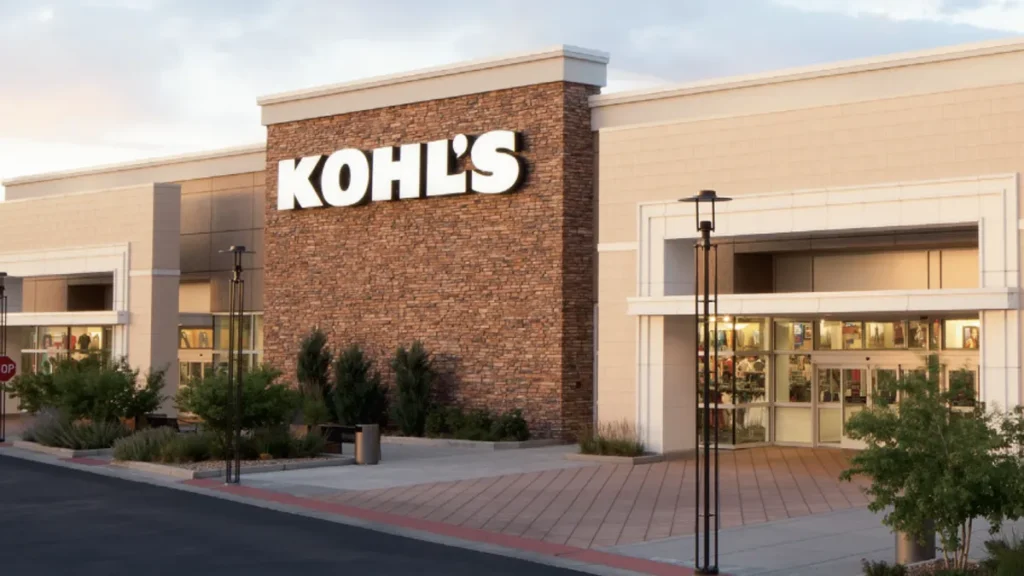
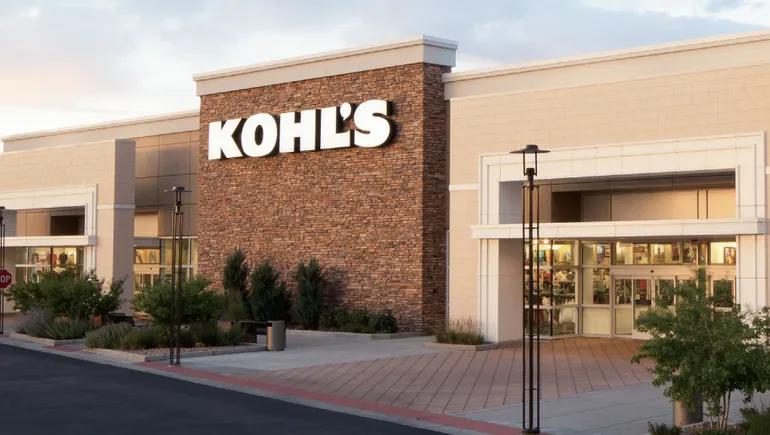
As the 2026 back-to-school shopping season reaches its critical midpoint, Kohl’s is intensifying its efforts to capture consumer wallet share. The department store giant, which has been navigating a challenging macroeconomic landscape, announced a fresh wave of aggressive promotions on Wednesday. This latest move comes on the heels of an already budget-conscious strategy introduced last month, as the retailer attempts to pivot from a series of quarterly traffic declines toward a more stable growth trajectory.
Main Facts: A Strategy Rooted in Value
The cornerstone of Kohl’s current retail strategy is a pivot toward "value-driven engagement." On Tuesday, the company unveiled a new tier of markdowns, slashing prices by as much as 50% across key categories, including school supplies, apparel, and beauty products.
The promotion, which aims to incentivize immediate spending, includes the reintroduction of the retailer’s popular “Kohl’s Cash” loyalty program. Customers are now eligible to earn $10 in store credit for every $50 spent, creating a psychological incentive for repeat visits. Furthermore, the retailer is hosting a weekend giveaway, offering customers the chance to secure between $5 and $100 in additional store credit, an initiative designed to drive foot traffic into physical locations during the final push before the academic year begins.
These efforts follow a broader campaign launched earlier this summer, where Kohl’s heavily marketed “thousands of products under $25,” specifically curated to appeal to parents managing tight household budgets amid persistent inflation.
Chronology: A Season of Evolving Tactics
The retail environment for the 2026 back-to-school season has been defined by a "wait-and-see" approach from both consumers and major chains.
- Early July 2026: Kohl’s initiates its first major wave of back-to-school marketing, highlighting a massive inventory of essential items priced under $25 to combat growing consumer price sensitivity.
- Late July 2026: Industry analysts begin to note a softening in consumer confidence, with reports from Circana suggesting that shoppers are becoming increasingly selective, prioritizing "necessity over novelty."
- Early August 2026: The National Retail Federation (NRF) releases a bullish forecast, predicting that back-to-school spending could climb nearly 10% year-over-year, reaching a record $43.3 billion.
- August 19, 2026: Kohl’s launches its second, more aggressive phase of promotional pricing, layering in deeper discounts and expanded Kohl’s Cash incentives to outpace competitors in a crowded retail landscape.
Supporting Data: Understanding the Traffic Trend
The urgency behind Kohl’s promotional strategy is rooted in hard data. According to insights from Placer.ai, which tracks real-world foot traffic, Kohl’s experienced a 1.4% decline in store visits during the second quarter of 2026 compared to the same period in 2025. While this figure is negative, it represents a significant improvement over the first quarter of the year, when visits plummeted by nearly 8%.
This stabilization suggests that while Kohl’s is still losing ground, the rate of attrition is slowing—a development that leadership attributes directly to their pivot toward value-focused pricing. However, the broader market remains precarious. With grocery and fuel costs continuing to consume a larger share of disposable income, the "choice architecture" for the American consumer has shifted. Shoppers are no longer just comparing prices; they are scrutinizing the necessity of each individual item, a behavior that poses a threat to department stores that rely on "impulse" categories like fashion and home decor.
Official Responses and Analyst Perspectives
The industry is currently divided on the outlook for the remainder of the quarter. While the NRF’s forecast of $43.3 billion in spending remains the optimistic industry benchmark, financial analysts are singing a more cautious tune.
Morgan Stanley, led by analyst Alex Straton, issued a note on Monday expressing skepticism regarding the industry’s ability to meet the high expectations set by trade groups. “We are slightly more cautious than the consensus,” the report noted. “A later build remains possible, but for now, we expect conservative Q3 guidance. Absent a sudden, significant inflection in demand, we believe current consensus estimates may prove a touch too high.”

The concern among analysts is that the first half of 2026 benefited from a "mirage" of strong retail sales that may not be sustainable. As retailers begin to lap the period in 2025 when new tariff structures were first implemented, the true cost of goods and the resulting impact on consumer purchasing power will become more apparent.
Implications: The High Stakes of Q3
For Kohl’s, the next few weeks are critical. The department store is essentially running a high-stakes experiment: can aggressive discounting and loyalty incentives successfully override the "cautionary spending" mindset of the modern consumer?
The "Selective Shopper" Challenge
Retailers across the country are discovering that simply lowering prices is no longer a silver bullet. Consumers in 2026 are highly informed and increasingly cynical. The Circana report suggests that the back-to-school season may prove to be "moderate at best." This implies that even with deep discounts, the total volume of sales may not reach the heights anticipated by the NRF, as consumers opt to repair existing items or buy only the absolute bare minimum for the school year.
The Margin Squeeze
The long-term implication for Kohl’s is the potential erosion of profit margins. By constantly relying on Kohl’s Cash and 50% off sales, the retailer risks training its customer base to never purchase at full price. This creates a "race to the bottom" where the retailer must move higher volumes of inventory just to maintain the same level of profitability. If the anticipated Q3 demand does not manifest, the company may find itself with excess inventory that it will have to clear out at even steeper discounts, further damaging the bottom line.
Future Outlook
As we move toward the close of the third quarter, all eyes will be on the company’s forward-looking guidance. If Kohl’s can demonstrate that its promotional strategy has successfully converted foot traffic into high-margin baskets, it may provide a roadmap for other mid-tier department stores struggling to find their footing.

However, if the "moderate" spending environment persists, the current reliance on heavy promotions might be viewed as a stopgap measure rather than a sustainable strategy. For now, Kohl’s remains committed to its path, betting that by being the most affordable option on the block, it can secure the loyalty of the American family during one of the most expensive times of the year.
As the school bells prepare to ring across the country, the success of this strategy will be measured not just in sales receipts, but in the company’s ability to prove that its brand remains essential to the modern household—regardless of the economic climate.