In the rapidly evolving landscape of independent horology, the "sub-$1,000" category has become a battleground for brand identity. For years, collectors have grown weary of "catalog builds"—watches assembled from generic, off-the-shelf components that lack soul or structural innovation. Enter the Beaucroft Contour GMT, a timepiece that suggests the industry’s entry-level segment is finally maturing. After weeks of rigorous wear-testing, it becomes clear that Beaucroft is not merely participating in the market; they are challenging the standard for what a sub-luxury watch can be.
Main Facts: The Anatomy of the Contour GMT
The Beaucroft Contour GMT is a testament to the idea that coherent design language is the most valuable asset a brand can possess. At a price point of $899 USD, the watch offers a level of refinement that, until recently, would have been considered impossible for a boutique brand.

Technical Specifications:
- Case Dimensions: 39.5mm diameter, 12.6mm thickness (inclusive of the box-sapphire crystal).
- Lug-to-Lug: 46.5mm, ensuring a balanced, versatile fit for a wide range of wrist sizes.
- Movement: Miyota 9075 "Flyer" GMT automatic movement.
- Performance: Regulated to -/+ 10 seconds per day.
- Water Resistance: 100 meters, supported by a robust screw-down crown.
- Durability: Hardened coating applied to both the stainless steel case and the bracelet.
The watch is defined by its sculptural case—a platform that the brand has committed to across its entire current catalog. By iterating on a single, high-quality chassis rather than constantly chasing trends, Beaucroft has achieved a level of brand consistency usually reserved for heritage manufacturers.

A Chronology of Design: From Concept to Wrist
The journey of the Contour GMT did not begin with a factory catalog, but with a specific architectural vision. Upon first inspection, the case profile demands attention. It is not a derivative of the typical "sports-watch-meets-diver" aesthetic that dominates the microbrand space. Instead, it utilizes a sweeping, brushed case side, elevated by a polished chamfer that curves gracefully over the crown.
The "floating" effect created by the recessed, blasted surface beneath the crown guard adds a layer of depth that is rarely seen at this price point. This is a design that requires significant investment in tooling, signaling that Beaucroft is committed to long-term manufacturing rather than quick-turn, low-cost production.

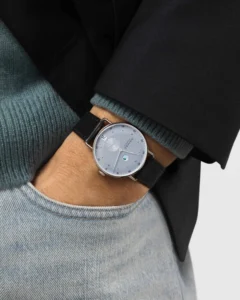
Over the course of a three-week testing period, the watch transitioned from a curiosity to a daily driver. The "Tropical Teal" dial, while marketed with the brand’s somewhat lofty "Floating Earth" narrative, stands perfectly well on its own merits. The sunray texture, interrupted by a functional, grooved 24-hour track, creates a play of light that remains legible in almost any environment. The transition from the elevated hour ring to the embossed logo at 6 o’clock shows a granular level of attention to detail that separates the Contour from its peers.
Supporting Data: Why "Hardened" and "Articulating" Matters
It is easy to throw around buzzwords like "hardened steel" or "micro-adjust," but the implementation here is what warrants praise.

The Bracelet Architecture
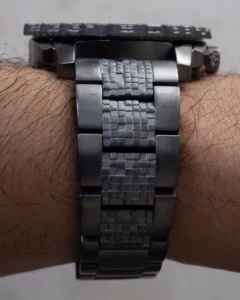
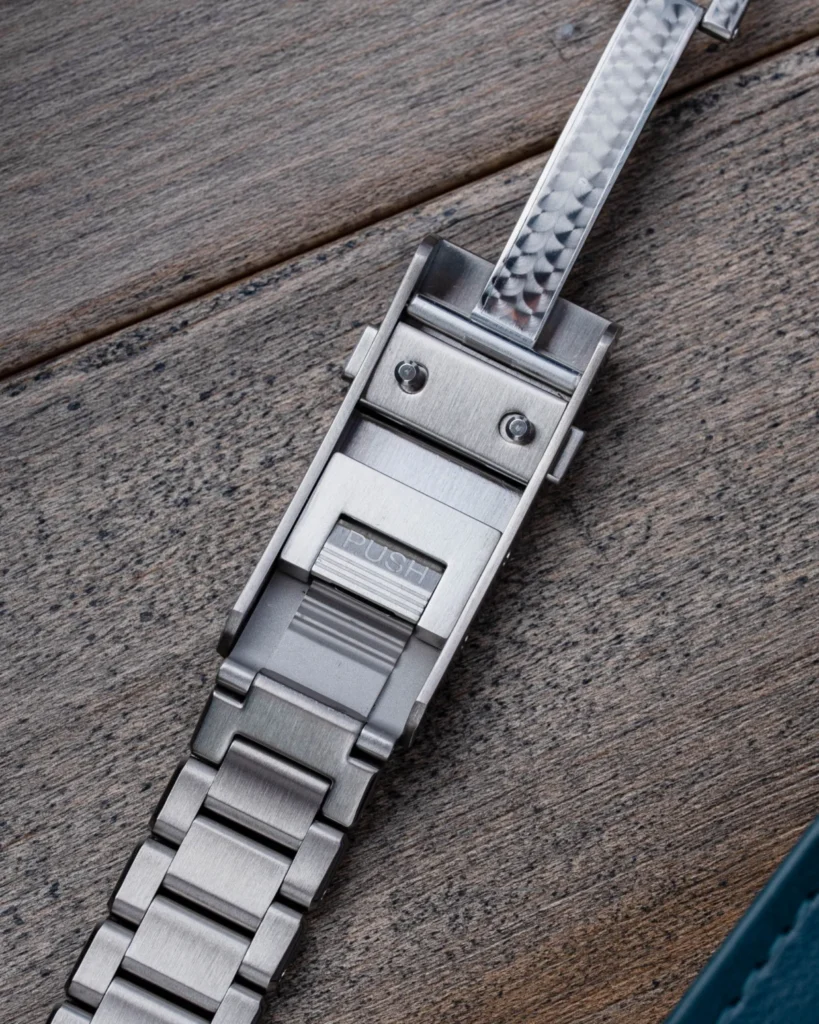
The 20mm-to-16mm tapered bracelet is the unsung hero of the Contour GMT. Featuring fully articulating links, the bracelet does not "hinge" at a limit; it flows. For the wearer, this translates to a watch that hugs the wrist rather than sitting atop it. The integration of a push-button micro-adjustment system within the foldover clasp—complete with perlage finishing on the interior—is a level of "over-engineering" that enthusiasts crave.
The Movement Choice
The decision to utilize the Miyota 9075 is the correct one. As a "flyer" or "true" GMT, the 9075 allows for the independent adjustment of the local hour hand. For the frequent traveler, this is the gold standard of mechanical GMT functionality. By regulating these movements to -/+ 10 seconds per day, Beaucroft is doing the heavy lifting that ensures the user experiences the watch as a precision instrument rather than just a fashion accessory.

The Caseback Debate
Beaucroft opted for a closed caseback, a move that might draw criticism from those who love to "watch the machine work." However, in the sub-$1,000 market, a display caseback often reveals an unfinished, industrial-looking movement. Beaucroft chose to utilize this space for a decorative, floral-inspired pattern that mimics the leaf-shape of the hands. This is a mature design choice—it prioritizes a cohesive aesthetic over the temptation to show off a movement that doesn’t necessarily warrant a view.
Official Perspectives: The Philosophy of Beaucroft
While the marketing copy on the Beaucroft website leans heavily into romantic imagery of space and the "Floating Earth," the reality of the brand’s philosophy is rooted in pragmatism. Beaucroft is operating under the belief that the modern consumer is educated, discerning, and tired of "phone-it-in" designs.

The brand’s strategy involves building a "family" of watches around a core platform. By sharing the same case design between the Contour GMT and the dressier Arc model, the brand can afford to put higher-quality materials into the production run. This "economy of quality" allows them to offer a hardened, high-performance watch for $899 that feels like a $2,000 piece.
Implications for the Industry
The success of the Beaucroft Contour GMT has broader implications for the watch industry. It proves that the "microbrand" stigma is fading. As brands like Beaucroft continue to invest in proprietary case designs and high-specification movements, the line between "independent" and "luxury" becomes increasingly blurred.

For the consumer, the implications are even more positive. We are entering an era where the expectation for a watch under $1,000 is no longer just "it keeps time," but "it is designed, finished, and engineered to a standard." Brands that rely on catalog parts and generic marketing fluff are finding it harder to compete with companies that provide tangible, value-driven innovation.
Final Verdict
The Beaucroft Contour GMT is a "banger" in the truest sense of the word. It is a watch that succeeds because it refuses to compromise on its core identity. While some might argue about the color choices or the GMT hand’s shape, the fundamental build quality is beyond reproach.

It is rare to find a watch that feels this intentional. It isn’t trying to be a Rolex, nor is it trying to be an homage to a bygone era of tool watches. It is simply a very good, modern, and highly wearable GMT that manages to justify its price tag ten times over. For those who want a reliable companion for travel—or simply a beautifully finished piece of mechanical art for their desk—the Contour GMT stands as a shining example of where the future of independent watchmaking is headed.
At $899, it is not just a purchase; it is a signal that you appreciate the details that matter. And in a world of mass-produced sameness, that is worth everything.