In the rapidly shifting landscape of modern transportation, few companies have faced as much structural turbulence as Detroit-based Grounded. Founded in 2022 with a singular vision of electrifying the “van life” movement, the startup has spent its short lifespan navigating the volatile currents of the automotive industry. Today, however, Grounded is emerging not as a casualty of the EV market’s cooling, but as a resilient, platform-agnostic powerhouse capable of redefining the commercial fleet sector.
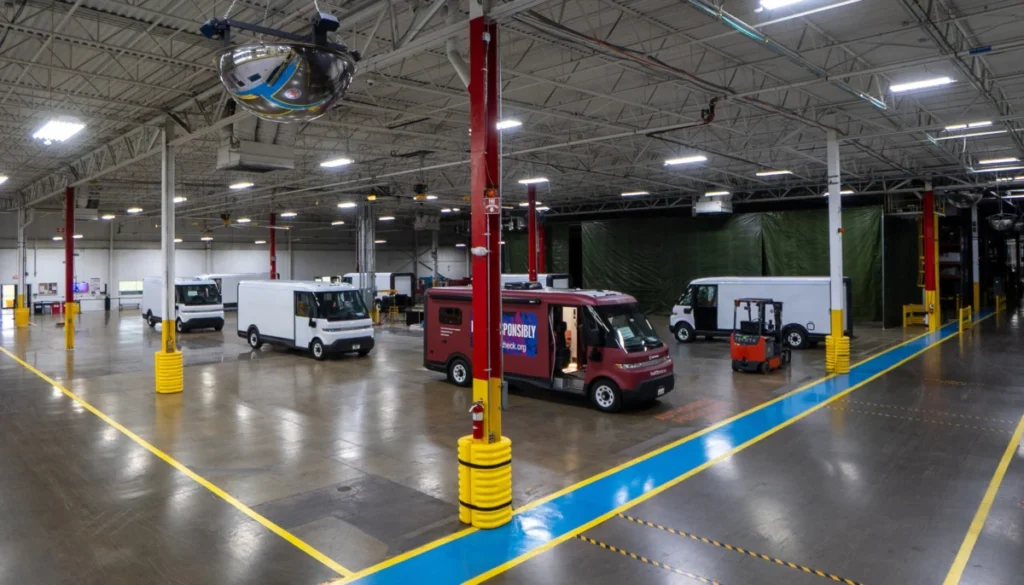
With the announcement of a $5 million seed round and the unveiling of a sprawling 50,000-square-foot manufacturing facility in the heart of Detroit, Grounded is officially moving past its origins. By decoupling its business model from specific fuel sources, the company is positioning its “Lego-like” modular workspace technology to serve a diverse array of sectors, from high-tech mobile medical units to commercial coffee shops.
The Evolution of a Startup: From Van Life to Fleet Logistics
Grounded’s origin story is rooted in the peak of the electric vehicle (EV) enthusiasm that characterized 2022. The company’s initial pitch was elegant: provide a modular, high-tech interior system that could turn commercial electric vans—such as the Ford E-Transit or the General Motors BrightDrop—into premium, sustainable recreational vehicles.
However, the automotive market rarely follows a linear trajectory. As the company matured, founder and CEO Sam Shapiro and his team identified a broader, more lucrative opportunity: commercial fleets. Small businesses, ranging from food and beverage distributors to mobile healthcare providers, were in desperate need of the same modular flexibility that campers required.
The transition was challenged by macroeconomic headwinds. The industry saw a series of high-profile setbacks: General Motors abruptly discontinued its BrightDrop electric delivery van line, and Ford scaled back its ambitions for a next-generation electric Transit. Simultaneously, the broader U.S. consumer and commercial interest in EVs began to plateau, hindered by charging infrastructure gaps and range anxiety. For many startups, these events would have signaled an existential threat. For Grounded, they served as a catalyst for a necessary evolution.
Chronology of a Pivot: Embracing Agnosticism
The path from a niche camper-van upfitter to a sophisticated fleet-customization firm has been marked by decisive strategic shifts.
- 2022 (The Foundation): Grounded launches in Detroit, focusing on the modular electrification of commercial vans to cater to the growing “van life” market.
- Late 2023 (The Catalyst): Following the cancellation of the BrightDrop program, Grounded officially acknowledges the limitations of an EV-only strategy. CEO Sam Shapiro publishes a manifesto clarifying that Grounded is not an "EV company" but a "workspace company."
- Early 2024 (The Infrastructure Push): The company begins planning for a new, larger facility to enable true vehicle-agnostic manufacturing, allowing for the integration of both internal combustion engines (ICE) and electric powertrains.
- October 2024 (The Capital Infusion): Grounded secures $5 million in seed funding, signaling investor confidence in their ability to scale regardless of powertrain trends.
- Current (The Scale Phase): The new 50,000-square-foot facility commences operations, signaling a transition from bespoke prototypes to industrial-scale production.
The Core Philosophy: The Application Layer as the Product
At the heart of Grounded’s success is a radical rethinking of what a “vehicle” actually is. In an industry obsessed with the chassis—the engine, the batteries, and the drivetrain—Grounded has successfully shifted the focus to the "application layer."
“Grounded is not an ‘EV company,’ nor is Grounded a vehicle company at all,” Shapiro wrote in a blog post that served as the company’s strategic turning point. “We build the smart, high-tech, modular workspace or living space on top of the chassis.”
This distinction is crucial. By focusing on the design, materials, power systems, and the proprietary "Grounded+" software, the company transforms a bare-bones van into a connected, functional unit. Whether that unit serves as a mobile command center for emergency services, a sterile environment for a mobile medical clinic, or a high-efficiency mobile cafe, the Grounded system remains the constant. This platform-agnostic approach allows the company to build on top of Ford’s combustion-powered Transit or Mercedes-Benz’s Sprinter, ensuring they remain immune to the volatility of any single manufacturer’s product roadmap.
Supporting Data and Investor Confidence
The recent $5 million seed round is a testament to the viability of this "chassis-agnostic" model. The round featured repeat investments from Also Capital and Chicago-based firm The 81 Collection. Joining them were the Michigan Outdoor Innovation Fund, Animal Capital, and a collection of SpaceX alumni—a group of investors known for backing companies that emphasize hardware engineering and vertical integration.
The market demand is clearly there. Grounded has already secured a roster of blue-chip and institutional clients. In the commercial sector, the company has worked with heavyweights like Colgate and Nokia. In the public health and medical sectors, organizations such as Wayne State University Medical and the Healthy Mothers, Healthy Babies Coalition of Hawaii have adopted Grounded’s modular solutions.
According to Nadia Meyer, Grounded’s Chief Product Officer, the company is seeing "notable growth" in the food and beverage sector and within public safety departments—areas where the ability to rapidly customize a fleet vehicle for a specific task is significantly more cost-effective than building custom vehicles from the ground up.
Official Responses: A Turning Point for Detroit
The opening of the new Detroit facility represents the most significant investment in the company’s history. Located in the heart of the American automotive industry, the plant is designed to handle the complexities of multi-powertrain integration.
“This new facility is a turning point for Grounded,” Sam Shapiro stated during the announcement. “We built this company to bring smart, modular electric vehicles to the businesses and institutions that keep our cities running. With this expansion, we can finally build at the scale our fleet customers need and bring our platform to an entirely new class of commercial vehicles.”
The facility will initially focus on scaling the core modular design business, with production capacity expected to ramp up significantly throughout the next year. By centralizing operations, Grounded aims to reduce lead times, improve quality control, and maintain the agility that has allowed them to survive when competitors struggled.
Implications: The Future of Modular Fleet Mobility
The implications of Grounded’s strategy for the wider transportation sector are profound. As fleet managers grapple with the slow adoption of electric vehicles and the ongoing reliability of traditional combustion engines, they require solutions that bridge the gap. Grounded provides that bridge.
1. Reducing Capital Expenditure
By allowing businesses to repurpose existing or easily acquired chassis, Grounded helps companies avoid the massive capital expenditure of commissioning custom, purpose-built vehicles. This is particularly relevant for startups and non-profits that operate on thinner margins.
2. Software-Defined Workspaces
The inclusion of "Grounded+" software suggests that the company is moving toward an Internet-of-Things (IoT) model for fleet management. If a vehicle can track its power consumption, climate control, and equipment usage in real-time, it becomes a data-generating asset rather than just a depreciating transport tool.
3. Resilience Through Diversity
By pivoting to include gas-powered vehicles and maintaining relationships with EV-focused startups like Harbinger, Grounded is hedging its bets against the uncertainty of the energy transition. They are effectively "future-proofing" their revenue stream. If the world goes electric, they are ready; if it remains reliant on internal combustion for the next decade, they are equally prepared.
4. Reinvigorating Detroit’s Manufacturing Heritage
Grounded’s commitment to staying in Detroit highlights a broader trend: the transformation of legacy manufacturing hubs into centers for modular, tech-forward hardware production. By utilizing the city’s existing supply chain and talent pool, Grounded is helping to sustain the local economy while simultaneously pushing the industry toward a more flexible, software-driven future.
Conclusion: A Blueprint for Resilience
Grounded’s journey from a niche van-life startup to a modular fleet leader offers a masterclass in corporate adaptability. By refusing to define themselves by the technology under the hood, they have successfully liberated themselves from the ups and downs of the EV market.
As they ramp up production in their new facility, the company is poised to become an essential layer in the infrastructure of the modern city. Whether it is a mobile veterinary clinic in a rural community or a high-tech command center in a bustling metropolis, Grounded’s modular, "Lego-like" system is proving that the most important part of the vehicle isn’t the engine—it’s the work that gets done inside.
With strong backing from investors, a clear mission, and a new facility designed for scale, Grounded is no longer just "the van company." They are the platform upon which the future of mobile commerce and essential services will be built. As the automotive industry continues to face the dual pressures of electrification and logistical optimization, Grounded’s flexible approach provides a blueprint that other hardware-focused startups would do well to study.