For decades, paleontologists have viewed underwater caves as both a treasure trove and a mystery. These submerged cavities, often hidden beneath the rugged limestone landscapes of regions like South Australia, serve as natural time capsules, preserving the skeletal remains of megafauna and modern animals alike. Yet, until now, the scientific community lacked a systematic way to interpret how these bones arrived, how they survived the crushing pressure of time, and what specific chemical or biological forces shaped them.
A groundbreaking study led by researchers at Griffith University has finally unlocked this "taphonomic code," providing a robust framework for reading the "fingerprints" left on bones by submerged environments. By meticulously analyzing skeletal remains from the depths of South Australia, researchers have transformed these dark, water-filled caverns from mere curiosity cabinets into high-fidelity records of the distant past.
The Science of Taphonomy: Decoding Skeletal Fingerprints
At the heart of the research, published in the journal PLOS One, is the field of taphonomy—the study of how organisms decay and become fossilized. While terrestrial taphonomy is well-understood, the processes occurring in underwater caves have remained elusive.
"By analyzing animal bones from two underwater cave systems in South Australia, we have revealed how different cave environments leave distinct preservation ‘fingerprints’ on skeletal remains," explains Meg Walker, a PhD Candidate at the Australian Research Centre for Human Evolution (ARCHE).
Working under the guidance of Professor Julien Louys, Director of ARCHE, Walker and her team utilized a multi-scalar approach to their investigation. They moved beyond mere visual inspection, employing a suite of methodologies that ranged from macro-scale spatial analysis to micro-level examinations of elemental composition and protein remnants trapped within ancient bone cells.
By comparing these submerged specimens with bones recovered from dry cave environments, the team identified the specific variables that influence bone degradation, such as light penetration, local micro-fauna, and water chemistry. The result is the first standardized interpretive framework that allows scientists to distinguish between natural deposition, environmental weathering, and biological colonization in underwater contexts.
Chronology of Discovery: From Modern Remains to Ancient Megafauna
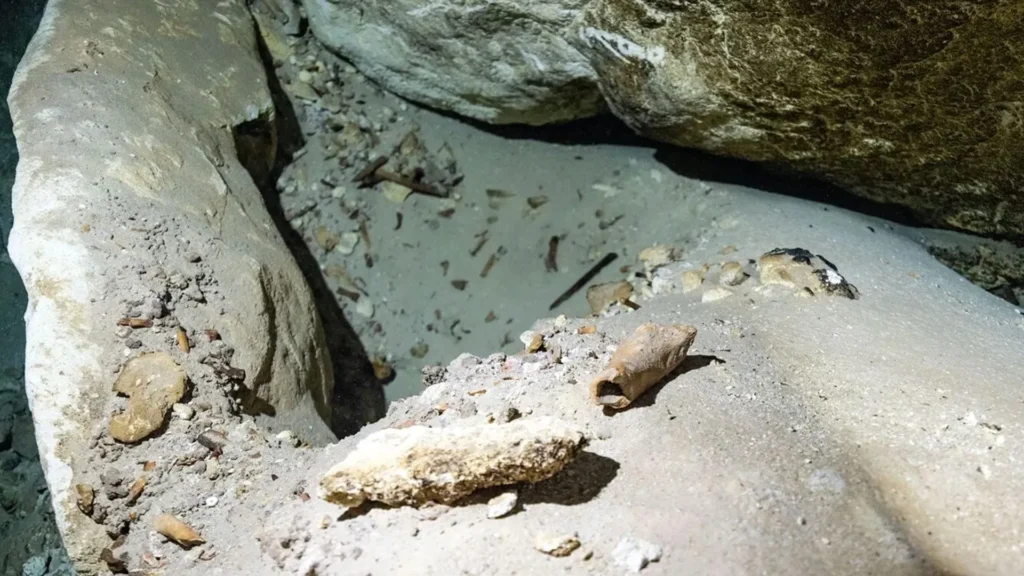
The research project focused on two primary sites near Mount Gambier: Green Waterhole and Gouldens Sinkhole. These sites were chosen not only for their geological significance but also for the diverse assemblage of fauna contained within them.
The Methodology of Recovery
The recovery process was a feat of specialized logistics. The team partnered with professional cave divers from the Cave Divers Association of Australia (CDAA), who navigated the complex, light-deprived passages of the sinkholes to retrieve samples.
The Temporal Scope
The collection included remains from a wide variety of species, both native to the Australian continent and introduced following European colonization. These included cows, sheep, pigs, rabbits, dingoes, kangaroos, emus, possums, quolls, and swamp rats. Some of these remains date back to the mid-19th century, coinciding with the establishment of Mount Gambier in the 1840s.
By studying these "modern" historical remains, the researchers created a baseline. Because the arrival of these animals is well-documented, the researchers could effectively calibrate their "clock," observing how bones behave over a known 180-year period. This historical data serves as a vital proxy for understanding how the fossils of extinct megafauna—animals that walked the earth tens of thousands of years ago—might have entered these caves and how they have fared since.
Supporting Data: Light, Algae, and the Midnight Zone
One of the most significant findings of the study is the role that light—or the total absence thereof—plays in the preservation of skeletal remains. The environment inside a submerged cave is not uniform; it is a gradient.
The Photic Zone
Near the entrance of these caves, where sunlight filters through the water column, the environment is biologically active. Here, researchers observed the growth of various algae and aquatic plants. These organisms do not merely inhabit the water; they colonize the bones themselves. As these organisms grow and eventually die, they leave behind specific chemical signatures and physical markings on the bone surface. These "photic signatures" allow researchers to determine if a bone spent its post-mortem existence near the cave entrance or if it was transported deeper into the cave by currents.
The Aphotic or "Midnight" Zone
In the depths of the caves, where sunlight never penetrates, the environment changes dramatically. Here, plants cannot survive, and the bones often remain in a state of near-pristine preservation. Without the influence of algae or the fluctuating temperatures found closer to the surface, the structural integrity of the bone is maintained for significantly longer periods.
Contrast with Dry Caves
When compared to terrestrial (dry) caves, the difference is stark. In dry caves, bones are subjected to a different set of destructive forces. Land-based bacteria actively consume the organic components of the bone, while plant roots—seeking water and nutrients—often grow into the caves, carving long, distinct grooves across the bone surfaces. The absence of these "terrestrial signatures" in the underwater samples provides a clear diagnostic tool for identifying the history of a fossil site.
Official Responses and Expert Perspective
The implications of this research have been met with enthusiasm by the broader archaeological community. Professor Julien Louys noted that the study bridges a critical gap in our understanding of fossilization processes.
"The ability to distinguish between different modes of bone accumulation is essential," Professor Louys stated. "When we find a megafauna fossil in a submerged context, we have previously had to guess at the environmental conditions that deposited it there. Now, we have a diagnostic toolkit that allows us to move from speculation to evidence-based reconstruction."
Meg Walker emphasized that the framework is designed to be accessible to global research teams. "This study has delivered the first framework for interpreting how megafauna fossils formed, survived, and changed in underwater caves," she said. "It will provide archaeologists and paleontologists worldwide with a powerful new tool for reconstructing past environments and histories in these challenging conditions."
The study’s publication in PLOS One marks a turning point in the field, moving away from purely descriptive research toward a predictive, systematic methodology.
Broader Implications for Global Paleontology
The framework developed by the Griffith University team has profound implications for how we view the history of the Australian continent and, indeed, the world.
Reconstructing Ancient Ecosystems
By applying this framework, scientists can now more accurately infer the environmental conditions that existed when megafauna were alive. If a bone is found with specific chemical markers indicating deep-water submersion without surface colonization, researchers can conclude that the cave environment remained stable and dark for millennia, protecting the specimen from the volatile changes occurring on the surface.
A Global Tool
While the study focused on South Australian sinkholes, the principles of the framework are universal. Submerged caves exist globally, from the cenotes of Mexico to the flooded cave systems of the Mediterranean. Researchers working in these regions can now adopt the same diagnostic criteria to analyze their local findings, ensuring a more standardized approach to the study of vertebrate site formation.
Preserving Our Heritage
Finally, this research underscores the fragility and importance of underwater caves as repositories of natural history. As climate change and human activity continue to alter water tables and cave stability, understanding the "biography" of a bone becomes even more critical. By decoding the history of these bones, we are essentially reading the diary of the planet, gaining insights into climate change, species extinction, and the evolution of the ecosystems that preceded our own.
As the research moves forward, the team at Griffith University plans to apply their framework to older, more enigmatic fossils. By peeling back the layers of chemical and biological history stored in these underwater graveyards, they hope to paint a clearer picture of the giants that once roamed the Earth—and the dark, submerged vaults that became their final resting places.