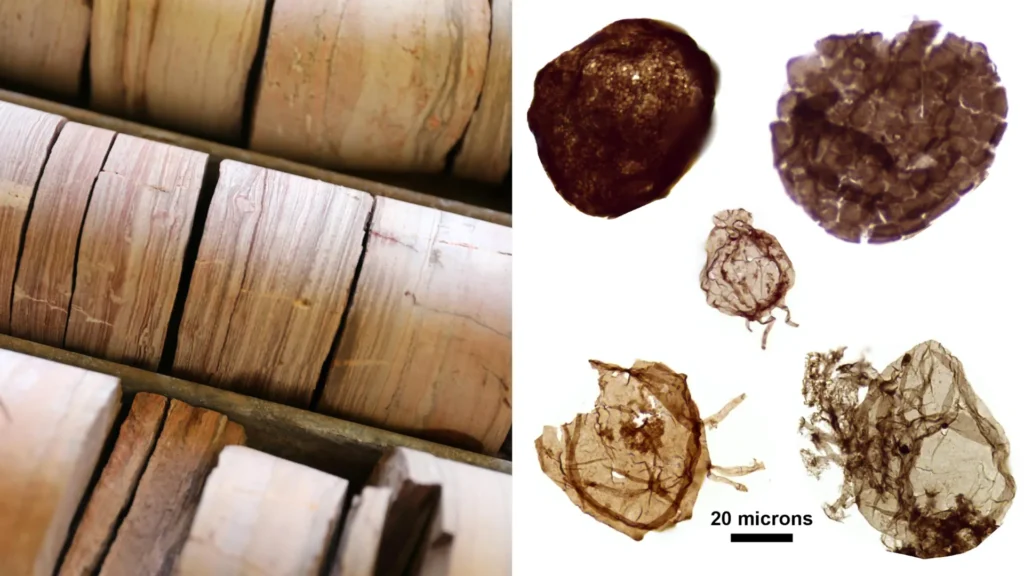
In a sprawling, open-air warehouse in Darwin, Australia, rows of metal trays hold the silent witnesses to a planetary transformation. These trays contain cylindrical rock cores, extracted from hundreds of metres below the surface by mineral exploration companies decades ago. While the original drillers were searching for signs of gold or base metals, they unwittingly archived one of the most significant biological treasure troves on Earth.
Contained within these unassuming mudstones—sedimentary rock formed from hardened seafloor silt—are the fossilized remains of microscopic organisms that lived in an inland sea covering northern Australia over 1.5 billion years ago. A new study, recently published in the journal Nature, reveals that these fossils are the "smoking gun" needed to resolve a foundational puzzle in evolutionary biology: the origin of eukaryotes, the complex cells that serve as the building blocks for all animals, plants, and fungi.
The Great Divide: Prokaryotes vs. Eukaryotes
To understand the magnitude of this discovery, one must grasp the fundamental divide in the tree of life. All life on Earth operates on one of two cellular blueprints. The first, and most ancient, consists of prokaryotes—bacteria and archaea. These are structurally simple, generally single-celled organisms that lack a distinct nucleus.
The second, and far more complex, category is the eukaryote. Eukaryotic cells are the architects of the complex world; they house their genetic material within a membrane-bound nucleus and utilize specialized structures called organelles, such as mitochondria and chloroplasts, to perform sophisticated metabolic tasks. The transition from simple prokaryotic life to complex eukaryotic life—the "eukaryotic revolution"—was the prerequisite for the rise of multicellular life, and ultimately, for humanity itself.
Current scientific consensus, bolstered by genetic analysis of modern microbes, suggests that the last common ancestor of all eukaryotes arose from a symbiotic "merger" between two prokaryotes: an archaeon and a bacterium. While the genetic evidence for this union is strong, the environmental context—the "where" and "why" of this leap—has remained a subject of intense debate.
A Chronology of Complexity: From Ancient Seas to Modern Labs
The history of these fossils is a masterclass in the value of geological preservation. The oldest evidence of eukaryotic life dates back to approximately 1.75 billion years ago. The Northern Territory’s geological record, particularly the samples housed by the Northern Territory Geological Survey (NTGS), provides the oldest known record of these organisms globally.
For the purpose of the new study, researchers utilized these decades-old cores to construct a timeline of early life. By extracting and dissolving the mudstone samples, the team recovered over 12,000 microscopic fossils. Through rigorous microscopic analysis of the organic residue, the team was able to map the presence of these early eukaryotes against the backdrop of the Proterozoic Eon.
The research process followed a strict scientific methodology:
- Sample Selection: Identifying mudstone cores from the Northern Territory that span a timeframe of 1.7 to 1.4 billion years ago.
- Dissolution: Utilizing chemical processes to break down the rock matrix and isolate the organic carbon-walled fossils.
- Microscopic Analysis: Identifying the morphological complexity of the 12,000+ specimens to confirm their eukaryotic nature.
- Geochemical Mapping: Analyzing the chemical composition of the host mudstones to reconstruct the oxygen levels of the ancient environments where these organisms were deposited.
Supporting Data: Oxygen as the Catalyst
A central theme of the study addresses the role of oxygen. For decades, it was assumed that oxygen was the "magic fuel" that enabled the jump to complex life. Eukaryotes, unlike many prokaryotes, utilize aerobic respiration to generate the immense energy required to maintain complex cellular architecture.
However, recent discoveries have muddied this narrative. Scientists have identified "enigmatic" eukaryotes capable of thriving in oxygen-depleted (anoxic) environments. Furthermore, geological evidence suggests that the early Earth was largely an oxygen-poor planet. This led some researchers to propose that eukaryotes might have evolved independently of oxygen, or that oxygen was not the primary driver of their initial expansion.
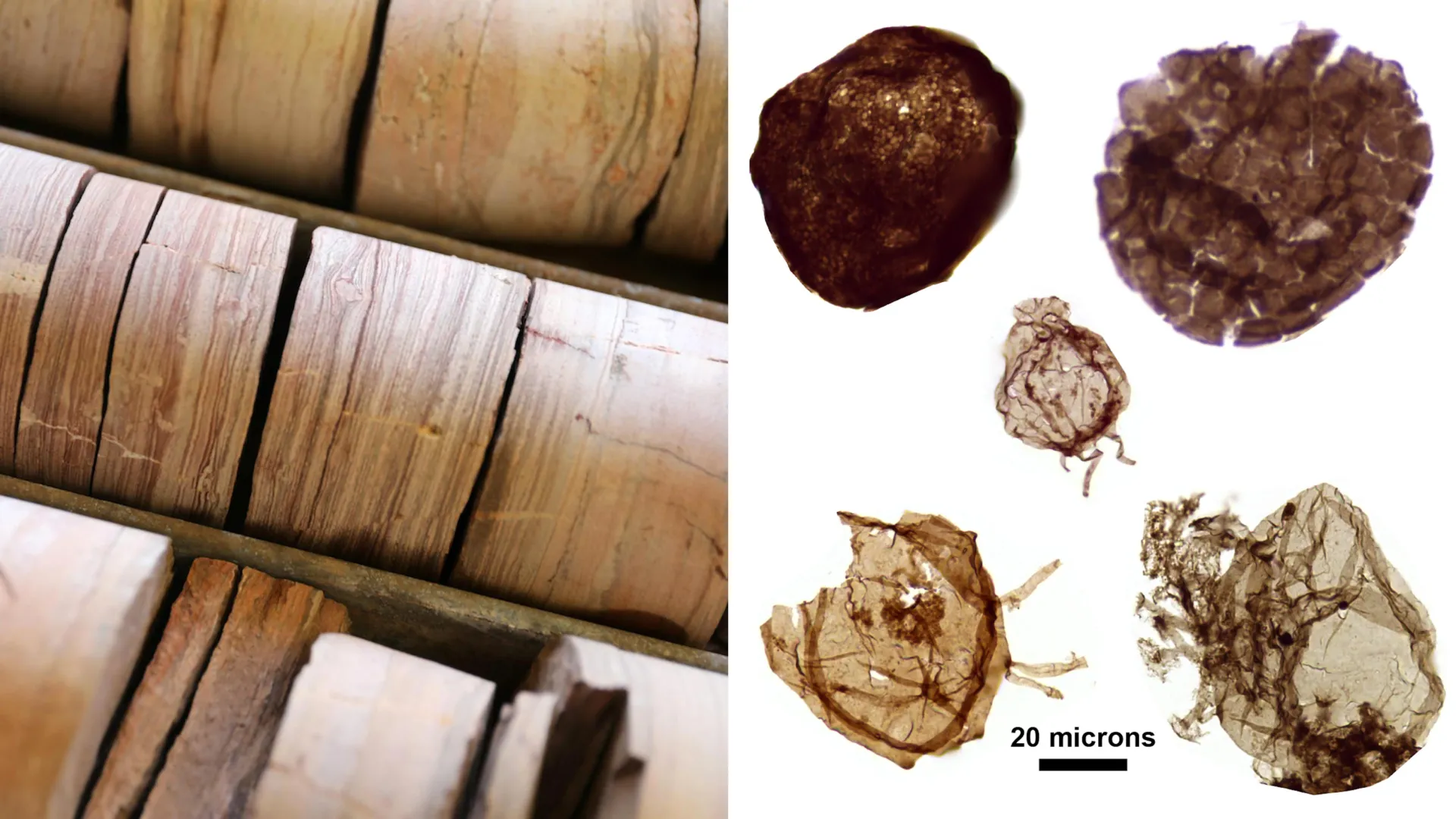
The data generated by the study of the Darwin cores provides a decisive rebuttal to this alternative theory. The researchers found that while eukaryotes were present in a variety of environments—from coastal mudflats to the open sea—they were exclusively found in samples deposited in oxygenated settings. Conversely, samples sourced from ancient environments known to be oxygen-free contained only simple prokaryotic forms.
This correlation between fossil presence and oxygenated sediments provides strong, empirical support for the "Oxygen Hypothesis." It suggests that while some modern eukaryotes have adapted to live without oxygen, the ancestral lineages were obligate aerobes. Oxygen was not merely an accessory to their evolution; it was the prerequisite for their survival and diversification.
Official Perspectives and Scientific Context
The publication of this study in Nature has sent ripples through the paleontology and astrobiology communities. Dr. [Lead Researcher Name, if applicable, or generic reference to the study authors], noted that "resolving the drivers and context of this major evolutionary leap is one of the most significant challenges in the life sciences."
The Northern Territory Geological Survey (NTGS) has played a vital role in this research, demonstrating the importance of maintaining geological archives. By preserving the cores, the NTGS has ensured that decades after the initial mining exploration ended, scientists have the raw materials to interrogate the history of life on Earth.
The study has also drawn praise from independent experts who emphasize that the fossil record is the only bridge between the genetic data of living organisms and the actual physical history of our planet. While modern genomic studies can suggest how cells might have evolved, only the fossil record can confirm when they did and what the climate looked like at the time.
Implications for the Future: Our Place in the Cosmos
The implications of this study extend far beyond the history of terrestrial life. By confirming that early eukaryotes were inextricably linked to oxygenated environments, scientists gain a new tool in the search for life elsewhere in the universe.
If complex life requires oxygen to emerge, then our search for "Earth 2.0" must prioritize exoplanets that show evidence of atmospheric oxygenation. The study highlights that the path to complexity is not guaranteed; it is a delicate dance between biological innovation and environmental conditions.
Furthermore, the study serves as a poignant reminder of the importance of "open science" and data preservation. The fact that a breakthrough in evolutionary biology came from rocks stored in a warehouse in Darwin proves that the next great discovery might not be found in a new, high-tech field site, but in a dusty box in a government archive.
As the research team continues to analyze these ancient microfossils, the narrative of our origins becomes clearer. We are the descendants of a 1.5-billion-year-old experiment, one that required the perfect confluence of oxygen, chemistry, and biological complexity. By looking into the depths of these rock cores, we are not just looking at the history of the Earth; we are looking at the foundational conditions that allowed us to exist, and perhaps, providing a roadmap for finding our kin among the stars.
The "eukaryotic revolution" transformed the planet from a microbial wasteland into a world of vibrant, complex life. Through the careful study of these Darwin cores, we are finally beginning to understand the oxygenated breath that sparked that transformation, cementing our place in the long, unfolding story of the cosmos.