By Editorial Staff
October 26, 2026
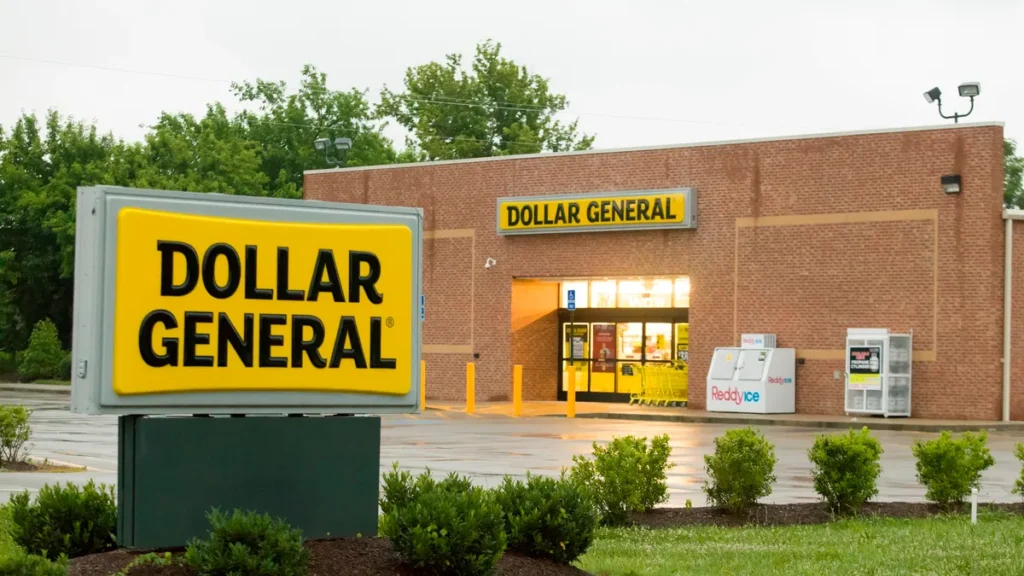
In a sweeping legal action that strikes at the heart of the "value-driven" retail model, the Federal Trade Commission (FTC), joined by a coalition of 20 U.S. states, has filed a formal lawsuit against discount retail giant Dollar General. The litigation alleges that the company has systematically engaged in deceptive pricing practices, consistently charging consumers more at the point of sale than the prices advertised on shelves, digital channels, and promotional circulars.
This legal confrontation arrives at a critical juncture for Dollar General, which has long positioned itself as a lifeline for budget-conscious shoppers in rural and underserved communities. However, the scale of the allegations suggests a systemic failure that threatens to undermine the company’s brand promise of affordability and trust.
The Core Allegations: A Breach of Consumer Trust
At the center of the complaint is the discrepancy between the price a consumer expects to pay and the final total rung up at the register. The FTC’s investigation, which draws on thousands of consumer reports and direct undercover operations, paints a picture of a retailer that has prioritized speed and volume over price accuracy, often at the expense of its most vulnerable clientele.
“Dollar General has betrayed the trust of millions of American consumers and imposed significant financial harm on communities and consumers who are already struggling to make their paychecks last,” said Christopher Mufarrige, director of the FTC’s Bureau of Consumer Protection.

The agency argues that the company’s business model relies on a "bait-and-switch" pricing architecture. By placing lower prices on shelf tags while configuring point-of-sale systems to ring up higher amounts, the retailer allegedly extracts excess profit from unsuspecting shoppers. The FTC also highlighted that the retailer’s register interfaces are designed in a way that makes it difficult for customers to verify the accuracy of their items in real-time, effectively obscuring the price hikes during the checkout process.
Chronology of the Investigation
The legal filing is the culmination of years of mounting concern regarding Dollar General’s store-level operations.
- January 2023 – March 2026: During this 15-month window, Dollar General received a staggering 29,000 complaints specifically related to "price honoring." Despite this high volume of internal red flags, the FTC alleges that the company failed to implement any meaningful policy shifts or technological updates to remediate the pricing inaccuracies.
- January 2026 – April 2026: Federal investigators conducted a series of undercover purchases at Dollar General locations across Ohio, Pennsylvania, Missouri, and Maryland. The findings were uniform and troubling: every single undercover purchase resulted in the consumer being charged more than the advertised price.
- January 16, 2026: In one notable instance cited in the complaint, an investigator visited a store in Ohio. Out of 58 items purchased, 13 were scanned at the register for a price higher than the one displayed on the shelf label—a failure rate of over 22%.
- October 2026: Following the conclusion of the undercover investigation and the synthesis of evidence—including internal, partially redacted corporate emails—the FTC and the 20-state coalition officially filed their complaint in federal court, charging the retailer with violations of the FTC Act and the Gramm-Leach-Bliley Act.
Supporting Data and Evidence of Systemic Failure
The FTC’s complaint is not merely based on anecdotal evidence. It includes internal corporate communications that suggest a corporate culture aware of these deficiencies yet unwilling to invest the resources required to rectify them.
The sheer volume of consumer complaints—nearly 30,000 in just over a year—indicates that the pricing issue is not isolated to a handful of poorly managed stores, but is instead a feature of the company’s wider operations. The undercover investigation further corroborates this, demonstrating that the pricing discrepancy is pervasive across multiple states, regardless of the store’s specific demographic or location.
For many shoppers, these discrepancies, while often amounting to only a few cents or dollars per item, represent a significant burden when aggregated across a full grocery basket. For a family living paycheck to paycheck—a demographic that makes up a core portion of Dollar General’s customer base—an extra $5 or $10 per trip is not a rounding error; it is a direct hit to their ability to purchase necessities.

Official Responses and Corporate Silence
As of the date of this report, Dollar General has maintained a stance of official silence. When reached for comment by industry analysts and news outlets, the company did not provide a statement regarding the specific allegations. This silence stands in stark contrast to the company’s recent performance-related public relations.
In August, during the company’s Q2 earnings call, CEO Todd Vasos was vocal about the company’s success, highlighting a 5.2% year-over-year jump in net sales to $11.3 billion. Vasos credited this growth to the retailer’s "mature store base" and its ability to act as a "unique competitive advantage" in rural markets.
The dissonance between the CEO’s pride in the store footprint and the FTC’s characterization of those same stores as centers of consumer deception is striking. While the company continues to tout its role in the American retail landscape, the legal pressure suggests that the "advantage" provided by its massive reach may be built on a foundation of regulatory non-compliance.
Implications: A Watershed Moment for Discount Retail
The lawsuit carries profound implications for the discount retail sector, which has been under increased scrutiny as inflation and economic uncertainty continue to drive more middle-income shoppers toward dollar-store chains.
1. Regulatory Scrutiny
This case signals a more aggressive posture from the FTC toward brick-and-mortar retail practices. By partnering with 20 states, the FTC is demonstrating a coordinated effort to tackle local-level deceptive practices that might otherwise fly under the radar of federal oversight.

2. Operational Overhaul
If the court finds in favor of the FTC, Dollar General will likely be forced to undergo a massive operational overhaul. This would include mandatory investments in more transparent POS systems, improved inventory management technology, and, potentially, the appointment of a federal monitor to ensure that shelf prices match register prices.
3. Impact on Brand Equity
Dollar General’s brand is built on the promise of "value." If that promise is proven to be a facade, the company risks losing the trust of its core customer base. In an era where consumers are increasingly tech-savvy and price-sensitive, the loss of this trust could have long-term consequences for the company’s market share, particularly as competition from other discount retailers and e-commerce platforms intensifies.
4. Legal Precedent
This litigation sets a significant precedent for other retailers. It serves as a warning that internal communications regarding consumer complaints can and will be used as evidence of "willful blindness" or "deceptive conduct." Retailers that receive thousands of complaints about their pricing are now on notice that they cannot simply ignore these issues while claiming to be "customer-focused."
Conclusion: The Path Forward
The lawsuit against Dollar General is more than a dispute over the price of a household item; it is a fundamental challenge to the integrity of the modern retail experience. As the legal process unfolds, the retail industry will be watching closely to see if the courts impose stringent penalties or mandate sweeping changes to how discount stores manage their pricing data.
For the millions of Americans who rely on these stores for their daily needs, the outcome of this case will be a test of whether the law can effectively protect them from the deceptive, often invisible, erosion of their limited financial resources. As the FTC stated, "Dollar General has for years engaged in deceptive conduct that harms the very consumers it claims to serve." The coming months will determine if the company is forced to pivot toward a more transparent and honest model of operation.