

The retail landscape is currently defined by a duality of rigorous corporate restructuring and whimsical seasonal experimentation. As we move deeper into the final quarter of the year, major players are trimming leadership to streamline operations while simultaneously doubling down on physical footprints and creative, albeit unconventional, marketing ploys to capture the consumer imagination. This week’s developments offer a snapshot of a sector that is simultaneously tightening its belt and reaching for new, unconventional revenue streams.
1. Corporate Realignment: Wolverine World Wide’s Strategic Shift
The most significant organizational news of the week centers on Wolverine World Wide, the footwear and apparel giant, which has moved to simplify its executive structure. Effective Monday, the company eliminated the role of "Active Group President."
The Departure of Susie Kuhn
The elimination of this position resulted in the departure of Susie Kuhn, who had been appointed to lead the division just under a year ago, in October 2024. Kuhn, a veteran in the retail space who previously served as the president of Foot Locker’s Europe, Middle East, and Africa (EMEA) operations, was tasked with overseeing the "Active Group"—a portfolio encompassing Merrell, Saucony, Sweaty Betty, and Chaco.
Under her brief tenure, Kuhn was responsible for brand strategy, go-to-market execution, and the overall commercial performance of these high-stakes brands. According to an SEC filing, her responsibilities have been redistributed across the broader organization. This move is indicative of a wider trend among mid-to-large cap retailers looking to flatten management hierarchies to reduce overhead and improve communication speed in an increasingly volatile market.
Supporting Financial Data
Despite the leadership change, the Active Group has been a point of relative strength for the company. In the most recent fiscal quarter, the Active Group reported a revenue increase of 9.3%, bringing its quarterly intake to $388.4 million. Total company revenue also saw a positive trajectory, rising 6.8% to $506.4 million. The decision to consolidate leadership, therefore, appears to be a proactive measure aimed at optimizing the current momentum rather than a response to immediate fiscal distress.
2. The Physical Frontier: Primark’s U.S. Expansion Strategy
While some retailers focus on administrative pruning, others are aggressively chasing physical growth. Irish apparel titan Primark is accelerating its U.S. expansion, marking a significant milestone this week with the opening of its second store in Georgia.
Chronology of Expansion
Primark’s entry into the Georgia market has been swift. Following the debut of its Lawrenceville location earlier this month, the retailer opened its second state location at the Augusta Mall this past Thursday. This addition brings the company’s total U.S. footprint to 48 stores.
Official Responses and Market Implications
"Primark is excited to have such a busy month in Georgia as it opens not one but two new stores in the state," said Kevin Tulip, president of Primark U.S. "We know that Primark’s outstanding value is more important than ever to today’s consumers, and we’re looking forward to welcoming customers in the culturally rich and historic city of Augusta."
The data supports this confidence. Primark’s U.S. sales have grown 14% year-to-date, with a 16% jump in the third quarter alone. By focusing on value-driven retail in suburban and regional hubs, Primark is effectively capturing the mid-market consumer who remains cautious about discretionary spending but still desires trend-conscious fashion.
3. Retail Therapy: The "Spooky" Marketing Phenomenon
As the calendar turns toward autumn, the retail industry has fully embraced the "spooky season." However, this year, brands are moving beyond traditional candy and decor, venturing into the bizarre to generate social media buzz.
Culinary Oddities
The competition for seasonal attention has reached a fever pitch. Hidden Valley Ranch has introduced "Spooky Ranch," a black-tinted version of its flagship dressing. The product achieves its dark hue through a blend of fruit juice and cocoa powder, packaged in a glow-in-the-dark bottle. While the aesthetic is polarizing, the strategy is clear: creating a "must-post" item for social media.
Cup Noodles has taken the concept even further, launching "Vampire Noodles." This garlic and chicken-flavored meal turns a vivid red when heated, aiming to capture the Halloween demographic. In a bold marketing move, they have partnered with Titan Casket to offer a custom, co-branded collector’s casket. Retailing for $4,000, it is a high-concept piece of marketing that turns a routine lunch item into a viral sensation.
Implications of Viral Marketing
These campaigns represent the "gamification" of retail. By launching limited-edition, strange products, these brands ensure they remain part of the cultural conversation, even if the products themselves are niche. For consumers, these items act as "retail therapy," offering small, affordable moments of fun in an otherwise serious economic environment.
4. Heritage and Legacy: J. Crew’s 40th Anniversary
Amidst the chaos of modern retail, heritage brands are leveraging nostalgia to drive engagement. J. Crew is currently celebrating the 40th anniversary of its iconic Barn Jacket, a piece of apparel that has transcended its utilitarian roots to become a fashion staple.
The Portrait Campaign
J. Crew’s celebration is grounded in a massive, community-focused campaign featuring 160 individuals photographed across major U.S. cities, including New York, Los Angeles, and Austin. The campaign aims to showcase the jacket’s versatility and longevity.
"For 40 years, the Barn Jacket has moved across wardrobes, generations and communities without ever feeling fixed in one place or moment," said Chief Marketing Officer Julia Collier. The current collection features 29 distinct styles for men, women, and children, priced between $98 and $898. This strategy of "elevating the classic" allows the retailer to maintain a high price point while leaning on the emotional equity built over four decades.
5. Market Analysis: The Michael Kors Conundrum
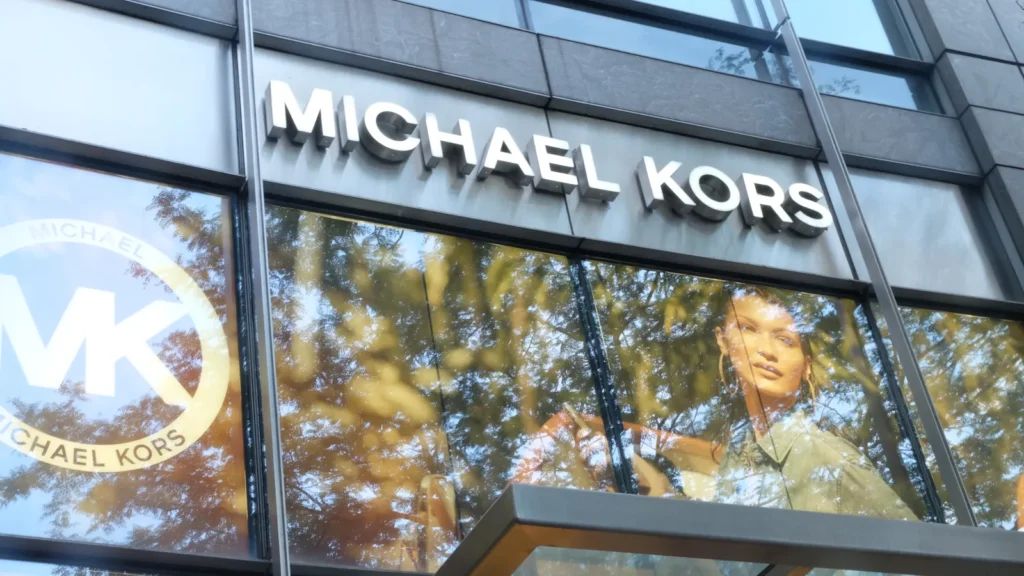
Perhaps the most pressing question in the luxury sector right now is the future of Michael Kors. As a cornerstone brand within the Capri Holdings conglomerate, Michael Kors has struggled to maintain its relevance in a shifting luxury landscape.
Performance and Waning Brand Heat
The brand’s recent performance has been sobering, with sales falling over 7% in the latest quarter and operating income seeing a sharp decline. Analysts, including those at Wells Fargo, have pointed to a significant drop in social media engagement and "brand heat."
The challenge for Michael Kors is structural. Trends have moved away from the logomania of the early 2010s, and the rise of the luxury resale market has saturated the consumer base with pre-owned, lower-priced options. UBS analysts suggest that the brand is unlikely to return to the healthy mid-single-digit growth it once enjoyed without a radical pivot in strategy.
Implications: Is a Sale Imminent?
The market is abuzz with speculation that Capri Holdings may look to divest the brand. Reports from Women’s Wear Daily indicate that there is investor interest in acquiring Michael Kors. This follows a major portfolio shift for Capri, which sold Versace to Prada for over $1 billion late last year.
For the retail industry, the potential sale of Michael Kors represents the end of an era for the "accessible luxury" model. Should a deal move forward, it will signal a broader consolidation of the luxury market, where conglomerates are shedding underperforming assets to focus on brands with higher growth potential, such as Jimmy Choo.
Conclusion: The Outlook for the Season
As we look toward the remainder of the year, three distinct themes emerge:
- Operational Efficiency: Companies like Wolverine World Wide are signaling that the era of "growth at any cost" is over, replaced by a focus on lean, agile leadership structures.
- The Physical Comeback: Despite the digital shift, retailers like Primark are proving that the right value proposition can still drive significant foot traffic to physical storefronts.
- The Engagement Economy: From "Spooky Ranch" to J. Crew’s 40th-anniversary portraits, successful brands are those that can weave their products into the cultural narrative, using social media as a primary driver of brand equity.
The retail sector remains a high-stakes environment where the ability to balance heritage with innovation—and the courage to divest underperforming assets—will determine the winners of the coming fiscal year. The coming months will likely see further consolidation, more viral product launches, and an ongoing battle for the consumer’s wallet in an increasingly fragmented market.



