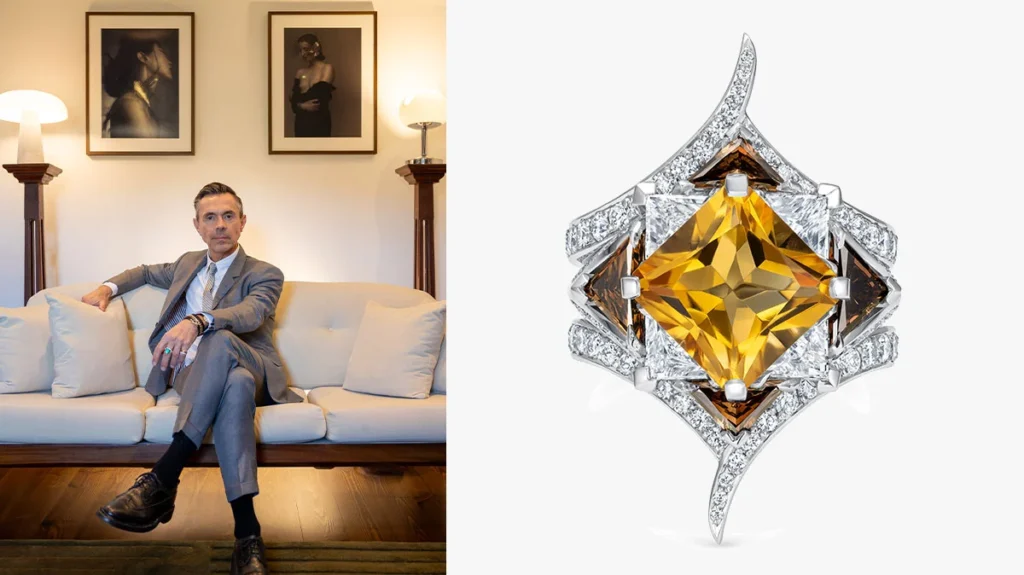
The Return of Shaun Leane: Inside ‘12’, the Master Jeweler’s Ultra-Rare Bespoke Renaissance
By
•
October 11, 2026
Following the collapse of his eponymous commercial brand and a subsequent period of creative recalibration, renowned British jeweler Shaun Leane has re-emerged on the global stage. His latest venture, a radically scaled-back studio titled 12, abandons mass-market ambitions in favor of ultimate rarity: producing just a dozen commission-only works of wearable art and sculpture per year.
The transition marks an intentional departure from commercial high-volume fine jewelry toward hyper-exclusive artisanal craft. Leane—famed for his genre-defying runway collaborations with Alexander McQueen and bespoke commissions for British royalty—has stripped away corporate infrastructure to re-establish an intimate dialogue between patron, artisan, and raw material.
Main Facts: The Architecture of ‘12’
The core premise of Leane’s new venture is defined by radical restraint:
Production Limit: Exactly 12 individually commissioned, one-of-a-kind creations are accepted and executed each calendar year.
Three Curatorial Pillars:
Fine Jewelry: Ranging from geometric modernism and historical Rococo motifs to classical high jewelry.
Monumental Sculptures: Bold, boundary-pushing wearable body architectures that defined his runway career.
Objets d’Art: Sculptural masterworks and private or civic public installations.
Artisanal Ecosystem: Work is produced in collaboration with independent stone cutters, goldsmiths, silversmiths, and specialists across the United Kingdom.
Holistic Presentation: Each finished piece is housed within a dark-green lacquered case, custom-built over months by a master box-maker in Greenwich, fitted with an individually hallmarked pure-silver plaque bearing the piece’s edition number and Leane’s signature.
       ┌─────────────────────────────────────────────────────────────┐
       │                      '12' BY SHAUN LEANE                    │
       │                   Annual Maximum: 12 Pieces                 │
       └──────────────────────────────┬──────────────────────────────┘
                                      │
         ┌────────────────────────────┼────────────────────────────┐
         ▼                            ▼                            ▼
   FINE JEWELRY              BODY SCULPTURE               OBJETS D’ART
 Geometric, Rococo, &       Avant-garde wearable       Civic monuments &
  classical fine pieces      architectural forms     bespoke collector art
Chronology: A 44-Year Journey Through Rebellion and Reinvention
1980          1984           1992              1999              2019          2024          Present
  │             │              │                 │                 │             │              │
Apprentice    Asprey       Alexander       Namesake brand    Princess      Administration   Launch of
at age 14     craftsman    McQueen era     founded;          Beatrice      and brand        '12' Atelier
at Hatton     for Royal    collaboration   Isabella Blow     engagement    departure
Garden        Family       begins          commission        ring
The Hatton Garden Foundations (1980–1991)
Leane’s journey began in London’s historic jewelry quarter, Hatton Garden. Leaving formal education at age 14, he entered a traditional seven-year apprenticeship under English master craftsmen. By 18, he was producing high-classical diamond suites and antique restorations for Asprey, manufacturing heirlooms destined for private collections and members of the British royal family. This traditional schooling granted him mastery over Victorian, Edwardian, and Art Deco metalwork.
The Alexander McQueen Vanguard (1992–2010)
In the early 1990s, an encounter with a young Lee Alexander McQueen altered the course of modern fashion. McQueen challenged Leane to apply his technical precision to non-traditional materials and silhouettes.
Working with silver, base metals, and aluminum, Leane engineered provocative runway objects, including:
The silver thorn crowns and jaw earrings for McQueen’s earliest presentations.
The Coiled Corset (Autumn/Winter 1999–2000, The Overlook): An aluminum torso piece fitted rib-by-rib directly to the model.
The 1997 brass neck coil designed for singer Björk’s Homogenic album cover, realized alongside McQueen and photographer Nick Knight.
Commercial Growth and the Corporate Crucible (1999–2024)
Leane established his namesake house, Shaun Leane Jewellery, in 1999, spurred by an inaugural commission from fashion icon Isabella Blow. Over the next two decades, the house expanded into global wholesale, boutique retail, and high-profile private commissions—including the bespoke engagement ring and wedding band for Princess Beatrice in 2019.
However, rapid scale brought operational strain. Leane found himself managing extensive distribution networks, inventory cycles, and 120-hour workweeks. In May 2024, Shaun Leane Jewellery entered administration amid broader retail headwinds in the luxury market. By August 2024, Leane severed ties with his namesake corporate entity, reclaiming full independence.
Supporting Data: Analysis of the Debut Commissions
The inaugural pieces under the 12 banner illustrate the studio’s blend of gemological rarity, sculptural engineering, and historical reference points.
Debut Collection Breakdown
Edition
Piece Title
Materials & Gemstones
Distinguishing Design Features
No. 2 / 12
The Dafodil Ring
Platinum; central citrine; white and cognac diamonds
Removable architectural platinum-and-diamond jacket sculpted in Leane’s signature thorn motif.
Meditative chromatic gradient achieved through traditional hot enameling techniques.
                       DAFODIL RING ARCHITECTURE

                   [  Central Citrine Setting  ]
                                 │
                 ┌───────────────┴───────────────┐
                 ▼                               ▼
       [ Cognac Diamond Halo ]         [ White Diamond Halo ]
                 │                               │
                 └───────────────┬───────────────┘
                                 │
               [ Detachable Platinum Thorn Jacket ]
               (Engineered for alternate wear styles)
Time as a Material Component
A key distinction of the project is the deliberate inflation of production time. Rather than seeking manufacturing efficiencies, 12 relies on extended build schedules.
The presentation packaging exemplifies this approach:
Every box is produced by a single artisan based in Greenwich, London.
Cases undergo months of specialized lacquer application, curing, and polishing.
Interiors are fitted by hand around the specific geometry of the commissioned jewel.
Each piece is completed with a solid silver, hand-engraved hallmark plaque.
Designer Philosophy: Countering the Acceleration of Luxury
The creation of 12 stems from Leane’s personal reflection following years of commercial strain and the passing of his father after a prolonged illness. The designer has been vocal about how modern corporate pressures dilute the creative process.
"Building a brand and running a brand takes all the fun out of it, and it takes on a whole new world. For me, 12 is about creating these beautiful one-off pieces, these unique pieces where I have time to breathe. And when an art form has time to breathe, it can evolve."
— Shaun Leane
Leane also addresses how digital platforms have altered the reception of high craft, pointing to the fleeting nature of contemporary fashion culture:
"It became very clear that there was actually a bigger point to it, and it was actually pointing out something quite important. It’s just the speed that we are going. I’ve gone back to my authentic self of what I truly love about my craft or my industry: the process of making, the connection between me and the collector, and the process of making it with a group of shared artisans from scratch to finish."
Reflecting on past milestones—such as the Homogenic cover image remaining on global billboards for an entire year—Leane argues that true artistic impact requires patience from both maker and audience:
"There’s no light without shadows. It’s the balance."
Strategic Implications for the High Jewelry Market
Leane’s return through an ultra-scarce model mirrors broader shifts across the upper tiers of luxury jewelry, art collecting, and independent horology.
As major luxury conglomerates increase retail prices while maintaining high production volumes, high-net-worth collectors are increasingly seeking out genuine exclusivity. Limiting output to 12 pieces per year insulates the work from commercial dilution, placing the output closer to private fine-art commissions than traditional luxury retail.
2. Preservation of Heritage Craft
Modern jewelry manufacturing increasingly relies on 3D printing and automated stone-setting. By contrast, Leane’s decentralized workshop model preserves endangered technical disciplines across London:
Traditional vitreous enameling,
Hand lapidary work and custom gem faceting,
Classical goldsmithing and complex articulation,
Bespoke, non-industrial box-making and leathercraft.
3. Collector Dynamics and Secondary Market Impact
Given Leane’s 44-year career, his institutional presence in major museums (including London’s Victoria and Albert Museum and New York’s Metropolitan Museum of Art), and a private client network spanning royalty, fashion icons, and contemporary art patrons, demand for these 12 annual slots will far exceed capacity.
By stepping away from commercial corporate manufacturing and returning to the bench, Shaun Leane’s 12 offers a blueprint for how legacy master jewelers can protect their creative voice and technical heritage in an era of industrial luxury.