

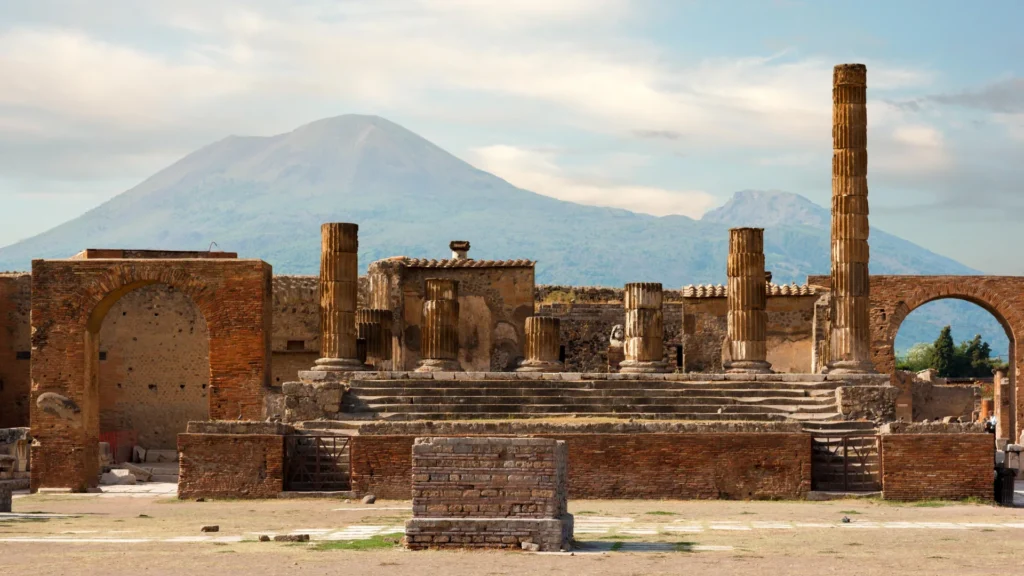
Nearly two millennia ago, the sky over the Bay of Naples turned to ash. As Mt. Vesuvius erupted in 79 CE, it entombed the bustling Roman cities of Pompeii and Herculaneum, effectively freezing a moment in time for future generations. Among those who bore witness was Pliny the Younger, whose detailed letters documenting the catastrophe served as a primary historical source for centuries.
Today, that ancient tragedy is serving a new, scientific purpose. Researchers from the Berkeley Geochronology Center (BGC), UC Berkeley, and the University of Padua have utilized the historical benchmark of the Vesuvius eruption to achieve a landmark advancement in geochronology. By calibrating the argon-argon (Ar-Ar) dating method against the precise historical date of August 24, 79 CE, scientists have significantly refined the "radioactive clock" used to date everything from the formation of the Earth to the extinction of the dinosaurs.
The Science of the "Radioactive Clock"
Geochronology—the science of determining the age of rocks, fossils, and sediments—relies on the predictable decay of radioactive isotopes. Argon-argon dating is one of the most robust tools in this field. It is based on the radioactive decay of potassium-40 into argon-40.
Under normal conditions, argon-40 is a gas that escapes from molten magma. However, once that magma cools into volcanic rock, the gas becomes trapped within the mineral structure. As time passes, the potassium-40 trapped within the rock decays into argon-40 at a constant rate. By measuring the ratio of these two isotopes, geologists can calculate how long ago the rock cooled.
"If you want to put together the eruptive history of a volcano in relatively recent time, precision and accuracy really count," explains Paul Renne, director of the Berkeley Geochronology Center and lead author of the study, which was recently published in Science Advances. "The study shows that you can achieve that kind of highly useful precision and accuracy into the historical realm."
Chronology of a Scientific Breakthrough
The path to this breakthrough was decades in the making, bridging the gap between ancient history and nuclear physics.
- 1997: The Initial Prediction: Researchers at the BGC conducted an initial argon-argon analysis of sanidine minerals from Vesuvius. At the time, they posited that with better samples and improved technology, they could eventually reduce the uncertainty of their dating method to below 1%.
- 1998: The Oplontis Discovery: Co-author Andrea Marzoli of the University of Padua collected pristine pumice samples from Oplontis, a Roman settlement buried by the same eruption. These samples were unique: they were richer in potassium and represented the earliest material ejected from the volcano. These samples were archived, waiting for the technology to catch up to their potential.
- 2020–2024: The Analytical Push: A team of graduate students and fellows—including Caroline Hasler, Anthony Fuentes, and Andy Tholt—returned to the 1998 samples. Utilizing advanced mass spectrometry and updated neutron irradiation methods, they re-analyzed the sanidine.
- 2025: The Calibration: The team finalized their results, reporting that their Ar-Ar measurements placed the eruption at 1,938 ± 13 years before the 2025 analysis. Given the historical record, the minerals were 1,946 years old. This represents a precision of 0.7% and an accuracy of 0.4%—a triumph of modern analytical science.
Supporting Data: Why the Earliest Pumice Matters
The success of the experiment hinged on the unique geology of Vesuvius. Magma chambers within stratovolcanoes are rarely homogenous; they are stratified. Heavier elements like iron and magnesium concentrate near the base of the chamber, while lighter, more soluble elements—such as potassium—tend to concentrate near the top.
Because the eruption of 79 CE was explosive, it emptied the magma chamber in a sequence. The potassium-rich magma at the top was the first to be ejected, settling at the bottom of the resulting debris field. By specifically targeting these early-ejected samples from Oplontis, the researchers minimized the variables that often introduce noise into radiometric dating.
Furthermore, graduate student Caroline Hasler meticulously cross-referenced historical numismatic evidence to solidify the 79 CE date. While some historians have debated a later autumnal date for the eruption based on coins found in Pompeii, Hasler’s analysis of Roman minting patterns suggested the coins were minted earlier, confirming the traditional August timeframe. This provided the "hard" historical constraint necessary to calculate the half-life of potassium-40 with unprecedented reliability: 12.044 billion years (± 0.088 billion), doubling the precision of the previously accepted value derived solely from nuclear physics.
Official Perspectives and Expert Insight
The implications of this research extend far beyond the slopes of Vesuvius. For Paul Renne, the project is a testament to the power of interdisciplinary cooperation. "It was really just a combination of better samples, instrumental advantage, and a more concerted effort. All of those things came together," Renne remarked.
The study also highlights the role of Bill Cassata, who played a critical role in developing the analytical strategy. By integrating a Bayesian statistical scheme, the team has begun the process of "intercalibrating" the world’s two most important geochronometers: argon-argon dating and uranium-lead dating.
"They came up with a Bayesian scheme… to intercalibrate these two most important geochronometers that we have, which have not been giving us consistent results over the years," Renne noted. By creating a unified mathematical framework, researchers can now reconcile disparate data sets that have historically caused confusion in the geologic record.
Implications for Earth’s Past and Future
The refinement of the argon-argon clock has profound implications for multiple fields of study:
1. Assessing Volcanic Hazards
Many of the world’s most dangerous volcanoes, including those threatening the Naples metropolitan area, the Valley of Mexico, and Yogyakarta in Indonesia, require accurate eruptive histories to predict future activity. This new level of decadal accuracy allows geologists to map the "tempo" of volcanic activity with greater confidence, helping authorities assess long-term risks to millions of residents.
2. Resolving Geologic Causality
Precision is vital when attempting to link cause and effect in deep time. A decade ago, Renne used Ar-Ar dating to link the Chicxulub asteroid impact to the mass extinction of non-avian dinosaurs. By showing that the impact and massive volcanic activity in India occurred within a narrow window of time, he helped prove that a "one-two punch" caused the extinction. Higher precision in dating methods allows scientists to shrink these temporal windows, making it easier to confirm or disprove theories about what triggers global cataclysms.
3. A Unified Dating Standard
Perhaps the most ambitious implication of the research is the potential to unify multiple dating methods. Argon-argon dating is now being positioned as a "standard" or "calibrant" for other methods, including carbon-14 dating for organic materials (used for the last 55,000 years) and uranium-lead dating (used for billions of years). By using a consistent mathematical approach across these methods, the scientific community is moving toward a single, coherent timeline of Earth’s history.
Conclusion: The Legacy of Pliny
The work funded by the National Science Foundation, the Ann and Gordon Getty Foundation, and the Berkeley Geochronology Center represents a rare intersection of the humanities and the hard sciences. Pliny the Younger could not have known that his letters would one day provide the key to calibrating the radioactive clocks of the 21st century.
As we continue to refine our understanding of Earth’s history, the lessons of Vesuvius remain as relevant today as they were in 79 CE. Through the careful, meticulous work of modern geologists, the dust of that ancient eruption has been transformed into a lens through which we can view the entirety of our planet’s timeline with newfound clarity.



