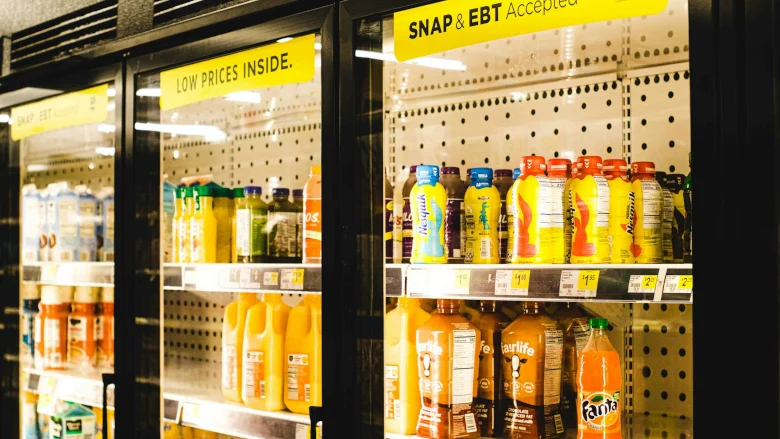
In a chilling demonstration of how digital vulnerabilities can manifest as physical disasters, hundreds of supermarkets across France have fallen victim to a targeted cyberattack that weaponized refrigeration systems. By exploiting legacy software in Danfoss controllers, malicious actors remotely manipulated temperatures, causing widespread food spoilage and creating genuine fire hazards.
The incident, which has prompted an immediate investigation by France’s National Cybersecurity Agency (ANSSI) under the direction of Prime Minister Sébastien Lecornu, marks a significant escalation in the threat landscape. Rather than seeking to siphon financial data or encrypted records, the perpetrators focused on "kinetic" damage—using the internet to turn industrial cooling units into heating elements.
The Mechanics of the Attack: Turning Chillers into Hazards
The breach was not characterized by complex, state-sponsored malware or zero-day exploits. Instead, it was a triumph of low-effort, high-impact exploitation of "low-hanging fruit."
According to security researchers, the attackers leveraged the public-facing nature of industrial controllers. By scanning the internet for devices using outdated, end-of-life (EOL) firmware and weak or default authentication protocols, they were able to gain administrative access to the refrigeration networks of major retail chains.
Once inside, the hackers did not need to deploy custom code to damage the facilities. They simply accessed the "defrost cycle" functionality inherent to the Danfoss controllers. By overriding safety parameters and forcing these cycles to run indefinitely, the attackers effectively transformed industrial-grade refrigeration units into high-heat sources. In some instances, internal temperatures soared to 122 degrees Fahrenheit (50 degrees Celsius), leading to the total loss of perishable inventory and, in several documented cases, sparking localized fires that threatened the structural integrity of the stores.
Chronology of the Breach
The discovery of the campaign began with the proactive work of independent cybersecurity researchers who were monitoring the digital footprint of industrial control systems (ICS).
- Pre-Discovery: Over several months, thousands of Danfoss controllers were left exposed to the public internet, many running firmware versions that had long been unsupported by the manufacturer.
- The Identification: On Monday, Baptiste Robert, CEO of the security firm Predicta Lab, publicly disclosed that he had identified 2,752 Danfoss systems exposed online. Of these, 1,590 were geolocated within France, signaling a massive, localized attack surface.
- The Escalation: Shortly after the identification of these exposed nodes, reports began surfacing from French retailers regarding mysterious malfunctions in their cold-chain infrastructure. Managers reported sudden spikes in power consumption, alarms triggered by high-temperature readings, and the smell of electrical burning.
- Official Intervention: As the pattern became undeniable, the French government intervened. Prime Minister Sébastien Lecornu formally tasked ANSSI with identifying the extent of the compromise and securing the nation’s retail supply chain.
Supporting Data: The Rising Tide of Kinetic Cyberattacks
The French supermarket incident is a localized manifestation of a much broader, global trend. Security experts warn that the transition from "data-focused" cybercrime to "physical-impact" cybercrime is accelerating.
John Gallagher, Vice President at Viakoo, notes that the shift toward ransomware and sabotage in Operational Technology (OT) and Internet of Things (IoT) environments increased by 57% in the last year alone. "This continues an alarming trend of using cyberattacks not for data theft, but to create physical kinetic damage," Gallagher stated.
The speed at which the attackers operated underscores the vulnerability. Using automated scanning tools—such as Shodan, a search engine for internet-connected devices—the perpetrators were able to map and compromise vulnerable systems in a matter of minutes. This "reconnaissance-to-exploitation" window is now so narrow that manual security patching is effectively obsolete.
The "Assume Breach" Imperative: Industry Perspectives
The fallout from the French breach has sparked an intense debate among cybersecurity professionals regarding the fundamental design of modern infrastructure.
The Failure of Legacy OT Security
Louis Eichenbaum, Federal CTO at ColorTokens, argues that the incident serves as a wake-up call for the retail and manufacturing sectors. "Operational systems were traditionally designed for reliability and availability, not to withstand sophisticated cyberattacks," Eichenbaum explained. "Many still rely on legacy software, outdated authentication mechanisms, and network architectures that provide far more connectivity than is operationally necessary."
The core issue is that these controllers were never intended to be accessible from the public internet. By bridging the gap between the internal operational network and the global web, organizations inadvertently provided a remote control interface to their physical assets.
Shifting to Zero Trust and Microsegmentation
To prevent similar occurrences, Eichenbaum advocates for an "assume breach, assume vulnerable" framework. This approach requires:
- Comprehensive Asset Discovery: Organizations must maintain an exhaustive inventory of all connected devices and their communication dependencies.
- Microsegmentation: Ensuring that even if a workstation or a remote access portal is compromised, the breach is "contained." A compromise of a cashier’s computer, for instance, should not grant the attacker a pathway to the refrigeration controller’s administrative panel.
- Least-Privilege Access: Restricting access to critical controllers so that only authorized, verified personnel can alter operational parameters.
The Boardroom Challenge: Cyber-Physical Risk
Perhaps the most significant takeaway from the French incident is that cybersecurity has moved beyond the IT department and into the boardroom. When a digital breach results in the destruction of physical inventory and a potential fire hazard, it ceases to be a "technology issue" and becomes a business continuity and liability issue.
John Gallagher of Viakoo emphasizes that "speed of remediation" is the new metric for success. "Organizations who have no automated mechanism to enforce firmware updates, rotate credentials, and fix configuration drift on OT/IoT assets across hundreds of remote sites are going to remain highly vulnerable," he warned.
The economic impact is immediate and quantifiable:
- Direct Revenue Loss: Spoilage of massive quantities of perishable food.
- Operational Disruption: Forced store closures during investigation and repair.
- Liability: Increased insurance premiums and potential legal scrutiny regarding safety standards.
- Brand Reputation: The erosion of consumer trust in the safety and integrity of the supply chain.
Implications for Global Infrastructure
While the current focus is on French supermarkets, the underlying vulnerabilities—outdated firmware, public-facing IoT devices, and poor network segmentation—are endemic to global infrastructure.
Water treatment plants, energy grids, manufacturing facilities, and transportation systems often run on similar, aging industrial controllers. If an attacker can manipulate the temperature of a refrigerator, they can, in theory, manipulate the pressure in a water pipe, the voltage in a power transformer, or the speed of an industrial centrifuge.
The "French incident" serves as a harrowing case study in what happens when the digital and physical worlds collide without adequate security buffers. The lesson for the global community is clear: cybersecurity in the era of IoT must focus on limiting what an attacker can reach and manipulate after they have gained access.
As the digital transformation of our physical world continues, the priority must shift from simply "protecting the data" to "protecting the process." The goal, as defined by industry experts, is to ensure that a cybersecurity incident never again escalates into a physical safety or life-threatening event. Whether businesses will act to close these gaps before the next, potentially more dangerous, attack occurs remains the defining challenge of the coming decade.