While the four-foot-tall Emperor penguin often dominates the public imagination as the quintessential symbol of the Antarctic, the reality of the penguin family is far more diverse and complex. Scientists have long known that seventeen species of these flightless birds inhabit the Southern Hemisphere, many residing on remote, windswept islands that remain some of the most inaccessible places on Earth.
For over a century, the gentoo penguin (Pygoscelis papua) has been a subject of intense taxonomic debate, categorized by many as a single, widely distributed species. However, an international team of researchers—led by scientists from the University of Chile and the University of California, Berkeley—has fundamentally altered our understanding of these birds. Through a landmark genomic study published in the journal Communications Biology, researchers have determined that what was once considered a single species is, in fact, four distinct evolutionary lineages. This revelation marks the first time a new penguin species has been formally named in over 100 years.
The Taxonomy of a Cryptic Species
The discovery centers on the Kerguelen Islands, a sub-Antarctic archipelago located nearly 2,000 miles from the nearest permanently inhabited landmass. Often referred to in French as the "Desolation Islands," this extreme isolation acted as an evolutionary laboratory.
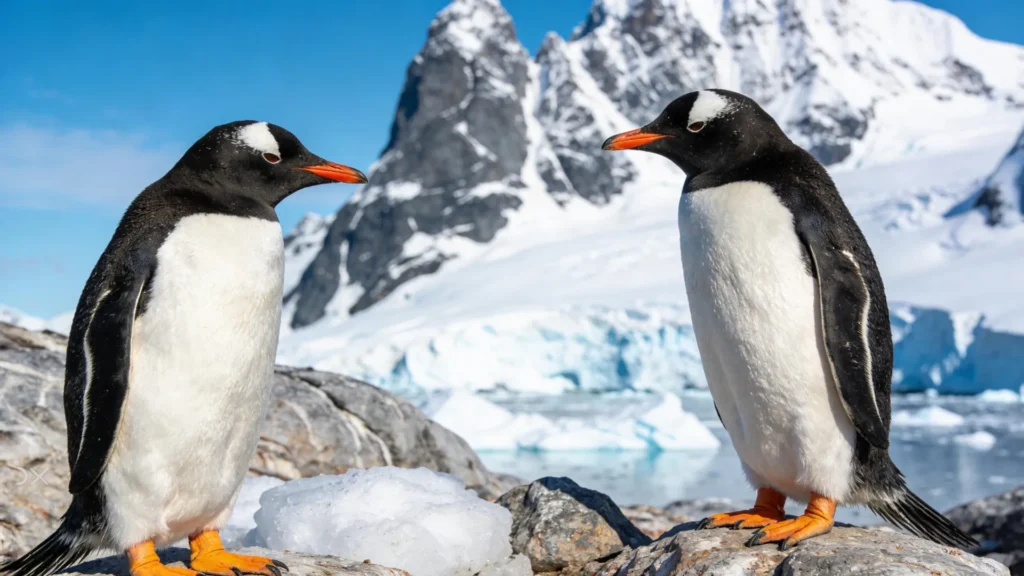
Researchers have now identified the population living there as a distinct species, Pygoscelis kerguelensis. While these birds share the iconic white underside and black back common to all gentoos—a counter-shading camouflage essential for avoiding marine predators—their genetic makeup tells a different story. In the field of biology, these are known as "cryptic species": organisms that appear physically similar to their cousins but possess significant, deep-seated genetic differences that prevent them from interbreeding.
By conducting a comprehensive genomic analysis of 64 penguins across 10 breeding colonies, the team was able to resolve a century-old dispute. Previous studies had proposed anywhere from one to six subspecies, but the lack of universal genetic consensus kept the scientific community in a state of flux. By utilizing whole-genome sequencing and comparing physical traits—including vocalizations, breeding schedules, and foraging behaviors—the researchers confirmed that four distinct species exist:
- Pygoscelis papua (Northern gentoo, found in the Falkland/Malvinas and Martillo Islands).
- Pygoscelis taeniata (Eastern gentoo, found on the Crozet, Marion, and Macquarie Islands).
- Pygoscelis kerguelensis (Southeastern gentoo, found on the Kerguelen and Heard Islands).
- Pygoscelis ellsworthi (Southern gentoo, found on the Antarctic Peninsula and South Georgia Island).
A Chronology of Diversification
The path to this discovery began with a decade of research into the evolutionary history of the penguin lineage. Previous work by the study’s co-senior authors, Rauri Bowie of UC Berkeley and Juliana Vianna of Andrés Bello National University, established that the penguin family tree originated roughly 22 million years ago near the coasts of modern-day Australia and New Zealand.
As the continent of Antarctica cooled and the circumpolar current intensified around 12 million years ago, penguins began to radiate outward. While Emperor and King penguins diverged early to specialize in high-latitude environments, the gentoo lineage developed a unique evolutionary strategy: dietary flexibility.
Unlike many of their counterparts, gentoos are not "picky eaters." They consume a varied diet of fish, krill, squid, and cuttlefish. This flexibility allowed them to remain close to their natal breeding sites rather than embarking on massive migrations to find food. Over the past 300,000 to 500,000 years, this sedentary lifestyle, combined with the barrier of the Antarctic Polar Front—a massive oceanographic boundary where water temperatures and salinity shift sharply—caused the populations to diverge. As these groups were cut off from one another by the ocean’s physical and thermal boundaries, natural selection acted upon their unique local environments, solidifying their status as distinct species.
Genomic Evidence: The Blueprint of Survival
The study, with primary analysis conducted by University of Chile graduate student Daly Noll, utilized thousands of genetic markers known as single nucleotide polymorphisms (SNPs) to map the environmental adaptations of each species. The results offer a masterclass in evolutionary biology:
- The Antarctic Specialist: Pygoscelis ellsworthi, the southern gentoo, shows genetic enrichment in genes associated with heat production, fat storage, and light perception. These adaptations are crucial for surviving the extreme cold and the intense, reflective glare of the Antarctic ice sheets.
- The Eastern Diver: The Pygoscelis taeniata lineage possesses genetic markers linked to efficient carbohydrate metabolism and enhanced diving physiology. These include developments in oxygen transport and lung capacity, which allow the birds to stay submerged longer in the nutrient-poor waters of the sub-Antarctic islands.
- The Northern Athlete: The northern gentoo (P. papua) exhibits genetic traits associated with enhanced digestion and muscle excitation, supporting the sustained physical exertion required for foraging in the temperate waters of South America.
Implications for Conservation
The classification of these four species carries significant weight for international conservation policy. As climate change reshapes the Southern Ocean, the vulnerability of these populations varies wildly.
Climate models suggest that the southern gentoo, P. ellsworthi, may actually benefit from current warming trends, with its suitable range potentially expanding southward as ice retreats. Conversely, the three sub-Antarctic species face a precarious future. As Juliana Vianna noted, these islands are governed by a complex array of nations, including Chile, South Africa, France, the Netherlands, Australia, and New Zealand. The recognition of these species as distinct entities is a prerequisite for effective legal protection.
"It’s very important that conservation institutions in all the different countries involved recognize and take appropriate action to save these three gentoo penguin species," Vianna stated.
The danger is not merely hypothetical. In many sub-Antarctic regions, penguins are facing a "squeeze" effect. Unlike the Antarctic continent, where species might find new territory as the climate shifts, island-dwelling penguins have nowhere to go. If the local environment of a specific island degrades due to rising ocean temperatures, competition with commercial fisheries, or the encroachment of invasive species like rats and dogs, these endemic populations could be driven to extinction.
A Future of Genomic Management
The implications of this research extend far beyond mere taxonomy. Rauri Bowie emphasized that the genomic dataset assembled for this study provides a template for future conservation efforts. By identifying the genetic signatures of resilience, scientists can better predict which populations are likely to survive the ongoing shifts in the global climate.
Furthermore, the team is already applying these techniques to understand avian influenza, a global threat that has recently begun to impact penguin, bird, and marine mammal populations. By identifying genetic traits that may confer resistance to disease, researchers hope to provide conservationists with the data needed to prioritize intervention.
"Whole genome sequencing has transformed our ability to not only look at adaptation from a perspective of how things diversify, but it has really important conservation value," Bowie said.
As the scientific community digests these findings, the "Desolation Islands" and their neighbors are no longer just remote, lonely outposts of the Southern Ocean. They are home to a newly recognized chapter of biological history, a reminder that even in the most isolated corners of the globe, life is continuously evolving, adapting, and—if given the right protections—persisting against the odds. The gentoo penguin, once thought to be a single, uniform species, has proven to be a testament to the power of geography and natural selection in shaping the biodiversity of our planet.