Approximately 631,000 years ago, a geological cataclysm occurred in what is now northwestern Wyoming. It was a blink of an eye in the context of Earth’s deep history, yet it shattered the ecosystems of North America and sent shockwaves across the globe. This event, the last major super-eruption of the Yellowstone volcanic system, remains a sobering reminder of the planet’s latent power.
While early humans were not present to witness the sky turn to ash, modern civilization now occupies the continent, turning the question of a future eruption from a geological curiosity into a primary existential concern. As experts in disaster management and volcanology, we present a thought experiment—a worst-case scenario constructed from current geological data and the patterns of modern crisis response—to understand what humanity would face if the giant beneath Yellowstone were to wake.
The Anatomy of the Threat: Main Facts
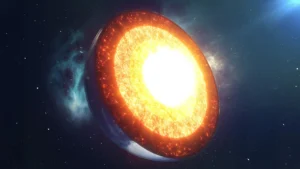
Yellowstone is not a dormant relic; it is a hyper-active, living volcanic system. Its vast caldera, stretching 55 to 70 kilometers across, sits atop a massive magma reservoir. Monitoring this system is a round-the-clock endeavor involving the University of Utah Seismograph Stations and the Yellowstone Volcano Observatory (YVO).
Scientists track an array of indicators: seismic swarms, ground deformation measured by GPS and strainmeters, gas emissions, and hydrothermal flux. While Yellowstone experiences thousands of minor earthquakes annually, a "super-eruption" requires a confluence of escalating signals. The risk is not merely the lava, but the atmospheric injection of billions of tons of ash, sulfur, and volcanic gases, capable of disrupting the global climate for years.
Chronology: A Countdown to Catastrophe
T-2 Months: The First Signs of Unrest
The crisis begins subtly. An analyst at the YVO detects a series of sharp, concentrated spikes on seismic monitors. These earthquakes, though small, are migrating upwards through the crust. While swarms are common at Yellowstone, this specific cluster exhibits a trajectory suggesting the upward movement of magma or pressurized hydrothermal fluids. The YVO initiates its standard response protocol, increasing monitoring density and coordinating with partner organizations.
T-1 Month: Escalation and Public Awareness
Four weeks later, the situation deteriorates. GPS stations show accelerating ground uplift, and satellite radar confirms a broad, swelling dome beneath the caldera. The earthquake swarm is now persistent and shallow. YVO raises the alert level to "advisory." The media begins to take notice. Scientists, while cautious of the "crying wolf" effect, hold public briefings to mitigate the spread of conspiracy theories—often fueled by the notion that global elites are manipulating the situation for economic gain.
T-2 Weeks: The Imminent Threat
Confidence in a pending eruption reaches 85-92%. The YVO issues a "watch" alert, and the USGS raises the Aviation Color Code to orange. A 100-kilometer exclusion zone is established, forcing the evacuation of 200,000 residents and tourists. International diplomacy enters a frantic phase. World leaders are forced to decide: will they operate as a unified global village, or will they retreat into protectionism? The logistics of moving hundreds of thousands of "volcano refugees" test the limits of international cooperation.
T=0: The Cataclysm
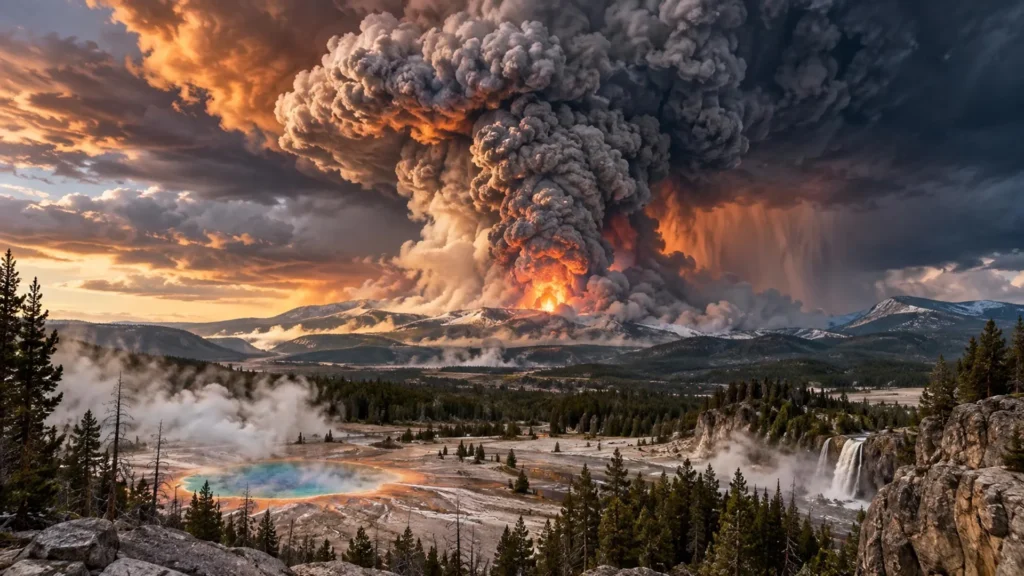
The earth fractures. The eruption begins with phreatomagmatic explosions—water, superheated by rising magma, turns to steam and expands 1,700-fold, shattering the rock above. Within hours, the eruption reaches VEI-8 status, the highest on the Volcanic Explosivity Index. A column of ash and pumice reaches 50 kilometers into the atmosphere. Pyroclastic density currents—surges of gas and rock exceeding 600°C—obliterate everything within tens of kilometers. The immediate death toll is estimated at 1,000 people, with many more lost to subsequent transport accidents, infrastructure failure, and fires.

T+3 Days to T+4 Months: The Long Winter
As the ash cloud envelops North America, the reality of the disaster sets in. Electricity grids fail as damp ash shorts out substations. Supply chains collapse. By the fourth month, the eruption transitions into intermittent explosions. Global food prices skyrocket as the "breadbasket" of the US and Canada is buried. A "volcanic cooling episode" begins; sulfate aerosols reflect sunlight, dropping global temperatures by an average of 1.5°C, with significantly harsher conditions in the northern hemisphere.
Official Responses and Strategic Challenges
The US government, led by the Federal Emergency Management Agency (FEMA), faces an impossible task. In a worst-case scenario, the scale of the displacement exceeds the capacity of existing infrastructure. While wealthy nations may mobilize, many countries are hesitant to accept refugees, fearing the economic burden.
The disparity in survival becomes stark. Those with social networks and financial means evacuate, while the marginalized remain in the shadow of the ash. Public health systems, already strained, struggle with the long-term effects of silica-rich ash, leading to a rise in silicosis and cardiovascular issues.
Implications: A World Transformed
The Decade of Recovery (T+10 Years)
A decade post-eruption, the global landscape has shifted toward agrarian survival. Recreational land is repurposed for vertical farming and greenhouses. The population, once 8.3 billion, faces a decline as infant and elderly mortality rates spike due to disease, contaminated water, and malnutrition. Estimates suggest between 0.7 and 1.3 billion premature deaths globally. The geological scar left by the eruption—a massive, sunken caldera—becomes the center of a new, desolate ecosystem.
The Million-Year Perspective
A million years later, the event is a footnote in the history of a post-human, spacefaring civilization. A humanoid traveler, observing Earth from a spacecraft, identifies the Yellowstone caldera. They find a lush planet that has long since recovered, yet the geological evidence of the "great fire" remains. They are left to wonder: did the primitive technological civilization of the past realize they were living on the edge of extinction, or were they simply lucky to have survived for as long as they did?
Supporting Data and Reflections
The catastrophic potential of a Yellowstone super-eruption is not merely a product of imagination but a calculated risk based on the geological record. The 74,000-year-old Toba eruption in Indonesia serves as the closest historical analogue.
The primary lesson for humanity is not one of impending doom, but of the fragility of our interconnected systems. Our reliance on fragile power grids, global transport, and centralized food distribution makes us uniquely vulnerable to large-scale atmospheric disruptions.
While the "supervolcano" narrative often triggers alarm, the scientific consensus emphasizes that Yellowstone is currently stable. However, the study of such disasters provides essential data for disaster resilience. Whether it is a super-eruption or another global crisis, the path to survival lies in international cooperation, robust infrastructure, and the ability of our species to adapt when the Earth itself changes the rules of existence. We are a resilient species, but our resilience is only as strong as our preparation.