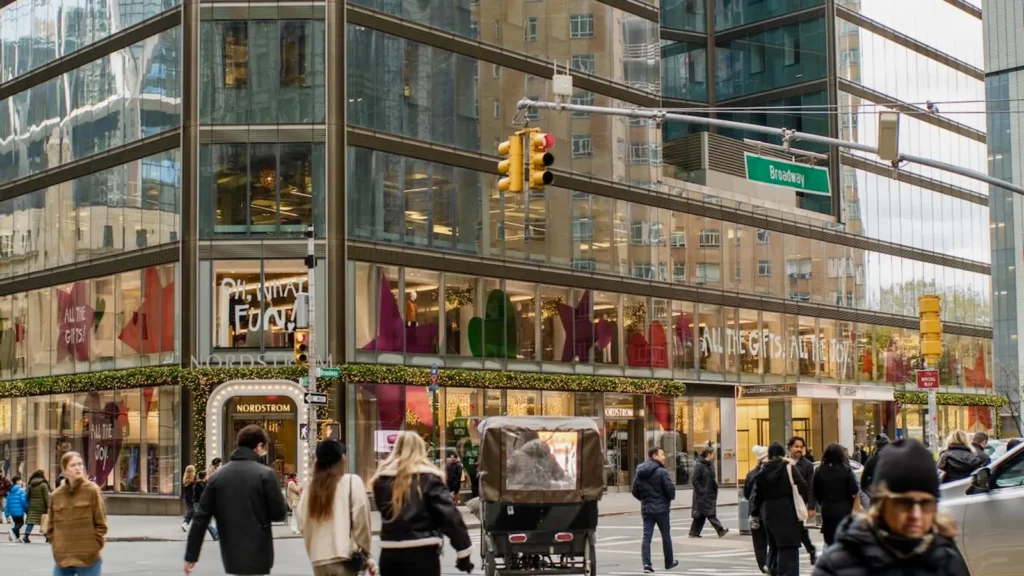
As the holiday season approaches, the retail industry finds itself navigating a complex dichotomy. On one hand, industry forecasts project that holiday sales will surpass $1.7 trillion, signaling a robust appetite for consumption. On the other hand, a darkening cloud of economic anxiety—driven by labor market instability, mounting household debt, and persistent inflation—is fundamentally altering the way American consumers approach their gift lists.
According to a comprehensive report from the International Council of Shopping Centers (ICSC), while the topline revenue figures remain historically strong, the underlying mechanics of consumer behavior are shifting toward extreme caution. Retailers are no longer just competing for the holiday dollar; they are competing for a limited, debt-constrained wallet that is being stretched thinner than in previous years.
Main Facts: A Billion-Dollar Balancing Act
The core narrative of this year’s holiday season is defined by "resilient necessity." Consumers are still planning to spend, but the psychological threshold for what constitutes a "good deal" has shifted significantly.
The ICSC data indicates that the retail sector is on track to cross the $1.7 trillion threshold in total holiday sales. However, this figure masks the strain on the average household. The research highlights that 49% of shoppers intend to rely on borrowing—via credit cards, buy-now-pay-later (BNPL) services, or personal loans—to bridge the gap between their income and their holiday aspirations. Even more concerning for long-term financial health, 47% of respondents reported that they are willing to pause retirement contributions, halt savings growth, or defer existing debt payments just to accommodate seasonal spending.
This behavior points to a "sunk cost" mentality where the social and emotional pressure of the holidays overrides prudent financial management, a trend that could have significant repercussions for the broader economy in early 2027.
Chronology: The Evolution of the 2026 Season
To understand the current climate, one must look at the timeline of the 2026 retail calendar:
- September 2026: Initial sentiment surveys began to show a divergence between intent and capability. Consumers expressed a desire to celebrate, but concerns regarding the labor market began to dampen sentiment.
- October 2026: Retailers began rolling out early promotions, responding to consumer demands for value. The "inflationary shift" became apparent, as households began prioritizing "essentials" over "discretionary" items.
- November 2026 (Cyber Week): Data from Adobe Analytics revealed a pivotal shift: shoppers began using the massive discounting period not for luxury gifts, but for household staples. Sales of clothing basics surged by 210% compared to September, while personal hygiene and pet products saw triple-digit growth.
- December 2026 (The Current Outlook): The final push of the season is characterized by a "wait-and-see" approach. Retailers are now doubling down on aggressive, personalized promotions to capture the final segment of the market, which is increasingly focused on deep discounts.
Supporting Data: The Shift Toward Utility
The data provided by industry analysts paints a picture of a consumer base that is increasingly pragmatic. The surge in sales for basic necessities during peak promotional periods is a tell-tale sign of an economy where discretionary income is under siege.
Key Performance Indicators:
- Consumer Debt Dependency: Nearly half (49%) of shoppers are utilizing credit to fund holiday purchases.
- The "Essentials" Boom: Adobe’s report confirms that Cyber Week was defined by utility, with baby products (113%), pet supplies (93%), and cleaning products (49%) seeing massive volume increases.
- In-Store Engagement: Despite the growth of e-commerce, 70% of ICSC survey respondents emphasized that exclusive in-store promotions are a primary driver for their physical shopping trips.
These figures suggest that retailers who can provide "value-add" experiences—such as bundled deals, loyalty-exclusive pricing, or experiential in-store events—are the ones most likely to capture the diminishing share of wallet.
Official Responses and Strategic Perspectives
Tom McGee, President and CEO of the ICSC, has been vocal about the precarious position retailers find themselves in. In his recent statement, he emphasized that while the consumer remains "resilient," that resilience is being tested by the realities of the modern economy.
"Shoppers remain resilient, but they’re more discerning and value-conscious," McGee noted. "Competitive prices, convenient shopping options, and experiences that bring people together are non-negotiable for retailers to attract shoppers and give them reasons to return throughout the season."
This sentiment is echoed by broader industry analysts who suggest that the "experience economy"—the idea that shoppers want more than just a transaction—is the only way to insulate a brand from price-based competition. Retailers are being forced to pivot from a "growth-at-all-costs" model to a "retention-and-value" model. If a store cannot offer a unique experience or a significant discount, the consumer, who is already wary of their debt-to-income ratio, will simply move to the next competitor.
Implications: The Long-Term Economic Shadow
The implications of this holiday season extend far beyond the Q4 earnings reports of major retailers. There is a profound concern that the "borrow-to-spend" model will lead to a "January hangover."
1. The Debt Burden
With nearly half of all shoppers prioritizing holiday spending over savings and debt repayment, the financial landscape in Q1 2027 looks volatile. Delinquency rates on credit cards and BNPL platforms are expected to rise as the bills from this holiday season come due.
2. Retailer Margin Erosion
Because consumers are demanding deep discounts and promotions to justify their spending, retailers are finding their profit margins squeezed. The cost of goods sold (COGS) remains elevated, yet retailers are forced to slash prices to move inventory. This leads to a scenario where revenue (top-line) may look strong, but profitability (bottom-line) is significantly diminished.

3. The "Essential" Pivot
We are witnessing a structural change in retail. The holiday season, traditionally the time for luxury and gift-giving, is being cannibalized by the need for daily living essentials. Retailers that rely heavily on discretionary categories—such as high-end fashion or non-essential home goods—must find ways to pivot their marketing toward utility or risk losing their customer base to retailers like big-box discounters and warehouse clubs.
4. Labor Market Uncertainty
The backdrop of this entire season is the fluctuating job market. As consumers grow more anxious about their employment security, their propensity to engage in "impulse buys" declines. This shifts the power dynamic; the consumer is now the one in control, holding onto their money until a retailer meets their specific, value-based criteria.
Conclusion: Navigating the New Normal
As we look toward the final days of the 2026 holiday season, the story is one of a consumer base that is determined to celebrate but is doing so with a calculator in one hand and a credit card in the other.
The successful retailers of this season are those who have stopped trying to convince the consumer to spend more and have started focusing on helping the consumer spend smarter. By leaning into essentials, offering transparent and aggressive discounts, and curating an in-store experience that offers value beyond the price tag, retailers are managing to maintain volume. However, the reliance on debt to fuel this spending remains a systemic risk that will continue to challenge the retail sector well into the new year.
For the industry, the lesson is clear: the era of easy, uninhibited consumption is in retreat. In its place is a more demanding, value-driven era that requires retailers to be as efficient and empathetic as they are competitive. Whether this transition leads to a sustainable recovery or a period of prolonged austerity will be determined in the months following the holiday peak.