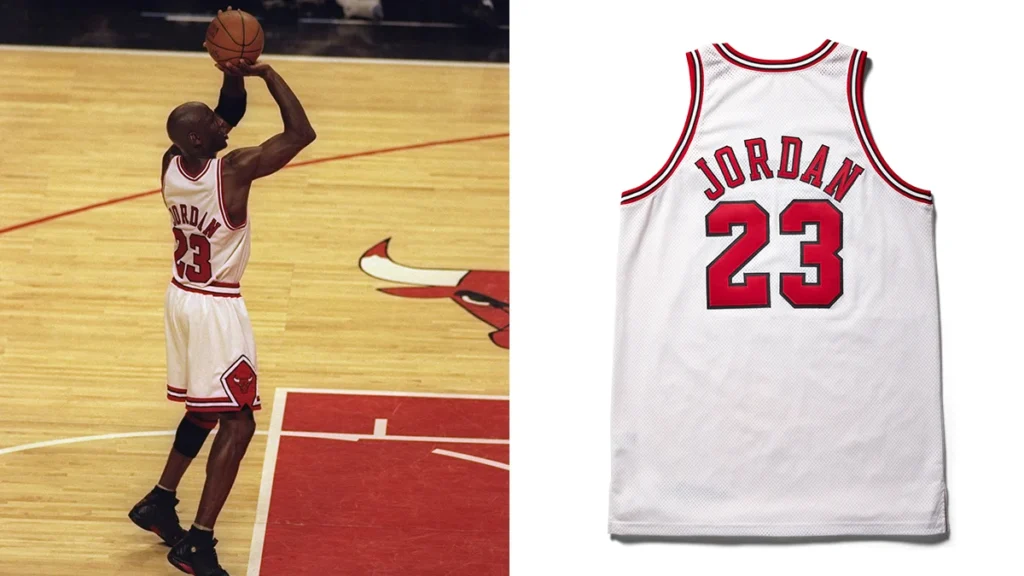
Twenty-three years after stepping away from the hardwood, Michael Jordan continues to dominate the record books, proving that his influence on the global sports landscape is not merely historical—it is appreciating. This week, the basketball icon shattered yet another financial benchmark as his game-worn jersey from Game 3 of the 1998 NBA Finals sold for a staggering $12.26 million through Joopiter, the digital-first auction house founded by multi-hyphenate creator Pharrell Williams.
This monumental sale does more than simply move a piece of memorabilia; it recalibrates the ceiling for the sports collectibles market, cementing Jordan’s status as the ultimate blue-chip asset in the world of high-end auctions.
The Anatomy of the Record-Breaking Sale
The jersey in question is not merely a garment; it is a relic of the most storied championship run in modern basketball history. During Game 3 of the 1998 NBA Finals, Jordan—in the midst of what would become famously known as the "Last Dance"—put on a clinical performance that perfectly encapsulated his ruthless efficiency. In just 32 minutes of play, he recorded 24 points, leading the Chicago Bulls to a lopsided 96-54 dismantling of the Utah Jazz.
The $12.26 million price tag makes this the most expensive NBA jersey ever sold at public auction. In doing so, it eclipsed the previous record holder: Jordan’s own Game 1 jersey from that same 1998 series, which commanded $10.1 million in a previous sale. By outperforming its predecessor, the Game 3 jersey demonstrates that the demand for "Last Dance" artifacts remains insatiable, even as the market for high-end collectibles becomes increasingly selective.
What elevates this specific piece beyond standard memorabilia is its rarity. It is the only white 1998 NBA Finals jersey from Jordan to have surfaced in the public market. Its provenance is airtight, and its connection to the final, emotional chapter of the Bulls’ dynasty provides a narrative weight that few other objects in sports history can claim.
A Chronology of the ‘Last Dance’ Era
To understand the value of this jersey, one must revisit the atmosphere of 1998. The NBA Finals that year were more than a sporting event; they were a cultural phenomenon.
- The Build-Up: Entering the 1997-1998 season, the Chicago Bulls were a team under immense pressure. With coach Phil Jackson’s contract expiring and management signaling the end of the roster’s core, the season was framed by the media and the players themselves as the "Last Dance."
- The Finals: The series against the Utah Jazz was grueling. After splitting the first two games, the Bulls returned to the United Center for Game 3 with the intensity of a team playing for its collective legacy. The 96-54 blowout victory remains one of the most dominant defensive and offensive displays in Finals history.
- The Legacy: Following the 1998 title—Jordan’s sixth and final ring—the team was dismantled, and Jordan retired for the second time. The documentary series The Last Dance, released decades later, reintroduced this specific era to a new generation of fans, re-contextualizing these artifacts from "old uniforms" into "historical documents."
- The Auction: The arrival of this jersey at Joopiter marks the culmination of years of rising interest in "cultural capital." The transition from traditional brick-and-mortar auction houses to digital-first platforms like Joopiter has opened the doors for a new generation of collectors who prioritize provenance, digital storytelling, and exclusivity.
Supporting Data: The Maturation of the Collectibles Market
The sale of the $12.26 million jersey is part of a broader, seismic shift in the valuation of sports memorabilia. For decades, trading cards and signed balls were the primary focus of the hobby. Today, the focus has shifted toward "game-worn" items that served as the physical armor for legends during their most critical moments.
The $12.26 million figure places this jersey in elite company, though it still sits behind the current world record for any sports jersey. That honor belongs to the "Called Shot" jersey worn by Babe Ruth during the 1932 World Series, which commanded a staggering $24.12 million in 2024.
However, the rapid appreciation of Jordan’s jerseys suggests that the gap between baseball’s historic giants and basketball’s modern icons is narrowing. Industry analysts point to several factors driving this growth:

- Global Reach: Basketball has a more expansive international footprint than baseball, attracting high-net-worth investors from Asia, Europe, and the Middle East who recognize Jordan as a global brand synonymous with success.
- Cultural Resonance: Through streaming services and social media, Jordan’s peak years are constantly being re-broadcast, ensuring that his brand equity never dips.
- Investment Diversification: As traditional markets face volatility, ultra-wealthy collectors are increasingly viewing rare sports artifacts as a "tangible asset class," similar to fine art or rare automobiles.
Official Responses and Strategic Significance
Caitlin Donovan, the global head of sale at Joopiter, emphasized the broader implications of the sale in an official statement following the hammer fall.
"It has been a privilege for Joopiter to bring such an important piece of Michael Jordan’s legacy to market, and to see it establish a new auction record for an NBA jersey," Donovan said. "Sports collectibles are in an exceptionally exciting period of evolution. The category is maturing rapidly, and objects of true rarity, provenance, and cultural significance are increasingly recognized on the global collecting stage. This result speaks to that momentum."
Donovan’s remarks highlight a critical shift: Joopiter is not just selling clothes; they are curating history. Under Pharrell Williams’s guidance, the platform has successfully bridged the gap between streetwear culture, luxury fashion, and high-stakes historical investment. From auctioning a triceratops skeleton named "Trey" to selling exclusive Jacob & Co. watches, Joopiter has positioned itself as a lifestyle curator rather than a traditional auction house. This diverse portfolio allows them to capture the attention of a younger, trend-setting demographic that is often ignored by legacy auction institutions.
The Implications: Where Do We Go From Here?
The $12.26 million price point forces the market to ask a difficult question: Is there a ceiling?
If a 1998 jersey can fetch eight figures, what happens to the market for earlier jerseys—perhaps from the 1991 championship, Jordan’s first? The scarcity of these items is the primary driver of value. As more pieces are sequestered into private collections, the remaining items on the market will naturally become more expensive, potentially creating a "scarcity loop" that continues to drive prices upward.
Furthermore, this sale signals a major victory for the digital-first auction model. By leveraging Pharrell’s cultural influence and a high-tech presentation, Joopiter has proven that the traditional, dusty auction room model is not the only way to facilitate high-value transactions. The ability to present an item through high-quality video, digital provenance tracking, and a global digital interface has broadened the pool of potential bidders.
Ultimately, the record-breaking sale of the "Last Dance" jersey serves as a testament to Michael Jordan’s enduring power. While he may have left the court in 2003, his ability to "score" has not diminished. For the collector who secured this piece, the purchase is not just an acquisition of fabric and stitching; it is the acquisition of a moment in time where excellence was the standard, and the world was watching.
As we look toward the future of the memorabilia market, one thing remains certain: as long as Jordan’s legend continues to grow, the price of his history will continue to climb.