

When is a fashion show not a fashion show? When the geography is a glitch in the system.
On Tuesday, the fashion cognoscenti gathered in a dimly lit, intimate theater in Paris, nursing the expectation of witnessing Telfar Clemens’ grand return to the Paris Fashion Week (PFW) official calendar—his first such appearance in seven years. The air was thick with the industry’s characteristic blend of prestige and anticipation. But as the lights dimmed, the illusion fractured. There was no runway in Paris; instead, a massive screen flickered to life, broadcasting a live, high-octane runway event occurring thousands of miles away in Brooklyn, New York.
In a single, masterfully orchestrated stroke of subversion, Telfar Clemens bypassed the traditional gatekeeping of the Parisian circuit, proving that in the modern era, the "home of fashion" is wherever the brand decides to plant its flag.
The Geography of Disruption: A Tale of Two Cities
The event was a study in controlled chaos. While Parisian attendees watched the broadcast at a distance, the actual physical manifestation of the show was unfolding at One Hanson Place in downtown Brooklyn. The venue—a historic landmark—became the epicenter of a multifaceted activation that prioritized community, accessibility, and radical transparency over the exclusivity that defines the traditional fashion calendar.
The Brooklyn event was far more than a runway show; it was a festival of brand utility. Upon entering the space, guests were met with the brand’s new "Bag Redemption" program. In a move that challenges the hyper-consumerist nature of luxury, Telfar invited customers to bring in their existing bags—regardless of their condition or age—to trade them in for credit toward new pieces. It was a tangible commitment to the brand’s longevity and a direct nod to the loyal community that propelled Telfar from a niche label to a global phenomenon.
Chronology of a Fashion Hack
The lead-up to the event was characterized by what Clemens described as his first experience with intentional deception. "I’ve been lying to the press for a day, and I don’t lie at all," Clemens admitted in a post-show interview with WWD. "My friends have been texting me, ‘Are you coming? When are you getting here?’ But I’ve been keeping it really quiet until the news broke."
The secrecy was necessary to preserve the impact of the reveal. For twenty-four hours, the industry believed they were hosting a Parisian homecoming. In reality, Clemens was finalizing a logistical feat that merged a high-fashion runway with an unprecedented public retail experience.
As the show began, a voice boomed over the speakers, setting the tone with typical Telfar irreverence: "So, you know the first two letters of sample sale are S and S, but at Telfar, we’re always ahead so right now you’re getting Telfar SS27."
Following the runway presentation, the doors to the event’s most aggressive feature opened: a massive sample sale. With over 30,000 garments and bags priced at up to 90 percent off, the event drew hundreds of fans who had wrapped around the block. The sale is scheduled to run through Sunday, effectively turning a "fashion week moment" into a multi-day retail marathon.
The Collection: A Rebirth of Genderless Design
Clemens described the current state of his brand as a "rebirth," a sentiment echoed in the collection’s sophisticated evolution. While the brand has long been a champion of genderless silhouettes, this season marked a pivot toward elevated tailoring and experimental fabrications.
Tailoring and Texture
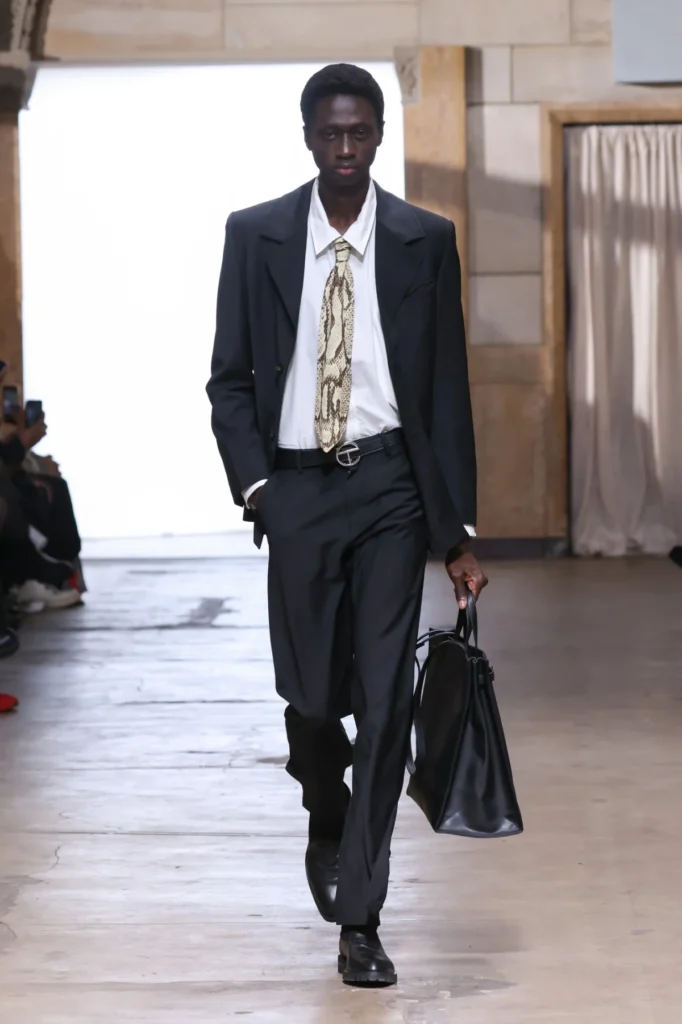
The collection introduced a sharp focus on silk jacquard button-ups, characterized by raw-cut edges that bridged the gap between formal and rugged. The tailoring—a standout element of the lineup—was notably versatile. Clemens highlighted that the suits are fully reversible, with linings designed to match the silks of the dress shirts. This fluidity allows the wearer to transition seamlessly from formal attire to a more casual, denim-focused aesthetic.
The Denim Exploration
Clemens revisited his brand’s roots with an expansive exploration of colored denim. Building upon the success of his "three-ply" jeans (a structural marvel that converts between shorts, capris, and pants), the designer introduced a fourth layer, creating a direct lineage to his 2010 archives. It was a "full-circle moment," acknowledging the brand’s history while pushing the boundaries of construction.
Nostalgia and Innovation
The designer continued to blend high-street sensibility with archival references. Garment-dyed snake and leopard prints—created by dragging wild skins across office scanners and manipulating them with camouflage and the iconic Telfar logo—offered a fresh take on early 2000s nostalgia. The runway featured sexy, layered minidresses, draped skirts paired with matching leggings, and an array of technical pieces, including:
- The "Skew-T": A deconstructed take on the brand’s signature logo.
- Embellished Bomber Jackets: Featuring Orchard Street-inspired detailing.
- Moto-Inspired Sweats: Worn-in textures with ribbed paneling.
- The Blanket Coat: A floor-length wool piece that utilized cracked leather sleeves to evoke the aesthetic of classic varsity jackets.
Accessory Evolution: The Next Generation of Bags
Telfar’s bag business remains the anchor of the brand, and this season saw the introduction of two pivotal designs. The "foxtail" bag, a faux-fur, scrunch-style accessory, was described by Clemens as a "grown-up version of our plastic bag." Additionally, the brand teased a "Triangle bag," slated for a 2025 release, which hints at a shift toward more geometric, structured silhouettes in the coming years.
The Philosophy of "Performative" Fashion
The decision to avoid a physical presence in Paris was not a slight against the city, but a critique of the industry’s traditional structure. For years, Telfar has operated on its own terms, often opting out of the standard fashion calendar to focus on its core demographic.
"Who is this show for? That was a big reason… we took a break from so many of the fashion weeks because it felt performative and wasn’t for people we actually wanted the shows to be for," Clemens explained. By creating a hybrid event—where the industry elite in Paris were forced to watch a stream while the actual show was being lived by the public in Brooklyn—Clemens effectively inverted the power dynamic of the fashion world.
"We started working on the collection and were making the clothes, but we initially had no plan to show it," Clemens added. "We needed to do a sample sale, so we wrapped it all in. Paris is where the home of fashion is, at least by exclusion of all the other places. In Paris, it’s a serious deal, serious, so it was fun to play with that."
Implications for the Industry
Telfar’s move signals a broader shift in how brands perceive "prestige." By prioritizing the public experience and the accessibility of a sample sale over the insular environment of a Parisian runway show, Clemens has challenged the necessity of traditional fashion week participation.
The success of this stunt rests on the fact that it felt authentic to the brand’s mission. Telfar has always thrived on being the "outsider" who dictates the terms of the "inside." By forcing the industry to tune in to a Brooklyn-based broadcast, Clemens turned the traditional exclusivity of PFW on its head.
As the fashion industry continues to grapple with the digital age, Telfar’s "Great Mirage" serves as a blueprint for the future. It is a future where the physical location of a runway matters less than the community it engages, and where the most powerful statement a designer can make is to refuse to play by the rules of the status quo.
For now, the brand remains in its state of "rebirth," focused on its loyalists in Brooklyn, its expanding archive of denim, and a future where, as Clemens hopes, the rest of the world is finally catching up to the vision he has been building since 2005. Whether or not Paris got the message remains to be seen, but one thing is certain: Telfar Clemens is no longer asking for a seat at the table—he is building an entirely new one.



