

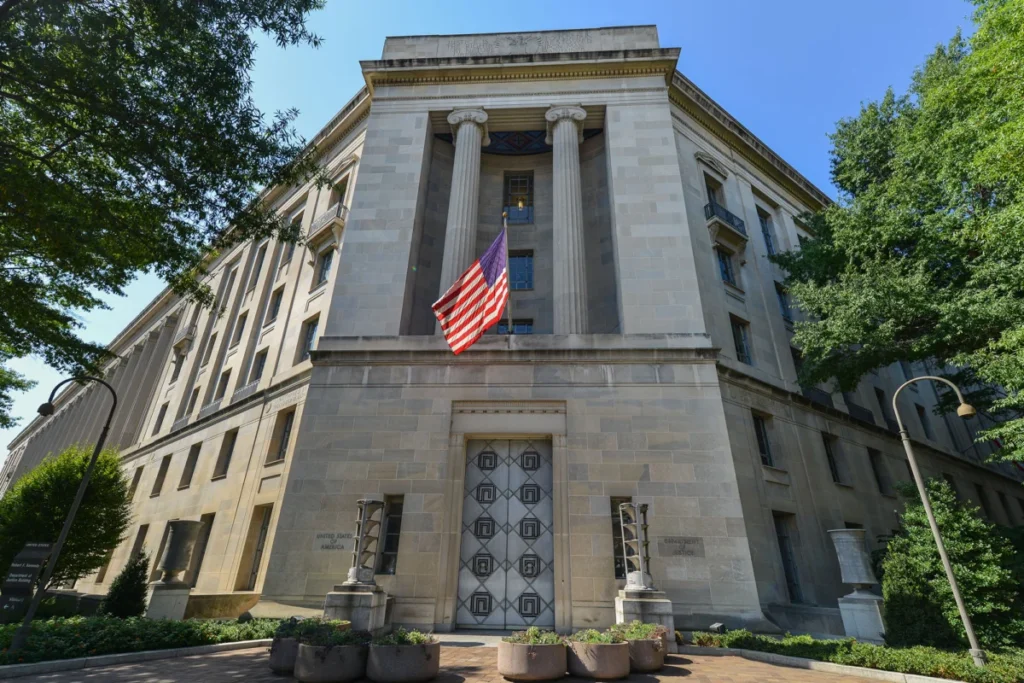
In a decisive move to bolster the federal government’s crackdown on white-collar crime, the U.S. Department of Justice (DOJ) has formally unveiled a strategic realignment aimed at tightening the leash on corporate malfeasance. Colin McDonald, the newly appointed chief of the DOJ’s National Fraud Enforcement Division (NFED), announced that the department is establishing a dedicated Corporate Enforcement Section (CES) tasked with the rigorous oversight of businesses operating under criminal resolutions. Simultaneously, the DOJ is launching a high-stakes whistleblower program designed to incentivize the reporting of systemic business fraud.
These developments, outlined in a formal memo to DOJ staff issued this past Thursday, signal a fundamental shift in how the federal government monitors corporate recidivism and detects clandestine financial crimes. As the NFED matures—having been announced by President Donald Trump in January and officially launched in April—the DOJ is consolidating its resources to ensure that deferred prosecution agreements (DPAs) and non-prosecution agreements (NPAs) are not merely paper tigers, but instruments of genuine corporate reform.
The Core Mandate: Understanding the New Corporate Enforcement Section
The establishment of the Corporate Enforcement Section represents the most significant structural change to the DOJ’s fraud-fighting machinery in recent years. Historically, the burden of monitoring corporate compliance fell across various fragmented units, often leading to inconsistent enforcement and monitoring. By centralizing this function under the CES, the DOJ aims to create a unified standard for corporate accountability.
H3: Bridging the Oversight Gap
Under the new framework, the CES will assume direct responsibility for overseeing businesses that have entered into criminal resolutions with the government. This means that when a corporation enters a plea agreement or a DPA, it will now face a specialized team of prosecutors and monitors whose sole mandate is to verify that the company is adhering to the terms of its settlement.
"The goal is to move beyond the ‘settle and forget’ mentality that has occasionally plagued long-term corporate oversight," notes one legal expert familiar with the DOJ’s internal shifts. By creating a dedicated section, the DOJ ensures that compliance metrics are not just checked once a year but are subject to a continuous loop of verification and scrutiny.
Chronology of a Regulatory Evolution
The emergence of the NFED and the subsequent creation of the CES did not happen in a vacuum. It is the culmination of years of internal deliberation regarding the efficacy of the DOJ’s fraud division.
- January 2025: President Donald Trump announces the intent to form a centralized National Fraud Enforcement Division (NFED) to streamline the prosecution of complex financial crimes.
- February 2025: Initial discussions regarding the consolidation of the Fraud Section and the Criminal Division’s specialized units begin.
- April 2025: The NFED is officially launched. Colin McDonald is tapped to lead the division, bringing with him a mandate to modernize enforcement strategies.
- May 2025: The DOJ begins drafting new internal guidelines for monitoring corporate probationers, leading to the identification of a need for a specialized oversight body.
- June 2025 (Current): Assistant Attorney General McDonald issues the landmark memo, formally establishing the Corporate Enforcement Section (CES) and announcing the upcoming whistleblower incentive program.
This rapid timeline underscores the current administration’s urgency in addressing what it perceives as a permissive environment for corporate repeat offenders.
Incentivizing Integrity: The New Whistleblower Program
Perhaps the most disruptive element of McDonald’s announcement is the DOJ’s commitment to a robust whistleblower program. While the Securities and Exchange Commission (SEC) has long utilized financial incentives to encourage reporting, the DOJ’s entry into this space indicates a broader, more aggressive strategy to infiltrate corporate malfeasance from the inside.
H3: Changing the Calculus of Corporate Secrecy
The DOJ’s fraud division aims to solicit "substantial tips" regarding business fraud. By offering potential financial rewards or non-prosecution incentives for whistleblowers, the DOJ is attempting to dismantle the "culture of silence" that often shields executive-level misconduct.
The mechanics of this program are expected to mirror successful existing models, focusing on:

- Direct Channels: Secure, anonymous portals for reporting fraud related to government contracts, foreign bribery, and large-scale financial schemes.
- Monetary Incentives: Providing a percentage of recovered funds to whistleblowers who provide original, actionable information.
- Anti-Retaliation Protections: Strengthening the legal shield for employees who come forward, ensuring that their careers remain intact even when they blow the whistle on their employers.
Supporting Data and Strategic Priorities
The memo issued by Assistant Attorney General McDonald highlights four primary priorities for the NFED, which will serve as the guiding light for the new Corporate Enforcement Section. These priorities are based on internal DOJ data suggesting that corporate fraud is increasingly global, technologically sophisticated, and deeply embedded in organizational culture.
H3: The Four Pillars of Enforcement
- Aggressive Monitoring of Recidivism: The CES will implement a "zero-tolerance" approach for companies that enter into criminal resolutions but fail to remediate their internal control failures.
- Data-Driven Investigations: Utilizing artificial intelligence and machine learning to scan for anomalies in financial reporting and government contracting data.
- Cross-Border Cooperation: Strengthening ties with international regulators to track illicit funds and corporate entities that attempt to hide behind jurisdictional complexities.
- Individual Accountability: A continued, intensified focus on prosecuting the specific executives who authorize or turn a blind eye to fraudulent schemes, rather than merely fining the corporate entity.
Statistics from the DOJ’s recent annual reports indicate that while the number of corporate settlements has remained stable, the complexity of these cases has increased by nearly 40% over the last five years. The CES is designed to manage this increasing complexity by providing staff with specialized training in forensic accounting and digital evidence recovery.
Official Responses and Industry Perspectives
The reaction from the legal and corporate compliance community has been a mixture of anticipation and apprehension. Defense attorneys have expressed concerns regarding the "over-centralization" of power within the CES, fearing that a more rigid enforcement environment could stifle companies’ willingness to self-disclose errors.
"We are entering an era where the cost of non-compliance is being recalibrated upwards," says a senior partner at a major white-collar defense firm. "The DOJ is signaling that they are no longer interested in simple fines; they are interested in structural, permanent change within organizations. Companies that do not update their compliance programs to reflect this new reality will find themselves in the crosshairs of the CES."
Conversely, investor advocacy groups have lauded the initiative. They argue that a more proactive DOJ is essential for maintaining market integrity and protecting shareholders from the catastrophic value loss that often accompanies high-profile fraud scandals.
Implications: What This Means for Corporate America
The establishment of the CES and the whistleblower program will have immediate, cascading effects on corporate operations. Companies should anticipate the following changes in the regulatory landscape:
H3: The New Compliance Reality
- Enhanced Monitoring Costs: Corporations under DOJ resolutions will likely face significantly higher costs for external monitors and internal compliance audits, as the CES will demand more frequent and granular reporting.
- Increased Vulnerability to Insider Reporting: With the new whistleblower program, the risk of internal reporting increases exponentially. HR departments and legal teams will need to overhaul their internal grievance procedures to ensure that complaints are resolved internally before they reach the DOJ.
- Heightened Executive Scrutiny: The focus on individual accountability means that the "tone at the top" is no longer just a buzzword—it is a legal liability. Executives will be expected to demonstrate active oversight of their divisions, with failure to do so potentially triggering personal investigation.
H3: The Shift Toward Transparency
The DOJ’s push for transparency is intended to force a culture shift. By making the consequences of fraud more tangible and the likelihood of detection higher, the NFED is attempting to nudge companies toward proactive self-policing. The era of the "faceless corporation" hiding behind a settlement check is drawing to a close.
Conclusion: A New Frontier in Corporate Justice
The creation of the Corporate Enforcement Section and the launch of the DOJ’s whistleblower program mark a watershed moment in the history of American corporate regulation. Under the leadership of Colin McDonald and the broader NFED, the Department of Justice is signaling that it has the tools, the personnel, and the political mandate to hold businesses to the highest standards of integrity.
For the American business community, the message is clear: compliance is no longer a check-the-box exercise. It is a fundamental operational requirement that, if ignored, carries the risk of not only significant financial penalties but also the intense, long-term scrutiny of the most powerful enforcement body in the country. As these new initiatives take effect, the focus will remain on whether these structural changes can effectively deter the sophisticated financial crimes that threaten the stability of the global economy. The next few years will be a litmus test for the effectiveness of this centralized, aggressive, and incentive-driven approach to corporate law enforcement.



