

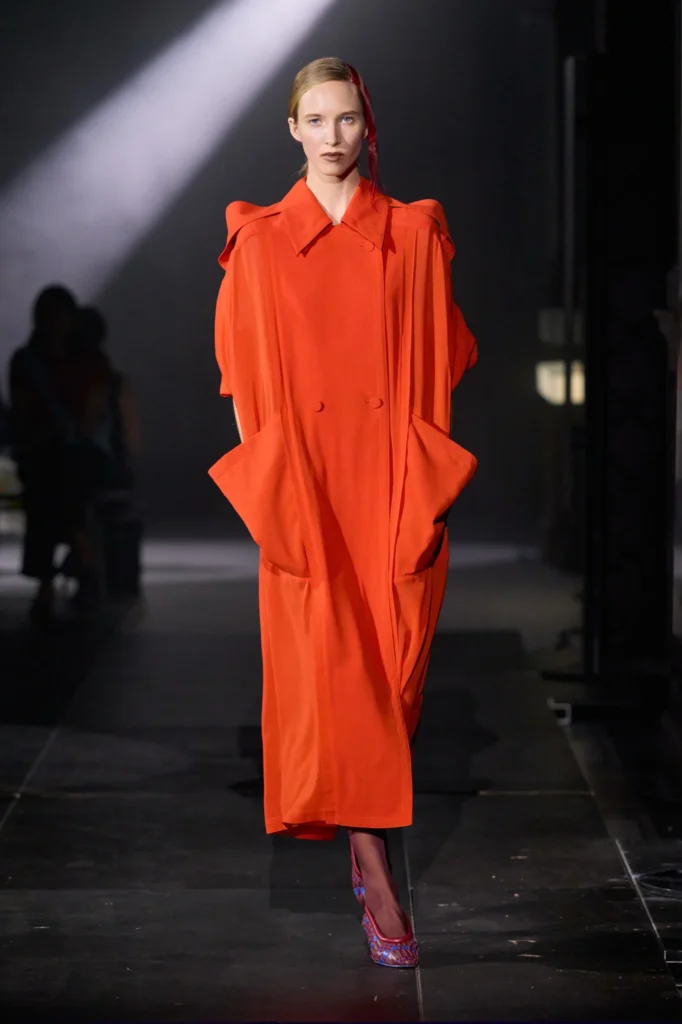
In the shifting landscape of contemporary fashion, few labels manage to bridge the gap between industrial design and sartorial elegance with the intellectual rigor of Kiko Kostadinov. Under the creative direction of sister duo Laura and Deanna Fanning, the label’s latest collection serves as a profound meditation on the physics of light, the architecture of the human form, and the enduring legacy of the late Italian multidisciplinary artist, Nanda Vigo.
The collection, unveiled to critical acclaim, represents a departure from traditional garment construction. By viewing the body as a canvas for light rather than merely a structural framework, the Fannings have curated a visual language that echoes the radical, boundary-pushing spirit of Vigo, who spent over six decades challenging the limitations of space and perception.
The Genesis of Light: Conceptual Framework
The impetus for the collection originated from a simple, yet complex, design prompt: How does one reflect light on the body? For the Fanning sisters, the answer lay in the intersection of depth, layers, and the manipulation of light-reactive materials.
“We were thinking about light, and how we could reflect light on the body,” Laura Fanning explained during a post-show briefing. “We like to at times work at parameters and understand depth and layers to things.”
This conceptual inquiry led the designers to the body of work produced by Nanda Vigo, a pioneer of the Zero movement whose practice was defined by the synthesis of glass, steel, and luminosity. Vigo’s “Chronotope” series—a collection of installations that utilized light to dissolve the boundaries of architectural space—became the primary blueprint for the collection’s silhouettes. By translating these static, industrial art forms into wearable art, the Fannings have effectively created a “chronotope” for the human silhouette.
Chronology of a Collection: From Vision to Runway
The journey to the final runway presentation was a meticulous process of material engineering. Unlike standard collections, which often prioritize cut and drape, this project required the development of custom textiles that could mimic the reflective qualities of glass and polished aluminum.
Phase 1: Material Innovation (Months 1–3)
The initial phase involved rigorous textile experimentation. The Fannings manipulated cotton and nylon, weaving them into knitwear that possessed a dual-texture profile—simultaneously shiny and rough. This contrast was intentional, designed to capture ambient light while providing a tactile, grounded weight to the garments.
Phase 2: Structural Translation (Months 4–6)
The middle phase focused on the application of geometric theory. The sisters studied the rigid, grid-like patterns of Vigo’s early steel and glass works. This research manifested in the collection’s wide-shouldered shirts and dresses, which utilize sharp, rectangular tailoring to mirror the brutalist beauty of Vigo’s light sculptures.
Phase 3: Technical Refinement (Months 7–9)
The final stage focused on the "breaking" of light. Deanna Fanning noted that the team spent considerable time experimenting with pleating and intarsia techniques. By utilizing knitted pleats, traditional shirt pleats, and velvet pintucks, the designers created a topography on the surface of the clothes that forces light to scatter in unpredictable, mesmerizing patterns.
Supporting Data: The Physics of Style
To understand the technical complexity of the collection, one must examine the specific construction methods employed by the Fanning sisters. The collection is not merely an aesthetic exercise; it is an engineering feat.
- Intarsia Mastery: The graphic knitted intarsias serve as a direct reference to Vigo’s light works. These are not mere patterns; they are spatial mappings. Each intarsia serves to delineate movement, creating a sense of shifting dimensions as the wearer walks.
- Volumetric Darts: The use of moiré materials allowed for the inclusion of triangular darts, which add a rigid, architectural volume to the garments. These shapes prevent the fabric from collapsing, maintaining a sculptural integrity regardless of the wearer’s posture.
- Translucency and Layering: The inclusion of organza was a strategic choice. By layering organza over heavier, more opaque fabrics, the Fannings achieved a "veiling" effect that mimics the way light passes through architectural glass.
- The Rectangular Coat: Perhaps the most direct homage to Vigo, the rectangular coats in the collection reject the traditional silhouette of the human shoulder in favor of a monolithic, boxy frame.
Official Responses and Creative Vision
The Fanning sisters have been transparent about the emotional and professional stakes involved in this collection. For them, Nanda Vigo was not just an aesthetic inspiration but a moral one. Vigo was a woman who worked for over 60 years in a male-dominated art world, consistently refusing to be categorized or constrained by the expectations of her time.
“We tried to create space on the body through different types of pleating,” Deanna Fanning remarked, highlighting the technical ambition behind the work. “I find it hard to take risks, and I think maybe we’ve done that with this collection.”
This sentiment is echoed by the industry’s reception. Critics have noted that the collection marks a maturation for the Kiko Kostadinov label. By stepping away from the more utilitarian, streetwear-adjacent roots of the brand and moving toward an intellectual, art-historical dialogue, the Fannings have signaled a new chapter for the house. The "no limitations" philosophy of Vigo has clearly permeated the creative process, emboldening the designers to abandon their comfort zones.
Implications: The Future of Wearable Architecture
The implications of this collection extend far beyond the immediate season. By successfully synthesizing the cold, hard logic of Italian conceptual art with the fluidity of high fashion, Kiko Kostadinov has opened a new conversation about the future of garment construction.
Redefining the Silhouette
For decades, fashion has been obsessed with "flattering" the body—accentuating curves or elongating limbs. This collection flips that paradigm, suggesting that the body should serve as a base for architectural exploration. By emphasizing wide shoulders, rectangular layering, and rigid pleats, the collection forces a re-evaluation of what constitutes a "correct" silhouette.
The Sustainability of Intellectualism
In an era of fast fashion and trend cycles, the Kiko Kostadinov approach offers a sustainable alternative: intellectual longevity. By rooting a collection in the deep, research-heavy history of an artist like Nanda Vigo, the brand creates pieces that carry inherent value beyond the current season. These are garments that invite the viewer to look closer, to understand the construction, and to appreciate the history embedded in the fabric.
The Role of the Designer as Curator
Finally, the collection highlights the evolving role of the creative director as a curator. The Fanning sisters are not just designing clothes; they are curating a bridge between the art of the past and the technology of the present. By bringing the work of Nanda Vigo to a new generation of fashion enthusiasts, they are ensuring that the radical spirit of mid-century Italian art remains a living, breathing force in the 21st century.
Conclusion
As the industry moves forward, the influence of Kiko Kostadinov’s latest outing is likely to be felt in the increasing interest in material manipulation and architectural tailoring. The Fanning sisters have proven that fashion, when approached with the same seriousness as fine art, can transcend the superficial.
Through their interpretation of Nanda Vigo’s light-filled universe, they have reminded us that the body is not just a structure to be covered, but a dynamic, moving space where light and shadow dance—a place where, if one is brave enough to take risks, the limitations of the physical world can be effectively dissolved. In this collection, the Fannings have not only reflected light; they have captured it, held it, and allowed it to define the very shape of the future.



