
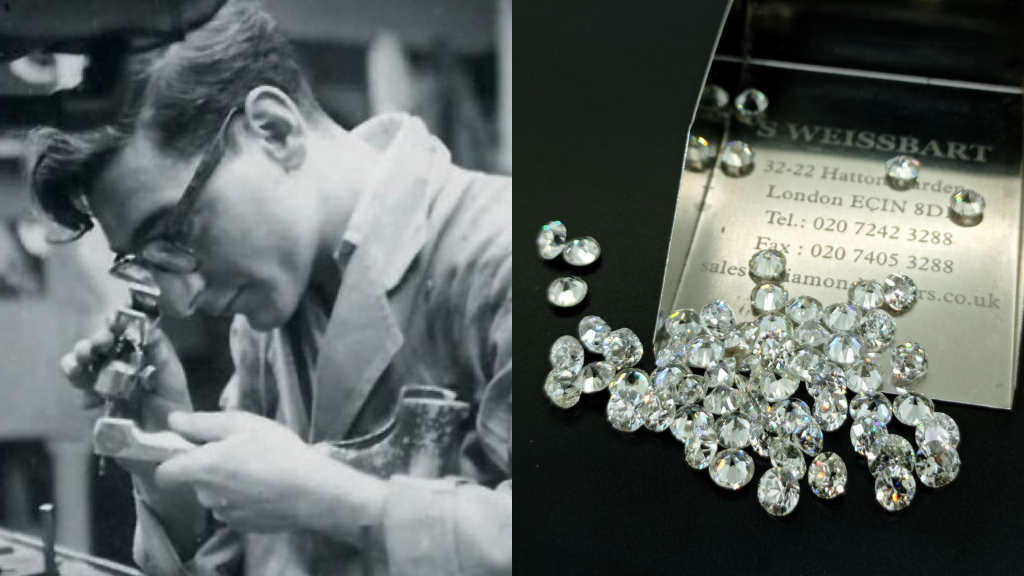
In the storied, narrow streets of Hatton Garden and the bustling, historic heart of Birmingham’s Jewellery Quarter, the name S Weissbart has served as a beacon of integrity for over six decades. Since its inception in 1958, this family-run diamond dealing house has weathered the shifting tides of the global jewellery industry by grounding its operations in a rare combination: uncompromising ethical standards and a deeply human, familial culture. Today, as the industry undergoes a seismic shift toward sustainability and transparency, S Weissbart stands at the forefront, proving that traditional heritage and modern accountability are not only compatible—they are essential.
A Legacy of Excellence: The S Weissbart Journey
The story of S Weissbart is not merely one of commerce; it is a narrative of continuity. Founded in 1958, the firm has spent 66 years navigating the complexities of the diamond trade. At the helm of this institution today is Jonathan Weissbart, a partner whose leadership style is as much about mentorship as it is about market expertise.
The company’s longevity is a testament to the vision of its founder, the late Saul Weissbart. Saul did more than build a business; he cultivated a philosophy. He believed that the value of a diamond was matched only by the value of the hands that traded it. This ethos has been passed down to the next generation, including Jonathan and his brother David, who continue to operate the business with a keen eye on the future while honoring the foundational principles established by their father.
The Pivot to Global Accountability: Joining the RJC
In recent years, the jewellery sector has faced increasing pressure to formalize its supply chains and prove its ethical credentials. For S Weissbart, the decision to join the Responsible Jewellery Council (RJC) was not a reactive measure to satisfy market trends, but a natural extension of their long-held internal values.
"We had been aware of the RJC for many years," Jonathan Weissbart explains. "The decision to take the plunge was a convergence of our internal commitment to transparency and the evolving expectations of our major clients. It was the right time to formalize our adherence to global standards."
For a company that has operated on trust since the 1950s, the RJC membership serves as a formal validation of their business practices. It ensures that every link in their supply chain—from procurement to distribution—is scrutinized, ethical, and transparent.

Chronology of Progress: From Tradition to Certification
The trajectory of S Weissbart’s modernization can be tracked through their recent certification milestones:
- 1958: Establishment of S Weissbart in the UK diamond trade.
- Decades of Growth: Building a reputation based on "honest and transparent connections" with suppliers and customers.
- 2019: Achieving the first major milestone in their RJC certification journey, aligning with the 2019 Code of Practice.
- 2024: Furthering their commitment by meeting updated RJC standards, including the stringent Laboratory Grown Material Standards.
- Ongoing: Implementation of enhanced employee training programs, focusing on modern workplace requirements like diversity, inclusion, and anti-bribery measures.
The Human Element: Building a Culture of Care
What sets S Weissbart apart in a professional landscape often dominated by cold, high-stakes transactions is their insistence on the "human touch." Jonathan Weissbart is known for mixing technical diamond expertise with a penchant for "compulsory dad jokes." While this might sound like a quirk, it is a deliberate component of their corporate culture.
"We don’t need to take ourselves too seriously," Weissbart says. "There is always time for sharing corny jokes and building connections through fun and laughter. We believe that when you treat everyone with care and respect, the business follows."
This culture of respect extends internally. In an era where many businesses struggle with staff retention, S Weissbart invests heavily in its people. They have held in-house workshops on active bystander skills and provided robust training in wellbeing and diversity. By fostering a psychologically safe environment, they ensure that every team member—from the veteran employee to the newest apprentice—feels empowered to contribute ideas.
Mentorship as a Business Imperative
The "Weissbart way" of doing business places a heavy emphasis on the transfer of knowledge. Following the example set by their father, Jonathan and David make a conscious effort to mentor the next generation of jewellers.
"My father firmly believed in dedicating time to upskilling the younger generation," says Jonathan. "He taught us that we don’t live in a vacuum. We aren’t here just to look after ourselves; we are committed to helping the wider community whenever we can."

This commitment to education is a two-way street. The company operates on the principle that seniority does not equate to a monopoly on wisdom. "Dad always said that no matter your age, everyone has something they can teach others," Weissbart adds. By listening to the ideas of younger employees, the firm remains agile and connected to the evolving demands of the market.
Future-Proofing: Sustainability and Innovation
Looking ahead, S Weissbart is not resting on its laurels. The firm is currently navigating the dual challenge of maintaining its legacy in natural diamonds while embracing the growth of the laboratory-grown sector.
"We’ve increased our stock and offerings of laboratory-grown diamonds," notes Weissbart. "We’re also working on a curated set of ready-made diamond jewellery pieces that our trade customers will have access to."
These product-side changes are a direct response to customer feedback, demonstrating the firm’s ability to pivot without compromising its core identity. However, they are also clear that their identity remains tethered to their roots. "Natural diamonds are still at the centre of our story," Weissbart hints, teasing future developments that the company has in the pipeline.
Official Perspective: Raising the Bar
When asked about the future of the industry, Weissbart expresses a desire to see a universal "raising of the bar." He identifies three key areas for improvement:
- Professionalization of the "Cottage Industry": Even smaller players in the diamond trade have a responsibility to adopt high-level ethical practices.
- Mentorship Programs: Experienced traders must take the initiative to offer apprenticeships, ensuring the industry doesn’t lose the "art" of the trade to automation.
- Influence and Advocacy: Companies that have already achieved sustainability in environmental and ethical areas should leverage their influence to encourage smaller suppliers to follow suit.
Weissbart also points to a significant positive shift in the industry: the rise of female leadership. "I’ve been very glad to see the continual increase in female leadership within the jewellery industry over the past decade," he notes. "It’s extremely encouraging and vital for the industry’s long-term health."
Implications for the Jewellery Trade
The S Weissbart story provides a blueprint for small-to-medium enterprises in specialized sectors. The implications are clear:
- Transparency as a Competitive Advantage: In the modern market, customers and partners demand to know the origins and ethics behind a product. Certification (like the RJC) is no longer a "nice-to-have" but a baseline expectation.
- Culture Drives Sustainability: True ethical business is not just about environmental policies; it is about how people are treated in the workplace. By championing diversity and inclusion, S Weissbart ensures their internal ethics match their external claims.
- Heritage Must Evolve: The success of the business proves that heritage is not a static object to be preserved, but a dynamic foundation upon which to build. By blending Saul Weissbart’s lessons with modern technological and ethical standards, the company remains relevant.
Conclusion: A Model for the Future
As the jewellery industry continues to grapple with the demands of a modern, eco-conscious, and socially aware consumer base, the example of S Weissbart is heartening. They prove that you do not need to abandon tradition to be progressive. By maintaining an unwavering commitment to the "human" element—whether through mentorship, laughter, or a genuine concern for the wellbeing of staff—S Weissbart is ensuring that their legacy will continue to sparkle for generations to come.
For those who visit their London office, the experience is a reminder that at the center of the world’s most precious, cold, and hard commodity—the diamond—there is, and must always be, a human heart.