

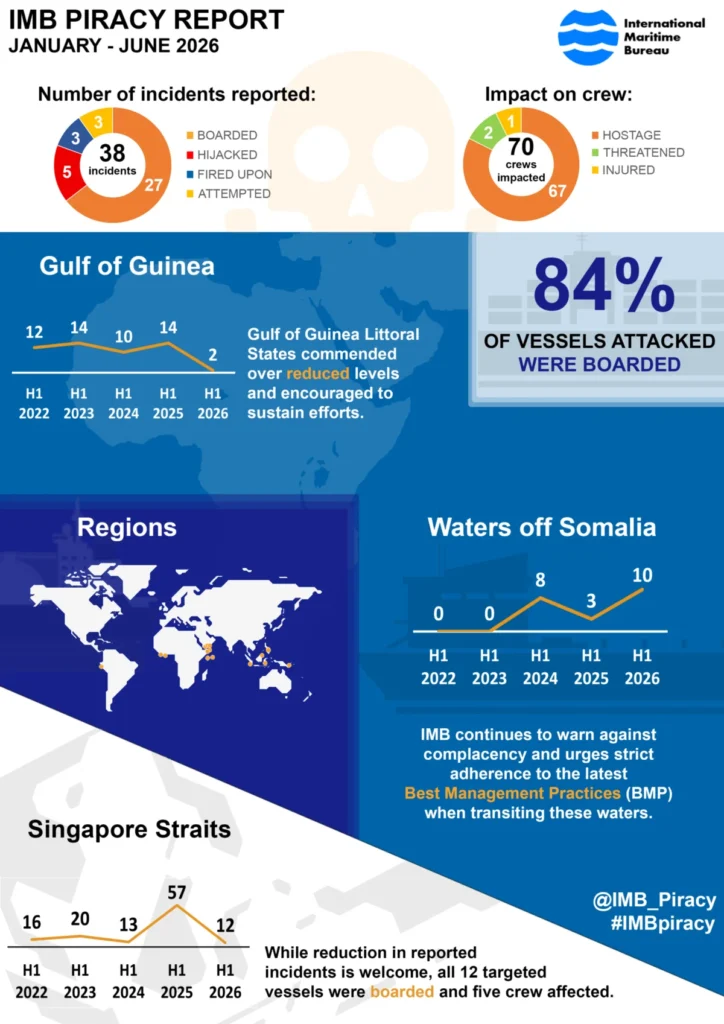
Introduction: The Invisible Frontline
The vast expanse of the world’s oceans serves as the lifeblood of the global economy, facilitating over 80% of international trade. Yet, beneath the veneer of smooth maritime logistics lies a persistent and evolving threat: piracy and armed robbery at sea. Standing as a bulwark against this menace is the International Maritime Bureau’s (IMB) Piracy Reporting Centre (PRC). Since its inception in 1991, the PRC has evolved from a simple information desk into a sophisticated, 24-hour nerve center, coordinating responses to threats and providing the intelligence necessary to secure the world’s most dangerous shipping lanes.
In an era where supply chain resilience is paramount, the role of the IMB PRC has never been more critical. By acting as the primary conduit for reporting, intelligence dissemination, and inter-agency coordination, the Centre ensures that shipmasters are never alone when navigating hostile waters.
I. Main Facts: The PRC’s Mandate and Mechanism
At its core, the IMB Piracy Reporting Centre functions as the global industry standard for maritime incident reporting. Operating under the umbrella of the International Chamber of Commerce (ICC), the PRC provides a singular, consistent point of contact for mariners facing distress.
The 24-Hour Watch
The PRC operates a round-the-clock monitoring station, staffed by experts capable of handling emergency calls from any ocean. When a ship reports an actual, attempted, or suspected attack, the PRC triggers a well-oiled response mechanism:
- Rapid Alerts: The Centre immediately broadcasts warnings to other vessels in the vicinity, effectively creating a "neighborhood watch" on the high seas.
- Inter-Agency Coordination: The PRC acts as a bridge between the victim vessel and the nearest coastal authorities, navies, or regional maritime security centers.
- Data Aggregation: Every incident is logged, categorized, and analyzed, forming a comprehensive database that is used to generate trend reports, which are then used by shipping companies to assess risk and by governments to allocate naval resources.
The Call to Action
The effectiveness of the PRC relies entirely on the participation of the maritime community. The Bureau strongly urges all shipmasters and owners to report even minor "suspicious activities." This transparency is the cornerstone of the Centre’s efficacy; without accurate, ground-level data, authorities cannot identify the shifting patterns of piracy, nor can they deploy assets to areas where they are most needed.
II. Chronology: Evolution of the IMB PRC
The landscape of maritime crime has shifted dramatically over the past three decades. The IMB PRC’s history is a testament to its ability to adapt to these changes.
1991–2000: The Foundation
The early 1990s saw a surge in piracy in the Malacca Strait and the waters off Southeast Asia. Recognizing the lack of a centralized reporting mechanism, the ICC established the PRC in 1991. Initially focused on collation, the Centre quickly realized that timely dissemination was the key to deterrence.
2001–2010: The Somali Crisis
The mid-2000s marked a dark period in maritime history. The emergence of Somali piracy—characterized by the hijacking of large commercial vessels for multi-million dollar ransoms—pushed the PRC to its limits. During this decade, the Centre became an essential operational partner for international naval coalitions (such as EUNAVFOR and Combined Maritime Forces). The PRC’s real-time updates were credited with preventing numerous hijackings during the height of the crisis.
2011–2020: The Shift to West Africa and Digitalization
As piracy off the coast of Somalia was contained, the focus shifted to the Gulf of Guinea. Unlike the Somali model, West African piracy was often characterized by violent kidnappings for ransom. The PRC pivoted to providing specific "Best Management Practices" (BMP) guidance for crews navigating these waters, while simultaneously upgrading its digital infrastructure to ensure that email alerts could reach ships even in low-bandwidth environments.
2021–Present: Cybersecurity and Emerging Threats
Today, the PRC faces a hybrid landscape. While physical armed robbery remains a threat, the Bureau is increasingly monitoring the intersection of maritime security and cybersecurity, as hackers attempt to target shipping logistics. The Centre continues to provide the gold-standard data used by the IMO and the UN Security Council to track global maritime crime.
III. Supporting Data: Why Reporting Matters
The data collected by the IMB PRC is more than just a ledger of crimes; it is a critical instrument for policy reform. The statistics provided by the Centre have been used to:
- Influence Naval Deployment: By mapping "hotspots," the PRC allows regional navies to conduct targeted patrols rather than relying on inefficient, wide-area surveillance.
- Guide Insurance Premiums: Maritime insurers rely heavily on IMB data to adjust "High Risk Area" (HRA) designations. This directly impacts the operational costs of global shipping.
- Advocate for Legislative Reform: By demonstrating the frequency of armed robbery in specific territorial waters, the IMB provides the evidence required for the ICC to lobby governments to improve their local coast guard and police presence.
The data confirms a chilling reality: when reporting drops, attacks often rise. The "dark figure" of unreported incidents—often suppressed by shipowners fearing higher insurance costs or bureaucratic delays—is exactly what the PRC works to eliminate. By centralizing reports, the IMB ensures that the true scale of the problem is visible to the international community.
IV. Official Responses and Advocacy: The ICC Perspective
The International Chamber of Commerce (ICC), representing over 45 million companies globally, views maritime security as a fundamental pillar of international trade.
Michael Howlett’s Vision
Michael Howlett, Director of the ICC International Maritime Bureau, emphasizes that security is a collective responsibility. "The PRC is not just a reporting office; it is a vital link in the global maritime security architecture," Howlett explains. "By providing actionable intelligence, we empower shipmasters to make informed decisions that save lives and protect cargo."
The ICC’s Holistic Approach
The ICC’s support for the PRC is part of its broader mission to "make business work for everyone." Through a combination of advocacy, standard-setting, and the provision of dispute resolution services, the ICC ensures that the maritime sector remains stable. The ICC argues that piracy is not just a security issue, but an economic one; it increases the cost of goods for consumers, disrupts food security in vulnerable nations, and endangers the lives of the world’s two million seafarers.
V. Implications: The Future of Maritime Security
As we look toward the future, the IMB PRC faces new challenges that will require continued innovation.
The Impact of Technology
The rise of autonomous vessels and digital shipping registries presents both opportunities and risks. The PRC is already preparing to integrate cybersecurity threat-sharing into its existing maritime security framework. As ships become more connected, the definition of a "piracy incident" may expand to include digital interference.
Geopolitical Stability
Piracy is often a symptom of underlying instability on land. The PRC’s data shows a clear correlation between weak governance and high piracy rates. Consequently, the IMB’s advocacy work extends beyond the sea; the ICC frequently engages with international bodies to emphasize that long-term security in the Gulf of Guinea or the Sulu-Celebes Seas cannot be achieved through naval presence alone. It requires economic development, poverty alleviation, and judicial reform on shore.
A Call for Global Solidarity
The IMB Piracy Reporting Centre remains the only truly global, independent, and 24/7 entity dedicated to this cause. The implications for the shipping industry are clear: without the PRC, the maritime domain would be significantly more fragmented, less transparent, and exponentially more dangerous.
For stakeholders—from shipping magnates to the individual seafarer—the message from the IMB is unified: Report, Respond, and Refine. By reporting every incident, ships contribute to a global knowledge base that keeps the entire industry safer.
Conclusion: A Vital Lifeline
The IMB Piracy Reporting Centre is a quiet giant of the global maritime industry. While it does not carry arms, its power lies in information. It provides the clarity required to navigate an increasingly complex world. As long as there are those who seek to profit from violence on the high seas, the IMB PRC will remain the essential partner for those who keep the world’s trade moving.
For those seeking to engage with the Bureau or to report an incident, the following contact details serve as a constant point of stability in an unpredictable environment:
Contact Information:
- Director: Michael Howlett
- Organization: ICC International Maritime Bureau
- Telephone: +44 207 423 6960
- Email: [email protected]
By fostering collaboration, demanding transparency, and maintaining an unwavering focus on the safety of seafarers, the IMB Piracy Reporting Centre continues to ensure that the oceans remain open for business, for everyone, everywhere.



