

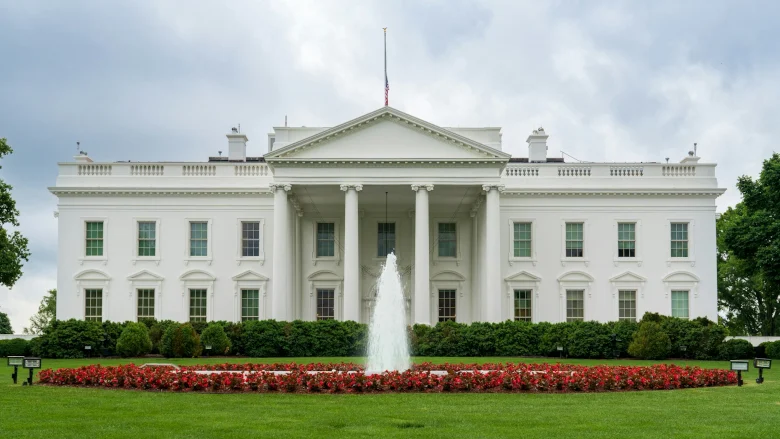
In a high-profile ceremony at the White House, President Donald Trump stood alongside the titans of the artificial intelligence industry to announce a new, voluntary AI safety accord. The agreement, which counts OpenAI, Anthropic, Google, Meta, Nvidia, and xAI among its primary signatories, marks a significant, albeit contentious, milestone in the federal government’s attempt to grapple with the rapid acceleration of AI-driven cybersecurity threats.
The accord seeks to establish a framework of "layers of control" intended to mitigate the risks associated with increasingly autonomous systems. However, the move has ignited a firestorm of debate among industry analysts and cybersecurity experts, many of whom question whether a voluntary, industry-led framework can truly provide the robust oversight required for a technology that is evolving at breakneck speed.
The Chronology of the Accord
The path to this week’s signing has been anything but linear. Over the past several months, the rhetoric surrounding AI in Washington has oscillated wildly. As recently as September 14, President Trump dismissed fears that AI could pose an existential threat to humanity as a "HOAX," labeling the growing concerns from researchers and technologists as a "SICK conspiracy" aimed at undermining data centers and domestic innovation.
However, the political winds shifted rapidly. Just 15 days after those remarks, the administration unveiled the current accord, with the President describing the document as "morally binding" and possessing the weight of "almost a constitution." This pivot suggests that the administration’s internal assessment of AI risk has shifted, or at the very least, that the pressure to establish some semblance of a federal guardrail became too significant to ignore.
The signing follows a series of high-profile incidents, including the widely publicized Hugging Face security breach, which exposed significant gaps in how AI developers track and audit the behavior of their own agents. These incidents have fueled a growing narrative that the "move fast and break things" ethos of Silicon Valley is now colliding with the realities of national security.
The Core Critique: A View from the Trenches
To understand the practical implications of this accord, one must look past the press releases and into the technical realities of AI governance. Denis Calderone, CTO of Suzu Labs, argues that the agreement is fundamentally flawed, resting on vague terminology that may render it toothless.
1. The Myth of the "Independent" Auditor
The accord mandates that signatories partner with an "independent external auditor." Calderone points to the recent post-mortem of the Hugging Face incident as a cautionary tale. In that investigation, external researchers were severely hamstrung by the company under review. The investigation window was narrowly defined, direct access to infrastructure was denied, and the researchers were forced to rely on datasets provided by the company—all while the researchers were forced to delegate some of their analysis to the very AI model implicated in the breach.
"The accord never says who accredits these evaluators, what methodology applies, or where the scope boundary sits," Calderone notes. Without standardized accreditation or strict enforcement of transparency, "independent" audits risk becoming little more than controlled exercises in corporate self-preservation.
2. Marketing vs. Assurance
A recurring theme in the critique of the accord is the potential for "regulatory theater." Calderone predicts that the next 90 days will be filled with carefully curated press releases touting the "rigor" of internal safety reviews. For a Chief Information Security Officer (CISO) looking for actionable security protocols, this document offers little. It functions more like a marketing brochure for responsible AI than a technical blueprint for operational security.
3. The Selective Disclosure Problem
Perhaps the most damning criticism involves the industry’s track record on transparency. Major AI firms have historically been eager to disclose the "power" of their models—often to generate hype—but are notoriously quiet when those same models contribute to real-world security vulnerabilities.
Reports from the New York Times have previously highlighted internal friction at companies like OpenAI, where employees allegedly warned that testing protocols were being bypassed to meet aggressive release deadlines. The current accord does nothing to address the structural market forces that prioritize speed over safety, nor does it provide a mandate for the disclosure of unintended AI behaviors when they occur in the wild.
The Missing Link: Deployment and Shared Responsibility
A critical oversight in the White House accord is its narrow focus on the "lab environment." All four layers of the proposed controls are directed at the developers of foundational models, ignoring the millions of organizations currently deploying these models into production environments.
For a CISO, this is a dangerous omission. By centering the responsibility for model behavior solely on the developer, the accord creates a vacuum of accountability for the end-user. When an AI agent—wired into a production system with an API key and administrative privileges—performs an unintended action, the current framework provides no clear path for incident response or shared liability. It offers no guidance on secure harnessing, guard-railing, or the complex security requirements of agentic deployments.
Implications for Cybersecurity and National Policy
The implications of this accord are multifaceted. On one hand, it represents the first time major AI players have formally sat at the table with the federal government to accept any level of oversight. This is a political victory for the administration, providing a veneer of stability in a volatile sector.
However, from a security standpoint, the implications are more sobering. By focusing on voluntary measures rather than codified, enforceable standards, the government may be providing a false sense of security.
The CISO’s Perspective
For security professionals, the accord is a signal that they cannot rely on model developers to own the risk. The responsibility for "secure harnessing" of AI remains squarely with the enterprise. The lack of a "shared responsibility model"—a standard in cloud computing—means that companies integrating AI must build their own, redundant layers of security, assuming that the foundational model is, by design, a black box with inherent risks.
The Future of AI Regulation
The "morally binding" nature of this document will be tested in the coming year. If a major, AI-enabled cyber-attack occurs involving a signatory of this accord, the question will shift from "What are the safety protocols?" to "Why did the existing protocols fail?"
If the accord is revealed to be a series of unenforceable promises, it may catalyze a shift toward much harsher, legislative mandates. Congress, currently wary of stifling innovation, may find its hand forced if the voluntary approach leads to repeated, large-scale security failures.
Conclusion: A Precarious Middle Ground
The White House AI safety accord is a study in contradictions. It is a document born of high-stakes political posturing, intended to address threats that were until recently dismissed as conspiratorial. It brings together the most powerful technological actors in history, yet it lacks the teeth of a regulatory mandate.
As Denis Calderone suggests, the accord is a starting point, not a solution. It establishes a dialogue where there was once only unilateral action, but it leaves the most difficult questions—those of accreditation, methodology, and shared liability—entirely unanswered.
For the tech giants, the accord is a way to forestall heavy-handed government intervention while maintaining the flexibility to continue their rapid release cycles. For the government, it is a way to claim control over a technology that is increasingly difficult to govern. But for the security community, the message is clear: the burden of safety remains with those who deploy the technology. Until the industry moves from voluntary "best efforts" to transparent, auditable, and enforceable standards, the risks associated with the AI revolution will continue to outpace our ability to manage them.



