

In the world of high fashion, the "invitation" is often a fleeting piece of theater—a precursor to the main event, usually destined for the recycling bin before the final model has even left the runway. However, for Ann Demeulemeester, the legendary Belgian designer and seminal member of the "Antwerp Six," the invitation was never merely a card; it was a manifesto.
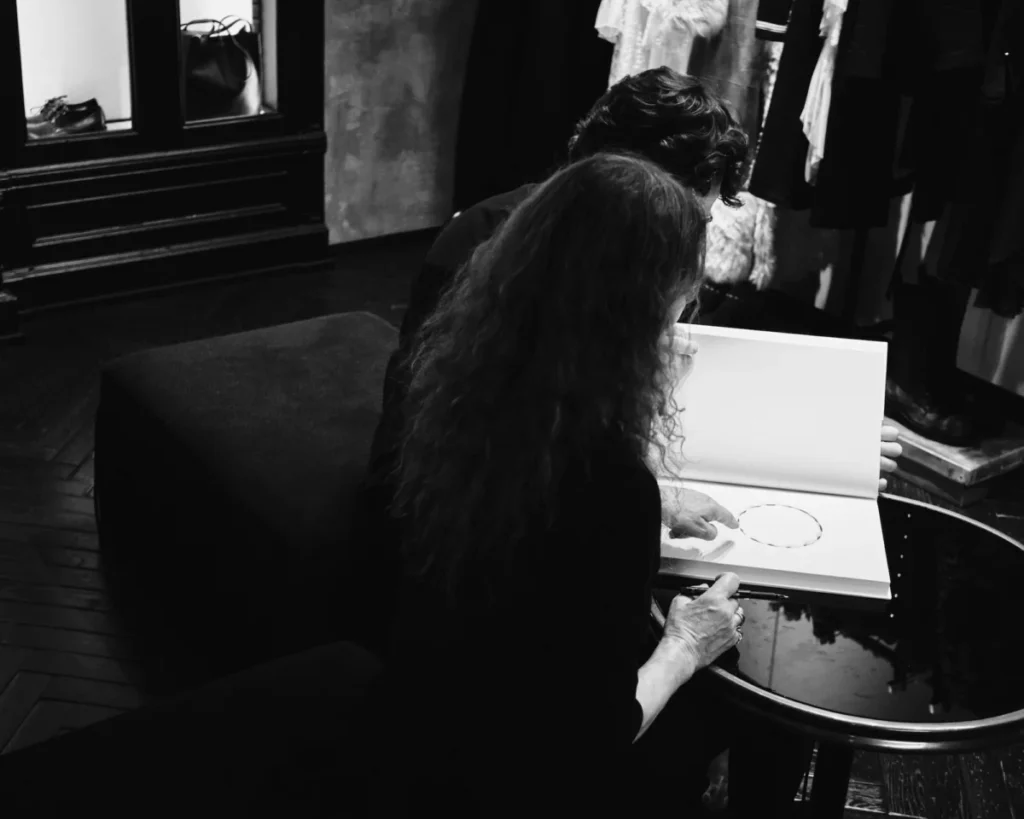
Now, these artifacts of fashion history have been immortalized in a new coffee table book, Ann Demeulemeester: Print. Published by Hannibal and masterminded by the designer’s son, Victor Robyn, the tome serves as a visual bridge between the raw, dark romanticism of Demeulemeester’s tenure and the enduring influence of the Antwerp avant-garde. The book’s arrival coincides with a renewed public fascination with the designer, underscored by a rare public appearance at her Milan flagship store last Friday, where fans, many adorned in her signature monochromatic layers, gathered to celebrate a career that redefined modern elegance.
The Architecture of an Invitation: A Historical Context
To understand the weight of Ann Demeulemeester: Print, one must look at the cultural ecosystem from which it emerged. The "Antwerp Six"—a collective of fashion radicals including Demeulemeester, Dries Van Noten, Walter Van Beirendonck, Marina Yee, Dirk Bikkembergs, and Dirk Van Saene—forever altered the trajectory of global fashion in the 1980s. Their work, characterized by deconstruction, intellectual depth, and a rebellion against the ostentatious glamour of the era, is currently the subject of a major retrospective at MoMu, Antwerp’s world-renowned fashion museum.
Within that exhibition, a dedicated room pays homage to the ephemera of these designers. Among the collection, Demeulemeester’s invitations stand out for their atmospheric intensity. They were never just about logistics. Her cards were frequently moody, flecked with shadows, or adorned with stark, haunting feather motifs. They were objects of tactile art, sometimes offering almost no information regarding location or time, forcing the recipient to engage with the brand’s enigmatic brand identity before even arriving at the show.
The most iconic example remains her invitation for the fall 1990 collection: a pair of white gloves printed with palmistry-inspired lines. Each glove was a canvas for the collection’s core themes—"romantic influence," "destiny," and "love." It was a gesture that perfectly encapsulated her approach: fashion as a vessel for intimacy and fate.
Chronology: A Career of Quiet Intensity
The trajectory of Ann Demeulemeester’s career is a study in consistency and evolution. Founded in 1985 alongside her life and creative partner, Patrick Robyn, the label immediately established a visual language that was entirely its own.

- 1985: The birth of the Ann Demeulemeester brand. Alongside the other members of the Antwerp Six, Demeulemeester begins to challenge the rigid structures of the Paris-dominated fashion system.
- 1995: WWD famously anoints her "Queen Ann" following a blockbuster collection that cemented her status as a titan of dark, poetic tailoring.
- 2014: In a move that shocked the industry, Demeulemeester announced her departure from her namesake brand, choosing to step away from the relentless cycle of the fashion calendar.
- 2024–2026: A period of quiet, selective engagement. She contributed significantly to the ongoing retrospective at MoMu, ensuring her archives were presented with the gravity they deserve.
- 2026: The launch of Ann Demeulemeester: Print. The publication marks a rare return to the spotlight, signaling a desire to archive the graphic legacy of the brand for a new generation.
Supporting Data: The Anatomy of the Book
Ann Demeulemeester: Print is more than a retrospective; it is a collaborative labor of love. As the designer herself recounted during the Milan signing, the project was born from an observation made by her son. "It was an idea of my son," she shared. "He said, ‘Mum, there are so many beautiful graphics, you have to do a book on it.’"
The book is curated to show the evolution of the brand’s visual communication. Beyond the invitations, the pages are interspersed with imagery of iconic garments—tank tops and T-shirts that featured the same dark, romantic graphic designs found on the paper ephemera. This juxtaposition reinforces the holistic nature of her vision; the invitation was merely the first garment the guest "wore" to the show.
The project is available in two distinct iterations:
- Standard Edition: A comprehensive catalog of the graphic history of the label.
- Limited Edition: A collector’s piece that includes an original, authentic show invitation from the spring 1998 collection, housed in a special custom folder.
Distribution is managed through Hannibal’s e-commerce platform and select high-end bookstores, as well as the brand’s physical flagships in Milan and Antwerp.
Official Perspectives and the Future of the Brand
The brand, now under the stewardship of the Antonioli Group and steered by current designer Stefano Gallici, has shown great respect for its heritage. The support for this book launch highlights the synergy between the house’s past and its present.
During the event in Milan, the atmosphere was thick with reverence. Demeulemeester, who has largely avoided the public eye since her 2014 exit, appeared comfortable and engaged. When asked to choose a favorite among the hundreds of invitations compiled in the book, she demurred, noting, "They are all very personal."

For the Antonioli Group, this book serves as a vital touchstone. By revisiting the graphic roots of the house, the brand reminds its contemporary audience that while the silhouettes may evolve under Gallici, the soul of the house—the "romantic influence," the "destiny," the "love"—remains anchored in the vision established four decades ago.
Implications: Why Archives Matter in Modern Fashion
The release of Ann Demeulemeester: Print carries significant weight in today’s digital-first landscape. In an era where fashion shows are broadcast instantly to millions via smartphone screens, the physical invitation has become an endangered species.
By cataloging these items, Demeulemeester is making a statement about the necessity of tangible history. The book serves several functions:
- Educational Value: It provides fashion students and historians with a primary source document for the aesthetic shift in the 1990s, when the Antwerp designers moved fashion away from power-dressing toward a more internal, psychological expression.
- Brand Equity: For the modern Ann Demeulemeester label, the book serves as a marketing tool that reinforces the "intellectual luxury" associated with the name. It validates the brand’s longevity and cultural capital.
- Preservation of Artistry: In a world of fast fashion and rapid trend cycles, the book argues for the "slow" appreciation of design. It asks the reader to look closely at the typography, the paper quality, and the poetic intent behind a simple invitation.
The exhibition at MoMu, which remains open until January 17, 2027, works in tandem with this publication. Together, they provide a comprehensive view of the Antwerp Six’s contribution to fashion history. For those who witnessed the rise of the movement, the book is a nostalgia-heavy keepsake; for those who missed it, it is an essential primer on how a group of students from a small Belgian city managed to capture the imagination of the entire world.
Ultimately, Ann Demeulemeester: Print is a testament to the idea that true style is not just about the clothes on the rack, but about the atmosphere, the philosophy, and the paper-and-ink extensions of a designer’s inner world. As "Queen Ann" steps back into the shadows of her private life, she leaves behind this permanent record, ensuring that the dark, romantic heartbeat of her work continues to pulse through the archives of fashion history.



