

In a move that signals the next evolution of digital retail, luxury conglomerate Tapestry Inc. has officially integrated its flagship brands—Coach and Kate Spade—into Google’s burgeoning AI-powered shopping ecosystem. This partnership marks a significant departure from traditional e-commerce models, aiming to place luxury products directly into the conversational flow of generative AI assistants. By leveraging Google’s Gemini and the underlying Shopping Graph, Tapestry is positioning itself to capture consumer demand at the exact moment of inspiration, effectively bypassing the need for a shopper to navigate a standard web browser.
This collaboration reflects a broader industry trend where retailers are racing to stake their claim in the "AI-first" shopping frontier. As consumers increasingly turn to conversational interfaces to research, compare, and purchase goods, legacy brands are recognizing that their long-term viability depends on meeting customers where they are—whether that is on a physical high street, a traditional website, or a chat-based artificial intelligence platform.
The Evolution of the Retail Landscape: A Chronology
To understand the weight of this development, one must look at the recent trajectory of retail technology and Google’s aggressive expansion into the shopping space.
- 2023: The Debut of AI Mode: Google introduced "AI Mode" to its shopping services, a feature designed to merge its powerful Gemini large language model with its vast Shopping Graph. This allowed users to generate comparative product data, receive tailored recommendations, and, in some cases, utilize virtual "try-on" features powered by augmented reality.
- Early 2024: Scaling Partnerships: Recognizing the potential to revolutionize the consumer journey, Google began courting major retail players. Walmart and Sam’s Club were among the first to integrate their inventory directly into the Gemini app, allowing for seamless voice- and text-activated shopping.
- Mid-2024: The Ulta Beauty Integration: The beauty retail giant Ulta Beauty joined the fold, enabling users to query for skincare and cosmetic recommendations through the AI interface. This provided a proof-of-concept for how high-touch, consultative shopping experiences—previously thought to be the domain of in-store associates—could be replicated via AI.
- Late 2024 (Current Development): The Tapestry Expansion: Tapestry’s decision to onboard Coach and Kate Spade represents a critical shift toward luxury retail. Unlike mass-market goods, luxury items require a higher degree of brand storytelling and visual engagement, proving that AI shopping is maturing from simple transactional utility to a sophisticated, brand-aligned experience.
Supporting Data: Financial Health and Market Context
Tapestry’s decision to invest in AI-assisted shopping arrives at a moment of both challenge and opportunity for the company. According to the company’s most recent fiscal fourth-quarter earnings report, the conglomerate showed resilience and significant growth.
Total revenue for the quarter rose by 9% year-over-year, reaching $1.9 billion. This is a stark improvement from the same period in the previous fiscal year, where the company faced a net loss of $517.1 million, eventually swinging back to a healthy net income of $347.8 million.
However, the performance of its brands remains bifurcated:
- Coach: The powerhouse of the portfolio, Coach, saw its revenue jump 15% year-over-year to $1.6 billion. The brand’s enduring popularity and successful modernization efforts have made it a cornerstone of the company’s digital strategy.
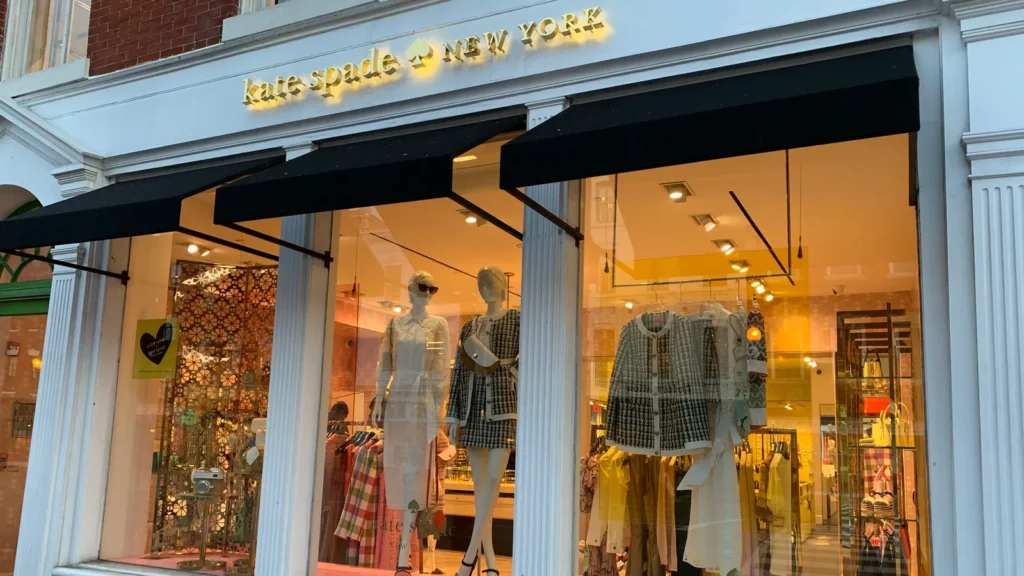
- Kate Spade: In contrast, Kate Spade reported a 7% decline in revenue, landing at $235 million. For a brand navigating changing consumer tastes, the Google AI integration serves as a crucial experimental channel to re-engage younger, tech-savvy demographics who might otherwise overlook the brand in traditional retail spaces.
These figures underscore why Tapestry is turning to AI: it is not merely a novelty but a strategic necessity to stabilize growth and streamline the path to purchase for underperforming segments.
Official Responses and Strategic Intent
The leadership at Tapestry has been vocal about the necessity of this pivot. Joanne Crevoiserat, CEO of Tapestry, framed the partnership as a response to the fragmentation of the modern shopper’s journey.
"Our goal is for shoppers to find and engage with our brands at the moment when inspiration strikes," Crevoiserat said in a recent statement. "Whether it be when a consumer passes by one of our stores, peruses our websites, or chats with AI, we want to be there."
This sentiment was echoed by Yang Lu, Chief Information and Data Officer at Tapestry. Addressing concerns regarding data privacy and the potential loss of customer relationship ownership, Lu emphasized that the integration is fundamentally about flexibility.
"Tapestry’s launch of UCP (Unified Commerce Platform) is about staying close to the consumer and building an infrastructure that is flexible and ready for wherever our customers are discovering and shopping for products," Lu noted. Crucially, Lu clarified that Tapestry maintains the same level of data insight via the Google platform as it does through its own e-commerce site, as orders are ultimately processed through the brands’ own infrastructure.
The Implications: Opportunities and Risks
The integration of high-end luxury into an AI interface brings with it a complex set of implications for the retail sector.

1. The "Distance" Dilemma
Industry analysts have long debated the risks associated with third-party AI platforms. By placing inventory inside Google’s ecosystem, retailers risk creating a "digital intermediary" that stands between them and their customers. Historically, retailers have fought to keep customers within their own apps and websites to collect first-party data, track user behavior, and build brand loyalty. There is a palpable fear that as AI agents become the primary gatekeepers of the internet, retailers could become "invisible suppliers," losing the ability to differentiate themselves through unique web experiences or personalized email marketing.
2. The Personalization Paradox
On the flip side, the AI-driven approach offers a level of personalization that traditional e-commerce has struggled to achieve. Through Gemini, a shopper can ask, "Show me a handbag that matches a navy blue trench coat for an autumn wedding." The AI, utilizing the Shopping Graph, can pull products from Coach or Kate Spade that fit the specific aesthetic, price point, and occasion. This creates a frictionless discovery process that could significantly increase conversion rates for luxury goods, which often suffer from "analysis paralysis" on standard websites with thousands of SKUs.
3. The Future of Omnichannel
Tapestry’s strategy highlights the transition from "omnichannel" to "ubiquitous commerce." The traditional definition of omnichannel—having a store, a website, and a social media presence—is no longer sufficient. The new paradigm requires brands to exist as a "headless" entity that can be invoked by an AI model at any moment. Companies that fail to optimize their product data for these AI agents risk being filtered out of the conversation entirely, as AI models favor retailers that provide structured, machine-readable information.
Conclusion: A New Era of Luxury Shopping
The collaboration between Tapestry and Google marks a milestone in the digital transformation of the luxury sector. While concerns regarding data sovereignty and brand identity remain, the potential benefits—greater accessibility, hyper-personalized product discovery, and the ability to capture consumer interest at the point of intent—are too significant for major players to ignore.
As Tapestry continues to refine its infrastructure, the success of the Coach and Kate Spade integration will likely serve as a blueprint for other luxury houses. The lesson for the retail industry is clear: in the age of generative AI, the storefront is no longer a destination; it is a conversation, and the brands that thrive will be those that can hold their own in the digital ether. Whether this shift ultimately strengthens the bond between brand and consumer or further distances them remains the great, unanswered question of the AI retail era.



