

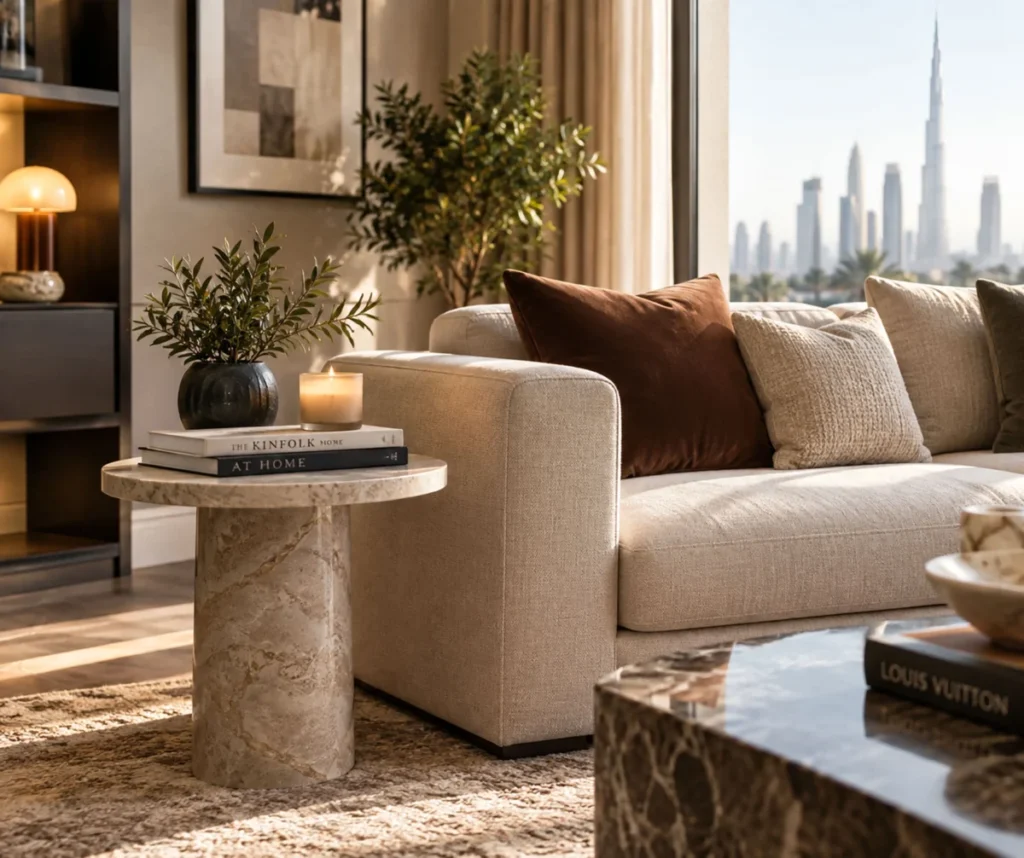
In the meticulously curated landscape of Dubai’s high-end interior design, the narrative often centers on the "hero" pieces: the oversized velvet sectional, the statement chandelier, or the sprawling, hand-knotted Persian rug. Yet, interior designers often argue that the true measure of a room’s success lies in the details—specifically, the side table. Frequently relegated to an afterthought, these compact pieces of furniture are the linchpin of a functional and harmonious living space.
When a living room feels "off" but the major furniture pieces are correct, the culprit is almost invariably a side table that is disproportionate to its environment. Whether it is a pedestal that interrupts the flow of traffic or a silhouette that dwarfs the surrounding seating, the side table is the final punctuation mark in a room’s design language.
The Anatomy of Placement: A Chronology of Choice
The process of selecting the perfect side table should follow a deliberate sequence. Most homeowners fall into the trap of purchasing a piece because it is beautiful in a vacuum, only to find it clashing with the existing furniture layout. To avoid this, follow this chronological approach to interior selection:
- The Foundation (Sofa and Seating): Define the seating area first. Understand the arm height, depth, and upholstery style of your sofa.
- The Traffic Assessment: Map out the pathways through the room. A side table that hinders movement is a design failure, regardless of its aesthetic appeal.
- The Height Calibration: Once the seating is in place, physically sit on the sofa. Reach your arm out naturally. This movement identifies the "sweet spot"—the optimal height for your surface.
- The Material Dialogue: Evaluate the textures already present in the room—linen, leather, metal, or timber—and select a material that either complements or provides a sophisticated contrast.
- The Functional Audit: Determine the purpose of the table. Is it a staging area for a curated collection of books and a lamp, or a utilitarian perch for a glass of water?
Supporting Data: The Physics of Proportion
Professional designers rely on specific ergonomic principles to ensure that a side table serves its purpose without becoming an obstacle.
- The Height Rule: As a general rule, a side table should be within two to three inches of the sofa arm. If the table is significantly higher, it becomes an awkward mountain to climb; if it is significantly lower, it creates a disjointed visual line that forces the user to lean too far down, disrupting the comfort of the seated position.
- The Clearance Requirement: In smaller apartments, where every square centimeter matters, a side table should ideally be narrow—often between 35 and 45 centimeters in width. In larger, open-concept villas common in the UAE, designers have the luxury of "breathing room," allowing for more substantial, sculptural pieces that anchor a corner.
- The Visual Weight Balance: A common mistake is pairing a light, minimalist sofa with a massive, blocky table. The "visual weight" of the table should harmonize with the furniture it sits beside. A delicate, spindly metal frame can keep a room feeling airy, while a solid marble pedestal provides a necessary sense of gravity to a lightweight, modern sofa.
Sculptural Elements: The Shift Toward Natural Stone
In the luxury market of Dubai, there has been a marked shift toward natural stone—specifically marble and travertine—as the material of choice for side tables. Unlike mass-produced synthetic materials, natural stone offers a unique narrative through its veining and tonal variations.
Designers increasingly view these tables as "small-scale architecture." A marble pedestal table is not merely a surface for a coaster; it is an object of art. When integrated correctly, the natural movement of the stone acts as a bridge between other materials in the room. For instance, a travertine side table can serve as a tonal anchor, pulling together the warm hues of a timber floor and the cool textures of a linen-upholstered sectional. The pores and organic texture of travertine provide a tactile experience that glass or high-gloss lacquer simply cannot replicate.
Professional Perspectives: The "Design Dialogue"
When asked about the role of side tables in contemporary living, leading interior decorators emphasize that these pieces should initiate a "conversation" with the rest of the room.
"The most common mistake is the obsession with matching sets," says a senior design consultant based in Dubai. "Homeowners often feel that if they have a coffee table, they must find a side table from the same collection. This is a missed opportunity for depth. A room feels layered and lived-in when you mix pieces that share a common thread—perhaps the same marble base but a different silhouette, or the same metallic finish but a different tabletop shape."
This philosophy of "curated contrast" allows for a more dynamic interior. A round table, for instance, is the perfect antidote to a room dominated by the straight, rigid lines of modern sectionals. By breaking up the geometry, a round table creates a softer flow, making a room feel more inviting and less clinical.
Implications for Modern Living: Functionality vs. Form
The ultimate challenge in choosing a side table is balancing aesthetic aspiration with daily utility.
- The Reading Nook: A side table adjacent to an armchair requires more surface area. It must accommodate a task lamp, a glass of water, and perhaps a book. Here, functionality must take precedence over minimalism.
- The Conversational Hub: At the end of a sofa used primarily for social gatherings, the surface requirements are lower. A smaller, more elegant table suffices, focusing on its role as a design accent rather than a storage surface.
Neglecting these requirements often leads to "table clutter." When a surface is too small for its intended use, items spill over onto the floor or coffee table, leading to visual chaos. Conversely, a surface that is too large often becomes a "catch-all" for mail, keys, and miscellaneous debris, detracting from the curated look of the living room.
Frequently Asked Questions
Why is the height of a side table so critical?
Beyond aesthetics, it is about ergonomics. A side table that is too high forces the user to reach upward, while one that is too low causes strain. The goal is a fluid movement that requires no thought—a seamless extension of your reach while seated.
Can I use a side table as a decorative statement?
Absolutely. In many luxury homes, the side table is treated as a piece of sculpture. If the room is neutral, a bold, high-contrast material—like a deep, dark marble—can serve as the room’s focal point.
Does the shape of the table affect the flow of the room?
Yes. Round tables are excellent for high-traffic areas because they lack sharp corners, which reduces the chance of injury and makes the space feel more open. Square and rectangular tables are best utilized in corners or against walls, where they can maximize surface area without interfering with movement.
How do I mix materials effectively?
Start with one constant. If your coffee table is made of oak, look for a side table that uses a different material, such as metal or stone, but perhaps shares a similar geometric detail or color palette. This creates a cohesive look without the monotony of a matching set.
Is one table enough, or should I use two?
This depends entirely on the symmetry of your room. If you have a long sofa, a matching pair of side tables can provide a sense of order and balance. However, if your room layout is asymmetrical, or if one side of the sofa is blocked by a wall or walkway, a single, well-placed table is often more sophisticated and prevents the room from feeling "over-furnished."
Conclusion: Investing in the Details
In the context of Dubai’s sophisticated design scene, the side table is the ultimate indicator of a thoughtful home. It requires an understanding of proportion, a respect for material, and a clear vision of how the space will be lived in. By moving away from the idea of the "last minute purchase" and treating the side table as a deliberate, architectural element, homeowners can transform their living spaces from standard showrooms into curated, harmonious sanctuaries. The next time you walk through your living room, consider the surfaces beside you—they are the quiet, steady pillars that hold the entire design together.



