
The vibrant green gemstone, peridot, has long captivated with its unique hue. However, a peculiar descriptor often accompanies its beauty: "oily green." Far from being a critique, this term, rooted in historical association and gemmological observation, offers a fascinating glimpse into the very essence of this ancient mineral. Gem-A Tutor Pat Daly delves into the origins of this moniker and explores what it truly reveals about peridot’s intrinsic qualities.
Peridot, a gemstone celebrated for its distinctive verdant tones, has often been described using the evocative phrase "oily green." While this may initially conjure images of a less-than-desirable characteristic, it is, in fact, a time-honored and scientifically grounded descriptor that sheds light on the mineral’s composition and optical properties. This article will explore the rich history of peridot, the geological processes that form it, and the specific gemmological features that give rise to its unique "oily" appearance, demonstrating that this characteristic is not a flaw, but a signature.
The Genesis of Green: Peridot’s Geological Origins
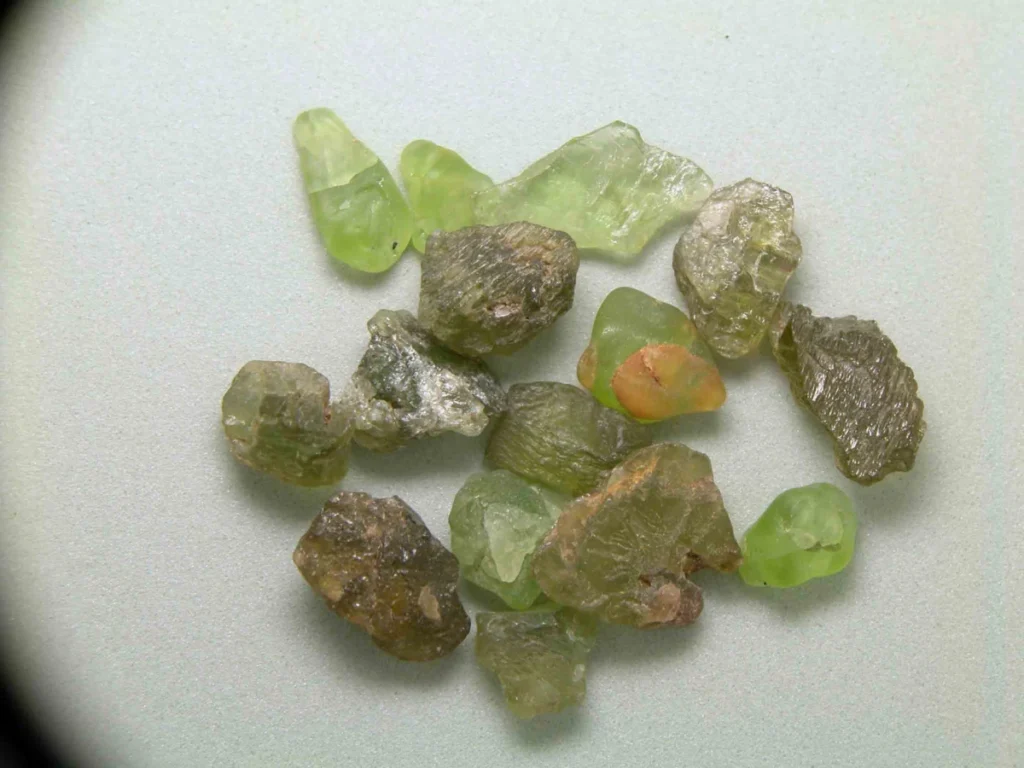
Peridot, scientifically known as olivine, is a magnesium iron silicate with the chemical formula (Mg, Fe)₂SiO₄. While it can occasionally present in shades of brown or yellow, it is its striking green coloration that defines its gem-quality appeal. This signature hue is primarily attributed to the presence of iron within its crystalline structure. The precise percentage of iron, along with the potential influence of trace elements like nickel and chromium, dictates the intensity and shade of green, ranging from a pale yellow-green to a deep, olive-like verdancy.
These gem-quality peridots typically form deep within the Earth’s mantle. Their journey to the surface is often a dramatic one, brought about by volcanic activity. The molten rock, or magma, erupts, carrying with it fragments of the mantle, including the peridot crystals. These crystals can also be found within peridotites, large masses of ultramafic rock that form in the upper mantle and are brought to the crust through tectonic processes, often after significant deformation and recrystallization.
A Chronicle of Color: Peridot Through the Ages
The allure of peridot is not a recent phenomenon. Its history stretches back to antiquity, with its primary source for centuries being the island of Zabargad (also known as St. John’s Island) in the Red Sea. This remote location, steeped in legend and maritime trade, yielded some of the finest peridot specimens for millennia. Historical texts and archaeological findings confirm its use in ancient jewelry and adornments, attesting to its early appreciation by diverse cultures.
Beyond Zabargad, other significant sources have emerged throughout history. Burma (modern-day Myanmar) has also been a notable producer of large and exquisite peridot stones. In more recent times, the American Southwest, particularly Arizona, has become a prominent source, contributing significantly to the global supply. Norway and Pakistan have also contributed to the peridot market, and more recently, substantial deposits discovered in China have become a major supplier to the international jewelry trade, ensuring a consistent availability of fine gem material.
The Olive Connection: Understanding Peridotites
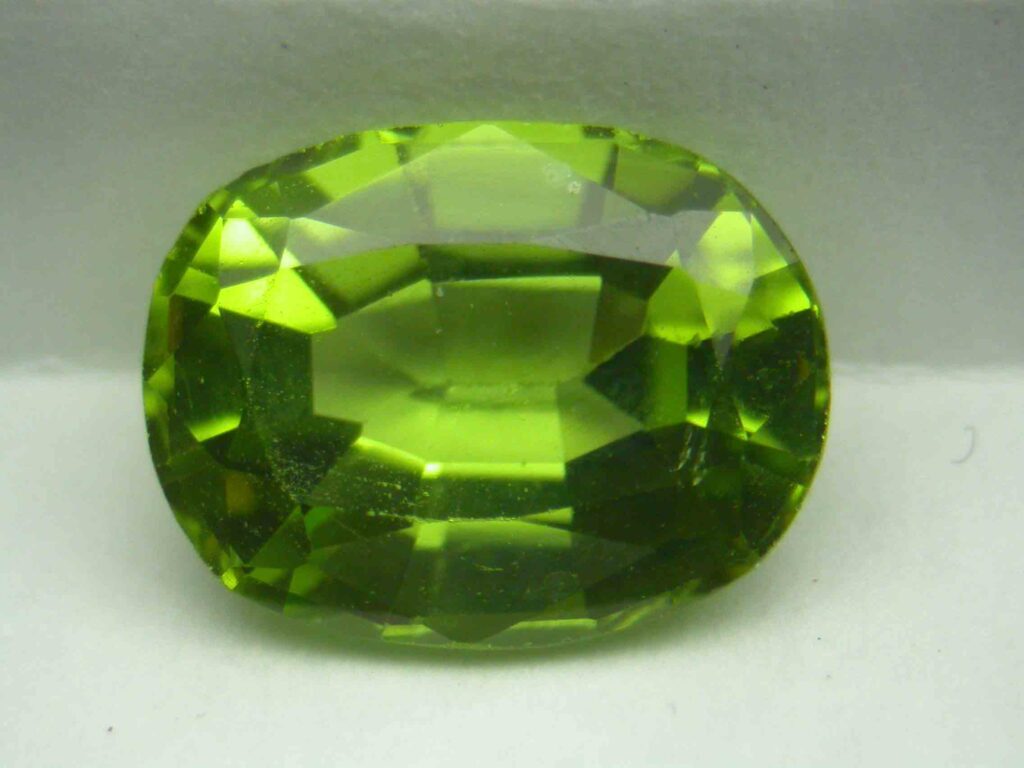
The very name "olivine" hints at its characteristic color, derived from the olive fruit. Peridotites, the rock formations where much of gem-quality peridot is found, are predominantly composed of this mineral. The resemblance between the yellowish-green hue of olivine and the color of olives, and subsequently the oil pressed from them, has led to this enduring association. Olive oil, a staple product for millennia, became a familiar reference point for color, and it’s unsurprising that its rich, golden-green tones were applied to describe this precious gem.
However, while the comparison to olive oil is apt in its general greenness, it’s important to note a subtle distinction. Olive oil is typically more yellow than peridot, which often displays a more pronounced and vibrant green. This difference in hue is a testament to the specific mineralogical composition and the way light interacts with the peridot crystal.

Deciphering "Oily Green": Inclusions and Optical Phenomena
The term "oily" in relation to peridot is not meant to imply any artificial treatment or impurity in the conventional sense. In fact, peridot is highly valued precisely because it is one of the few gem materials that is rarely treated. Instead, the descriptor "oily" arises from specific visual characteristics observed within the stone, often related to its internal structure and how light behaves within it.
One of the primary contributors to this perception is the presence of sub-microscopic inclusions. These tiny imperfections, trapped within the crystal lattice during its formation, can scatter light internally. This internal scattering can lead to a phenomenon sometimes referred to as a "sleepy" appearance, where the gemstone’s transparency might seem slightly reduced, giving it a softer, less intensely brilliant quality than a perfectly inclusion-free stone.
Furthermore, the optical properties of peridot itself can contribute to the "oily" impression. Peridot exhibits a relatively high refractive index and, significantly, strong double refraction. This means that light entering the stone is split into two rays, which travel at slightly different speeds and emerge at slightly different angles. In some orientations, particularly when viewing pavilion facet edges, this doubling can cause a slight blurring or a softened appearance, akin to looking through a slightly viscous liquid. This visual effect, combined with the internal light scattering from inclusions, has historically led to the "oily green" description.
While these features might be perceived as undesirable by some, they are not necessarily detrimental to a peridot’s beauty. In fact, a certain degree of light scattering can, in some instances, enhance the gem’s visual appeal. It can help to illuminate facets that might otherwise appear dark, creating a more lively and dynamic play of light within the stone, even in well-cut and polished specimens. The presence of specific inclusions, such as biotite, a common mineral found in peridot, can also add unique visual interest and serve as identifying markers for gemmologists.

Peridot’s Enduring Uniqueness: A Single Vision of Verdancy
In the vast world of gemstones, many species are celebrated for their diverse color palettes, a spectrum of optical effects, and a multitude of named varieties. Peridot, however, stands apart in its singular focus. It is essentially a gemstone with one dominant color – that captivating green – and this consistency has been a key factor in its enduring appeal for thousands of years.
Its pleasing green hues, ranging from vibrant lime to deep olive, combined with consistently good transparency, make it a favorite among jewelry designers, artisans, and their clientele. The current global supply chain for peridot is robust, with fine gem material regularly available in quantities that allow for its sale at moderate prices. While exceptionally large and flawless specimens can command significant sums, peridot remains an accessible and beloved gemstone for many.
The "oily green" descriptor, far from being a flaw, is an integral part of peridot’s identity. It speaks to the mineral’s geological origins, its unique optical properties, and the rich history that has shaped its perception. It is a testament to the subtle complexities that make each gemstone a unique marvel of nature, inviting us to look beyond the surface and appreciate the intricate stories held within.
For those eager to delve deeper into the fascinating world of peridot and other commercially significant gemstones, Gem-A offers comprehensive educational resources. The online-only course, GemIntro, provides a foundational understanding for beginners, while the Gemmology Foundation course offers a structured pathway to kickstart a career in gemmology and its related professions.

Main Image: A faceted peridot gemstone, photographed by the author, Pat Daly.