For centuries, volcanologists have been haunted by a persistent mystery: why do two volcanoes with nearly identical chemical compositions and geological settings produce vastly different eruptive styles? In some cases, a volcano may launch spectacular, sky-piercing fountains of lava, while a neighbor with similar magma characteristics produces a sluggish, effusive flow.
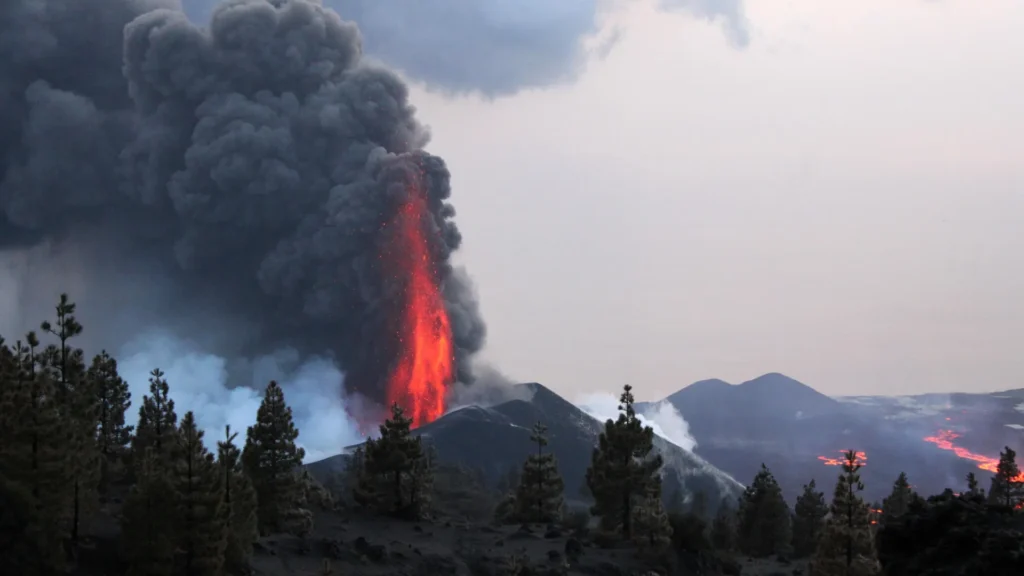
New research, led by an international team from The University of Manchester, has identified a critical, previously overlooked variable in the volcanic equation: "superheating." By analyzing magma samples from the 2021 Tajogaite eruption on the island of La Palma, Spain, scientists have discovered that the thermal history of magma—specifically how hot it gets before it reaches the surface—acts as a master switch, controlling the rate of crystallization and, by extension, the explosivity of an eruption.
The Mechanics of Magma: Understanding the Crystal Constraint
To understand why this discovery is a paradigm shift, one must first understand the role of crystals in magma. Magma is not simply molten rock; it is a complex, high-pressure slurry of liquid, gas bubbles, and solid crystals. As magma rises from the deep crust toward the surface, the drop in pressure and temperature typically triggers the growth of crystals.
As these crystals multiply, they fundamentally alter the physical properties of the magma. They increase its viscosity—its resistance to flow—turning a fluid, runny substance into a thick, paste-like material. This viscosity dictates everything from how fast magma moves through volcanic conduits to how easily gases can escape. If gas bubbles are trapped by thick, crystal-rich magma, pressure builds, often leading to more violent, explosive activity.
However, the new study, published in Nature Communications, suggests that a "superheating" event—where magma is heated beyond the threshold where crystals remain stable—can radically alter this process. Intense heat effectively "cleanses" the magma, dissolving existing crystal seeds that would otherwise provide a scaffolding for new growth. Furthermore, this process reorganizes the magma at a microscopic level, creating a more uniform structure that is temporarily "crystal-resistant."
Chronology of a Laboratory Volcano
The research was not limited to theoretical modeling; it was grounded in rigorous empirical observation. The team began by collecting samples from the 2021 Tajogaite eruption, a high-profile event that offered a perfect case study for active, ongoing volcanic processes.
Phase 1: The Diamond Light Source Experiments
The core of the study involved high-tech, real-time observation. Using the Diamond Light Source, the UK’s national synchrotron science facility, researchers utilized synchrotron X-ray microtomography. This technology allowed the team to peer inside the opaque, high-pressure environment of a "volcano in a bottle." By recreating the extreme temperatures and pressures of the Earth’s crust, the researchers could watch the formation of crystals in real time, observing how the magma’s structure responded to thermal fluctuations.
Phase 2: Long-Duration Complementary Studies
To ensure the findings held up over longer temporal scales, the team conducted parallel, ex-situ experiments in Prague. These studies allowed for the observation of samples over extended periods, moving beyond the millisecond-by-millisecond precision of the synchrotron to see how crystallization kinetics played out over hours and days.
Phase 3: Numerical Integration
Once the experimental data was gathered, it was fed into sophisticated numerical models of magma ascent. These simulations tracked how magma would travel through the Earth’s crust, incorporating the measured "nucleation delays" to see how they would affect the final volcanic output.
Supporting Data: The Eight-Hour Delay
The contrast observed by the researchers was striking. In samples that were not subjected to superheating, the onset of crystallization began within a mere 20 minutes. The magma quickly thickened, its viscosity rising in tandem with the growing crystal population.
In stark contrast, samples that underwent strong superheating remained liquid and clear of crystals for more than eight hours. This massive delay in crystallization fundamentally changes the physics of the magma’s ascent. By remaining fluid and less viscous for longer periods, the magma can surge toward the surface with much greater velocity. This rapid ascent is the engine behind dramatic lava fountains—events that define some of the most visually spectacular eruptions on Earth.
Official Responses and Scientific Perspective
The implications of this study are being felt across the field of volcanology. Dr. Barbara Bonechi, the lead author and a Research Associate at The University of Manchester, emphasizes that the scientific community had long been missing a piece of the puzzle regarding how magma responds to thermal injections during its ascent.
"The history of crystal and bubble growth can dramatically control how a magma erupts," Dr. Bonechi explained. "In particular, as more crystals grow, they eventually have a dramatic effect on magma viscosity. Until now, we did not fully understand the dynamics of crystal growth for magmas that received an injection of superheat just before ascent. But using our exciting and newly developed X-ray transparent pressure vessel combined with synchrotron X-ray microtomography, we can actually observe these processes ‘in situ’."
Dr. Margherita Polacci, a Senior Lecturer in Volcanology at The University of Manchester and co-author of the study, highlighted how this discovery challenges the status quo of hazard assessment.
"Current volcanic hazard models typically focus on magma chemistry, gas content and pressure changes," Dr. Polacci noted. "This work suggests that pre-eruptive thermal history and crystallization kinetics may also play an important role in controlling magma ascent and eruptive behavior, with implications for volcanic hazard assessment."
Implications for Global Volcanic Hazard Assessment
The shift from a "chemistry-only" approach to one that accounts for "thermal history" is a significant evolution in geology. Volcanologists generally look at the chemical "recipe" of the magma—the silica content, the iron, the magnesium—to predict how an eruption might behave. While chemistry remains a vital component, this research proves that the biography of the magma is equally important.
Improving Eruption Forecasts
By integrating these new findings into monitoring protocols, scientists may be able to refine their forecasts. If seismological data or gas emissions suggest that an injection of heat is occurring within a magma chamber, officials could use this information to better estimate whether an upcoming eruption will be a slow, manageable lava flow or a more explosive, fountain-driven event.
Rethinking Hazard Mapping
Hazard maps, which delineate zones of risk around active volcanoes, are often based on historical data of previous eruptions. However, if a volcano’s thermal state changes over time, its eruptive style could potentially shift. Understanding the mechanism of superheating allows for a more dynamic, rather than static, approach to hazard mitigation.
A New Tool for the Future
The development of X-ray transparent pressure vessels and the utilization of synchrotrons represent a technological leap forward. As this technology becomes more accessible, researchers expect to apply it to a broader range of volcanic samples, potentially unlocking further secrets about the deep-earth processes that govern our planet’s most volatile phenomena.
Ultimately, the research led by The University of Manchester serves as a poignant reminder that even the most massive, destructive forces on Earth are governed by microscopic events. The way a tiny crystal fails to form in the heat of the crust can mean the difference between a gentle glow and a violent display of nature’s power. By focusing on these invisible, thermal histories, volcanologists are finally beginning to peel back the layers of mystery that have shielded the inner workings of our planet’s volcanoes for generations.