

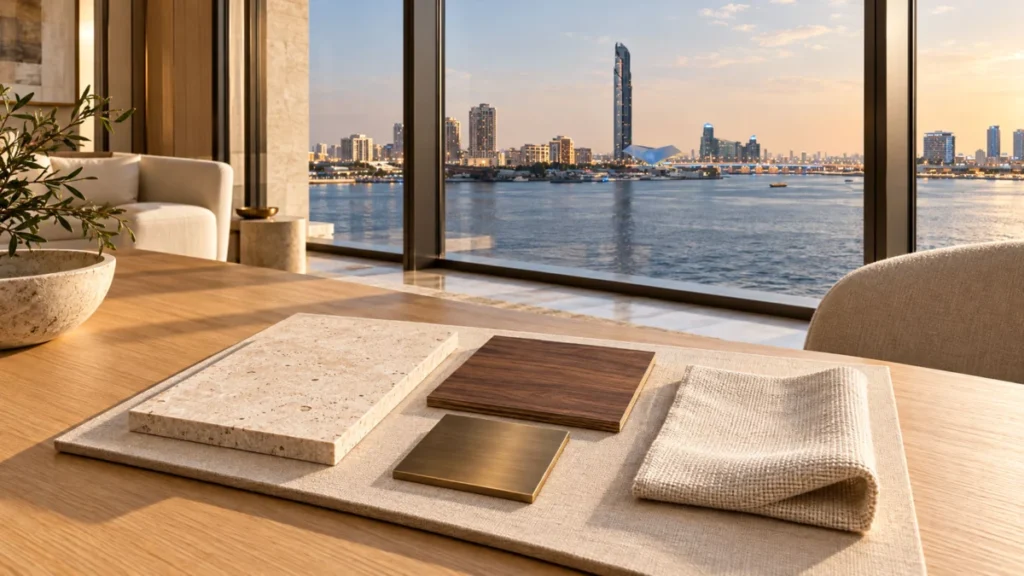
In the rarefied atmosphere of Dubai’s ultra-luxury real estate market, the most coveted trophy properties are often never listed on the open market. They are claimed, secured, and finalized while they exist only as blueprints, digital renderings, and meticulously curated material samples. For the global elite, purchasing "off-plan"—buying a property before its completion—has evolved from a speculative financial strategy into a sophisticated exercise in exclusivity and bespoke living.
In Dubai, timing is no longer just a market variable; it is a form of currency. By entering the market at the launch phase, high-net-worth individuals (HNWIs) gain access to the "architectural crown jewels": the penthouse with the widest sweep of the Dubai Creek, the waterfront villa with an unobstructed horizon, or the sky-mansion that occupies an entire floor.
The Strategy of Early Access: Beyond Price
While the allure of early-bird pricing—often significantly lower than post-completion valuations—is a primary driver, the motivations for seasoned investors are increasingly nuanced.
1. The Power of Choice
When a project is announced, the inventory is at its peak. Buyers who act early are not merely purchasing square footage; they are curating their lifestyle. They select the units with the optimal orientation to catch the sunset, the most private elevator access, or the layout that best facilitates their personal hosting requirements. Once a tower is complete, the "best" units are rarely traded, often held by original investors as permanent family assets.
2. The Personalization Window
Modern luxury is increasingly defined by hyper-personalization. Off-plan buying creates a unique "window of influence" where buyers can collaborate with developers to influence interior specifications. Whether it is selecting rare marbles from Italy, installing bespoke smart-home infrastructure, or altering internal layouts to accommodate expansive art collections, the off-plan process allows the home to be an extension of the owner’s identity long before the keys are handed over.
3. Staged Capital Commitment
From a financial standpoint, off-plan projects offer a structured payment plan. Unlike secondary market acquisitions, which require full capital deployment at the point of transfer, off-plan purchases allow buyers to distribute their investment across the construction cycle. This provides flexibility, allowing liquidity to remain deployed in other ventures while the asset appreciates in value during the build phase.
A Taxonomy of Dubai’s Luxury Product
The landscape of Dubai’s development is as diverse as the international clientele it attracts. Understanding the specific asset classes is essential for any serious investor.
| Property Type | Key Differentiators | Primary Appeal |
|---|---|---|
| Penthouses | Elevated living, 360-degree views, expansive outdoor terraces. | Unrivaled prestige and sky-high seclusion. |
| Sky Villas | Villa-style footprints integrated into high-rise architecture. | Combining suburban space with urban connectivity. |
| Branded Residences | Partnerships with haute couture, automotive, or hotel groups. | Guaranteed service standards and aesthetic pedigree. |
| Waterfront Villas | Prime beach frontage or direct marina access. | The quintessential Mediterranean-style resort lifestyle. |
| Island Mansions | Low-density, high-plot-size developments on private islands. | Maximum privacy and extreme scarcity. |
Geography of Prestige: Where Capital is Flowing
The Dubai 2040 Urban Master Plan serves as the roadmap for the city’s next two decades. This government-led initiative dictates where infrastructure, green spaces, and high-end residential hubs will proliferate. Investors are increasingly looking at "master-planned communities" that integrate world-class amenities with transport connectivity.
Areas like Dubai Creek Harbour, Palm Jumeirah’s latest extensions, and the burgeoning developments along the Dubai Water Canal have become the focal points for high-end off-plan activity. These locations are chosen not just for their current aesthetic, but for their long-term position within the city’s strategic growth trajectory.
Evaluating the "Exceptional" Launch
Not every luxury development holds its value over a twenty-year horizon. To differentiate a fleeting trend from a lasting asset, sophisticated buyers evaluate three critical pillars:
- Developer Pedigree: A developer’s track record for quality, delivery timelines, and the ongoing maintenance of their properties is the most reliable predictor of long-term appreciation.
- Architectural Vision: Buildings designed by Pritzker Prize-winning architects or globally renowned design firms tend to command higher resale and rental premiums due to their cultural and aesthetic relevance.
- The "Scarcity Factor": Properties that occupy unique geographic positions—such as the last remaining plots on a prestigious beach or a location with a protected, unbuildable view—carry an inherent premium that is immune to market fluctuations.
The Role of Specialist Advisory
Given the speed at which top-tier units are absorbed, the "public" market is often a myth for the most exclusive properties. Many buyers now rely on specialist firms—such as GRD Off Plan—to bridge the gap between developer launches and private capital. These specialists provide a concierge-like service: scouting pre-launch inventory, conducting comparative analysis on floor plans, and navigating the nuances of legal contracts to ensure priority access.
Chronology of an Off-Plan Investment
The lifecycle of an off-plan acquisition follows a distinct rhythm:
- Phase 1: The Pre-Launch Inquiry. Early engagement with specialists to identify the development’s vision and secure a "letter of interest."
- Phase 2: Due Diligence and Customization. Reviewing the Sale and Purchase Agreement (SPA), understanding the payment schedule, and discussing bespoke interior options.
- Phase 3: The Construction Horizon. A multi-year period characterized by regular updates. This is where investors often review progress, monitor market shifts, and prepare for the final stages of the asset’s completion.
- Phase 4: Handover and Activation. The final inspection, snagging (identifying and correcting minor defects), and the transition into a furnished, livable home.
Official Perspectives and Market Governance
The Dubai Land Department (DLD) and the Real Estate Regulatory Agency (RERA) have significantly tightened regulations to protect buyers. The implementation of escrow accounts—where buyer payments are held in trust and released only as construction milestones are met—has transformed Dubai from a speculative frontier into one of the most transparent and secure real estate markets globally.
In recent statements, urban planners have emphasized that the current wave of luxury development is not merely about volume, but about "curated urban living." The focus is on integrating high-end residential units with wellness centers, sustainable energy systems, and high-speed digital infrastructure, aligning the city with the demands of the modern, global citizen.
Implications for the Future
The rise of off-plan luxury in Dubai suggests a fundamental shift in the global wealth landscape. Dubai is no longer seen as a transient tax haven, but as a primary residence for the world’s elite. The "off-plan" phenomenon is the outward manifestation of this trend: families and investors are making long-term bets on the city’s ability to remain a hub of innovation, safety, and luxury.
However, caution remains a virtue. As with any high-end investment, the risk of project delays or shifts in final specifications exists. Buyers are encouraged to retain legal counsel to scrutinize contracts and to maintain a realistic view of the time required to bring these grand visions to life.
Conclusion: Securing the Future
Buying off-plan in Dubai is an act of foresight. It is the ability to look past the construction hoarding and see the finished masterpiece. By leveraging early access, participating in the customization process, and choosing projects with sound structural and aesthetic foundations, investors are doing more than buying real estate—they are securing a stake in one of the most ambitious urban experiments in human history.
For those who understand the value of "first choice," the future isn’t just something that happens; it is something they design, one floor plan at a time.