

By Prasad Ananthakrishnan and Vera Songwe
October 7, 2026
The global economic landscape is undergoing a profound structural shift. As the United States grapples with persistent inflationary pressures that have pushed dollar-denominated borrowing costs to multi-year highs, a striking divergence has emerged on the other side of the Pacific. In China, monetary policy easing has pushed interest rates toward historic lows, creating a massive liquidity window that is currently underutilized by emerging markets.
For African nations, which are increasingly caught between the competing gravitational pulls of Washington and Beijing, this macroeconomic reality offers more than just a geopolitical headache—it presents a strategic opening. By carefully navigating the recent diplomatic thaw between the world’s two largest economies, African governments have a rare opportunity to pursue a "hybrid financing" model: partnering with the United States to develop natural gas infrastructure as a transition fuel, while simultaneously tapping into low-cost Chinese capital markets to bankroll a massive expansion in solar energy and battery storage capacity.
The State of Play: A Fragile Diplomatic Truce
The recent state visit by Chinese President Xi Jinping to Washington, D.C., concluded with a modest, albeit significant, outcome: a two-month extension of the existing bilateral trade truce. While critics were quick to point out the lack of sweeping structural agreements or tariff rollbacks, the move was not intended to be a grand resolution of the systemic rivalry between the two powers.
Instead, the visit served as a vital "stabilization signal." Both President Xi and his American counterpart appear intent on cooling the rhetorical and economic temperature ahead of two high-stakes summits: the Asia-Pacific Economic Cooperation (APEC) summit in Shenzhen this November and the G20 gathering in Miami in December. This period of deliberate de-escalation provides a narrow, time-sensitive window for developing nations to maneuver without fear of immediate secondary sanctions or intense diplomatic arm-twisting.
Chronology of the Divergence: From Policy to Markets
To understand the opportunity, one must look at the timeline of the current financial chasm:
- Q1 2026: The Federal Reserve maintains a "higher-for-longer" stance, driven by stubborn service-sector inflation. Yields on the US 10-year Treasury note remain elevated, driving up the cost of capital for emerging market debt issuance denominated in dollars.
- Q2 2026: China, struggling with sluggish domestic consumption and a property market deleveraging cycle, pivots to a more aggressive monetary easing stance. The People’s Bank of China (PBOC) lowers the Loan Prime Rate (LPR) to stimulate industrial investment.
- August 2026: Data reveals that the spread between US dollar-denominated corporate bonds and Chinese Yuan-denominated bonds reaches a decade-wide peak.
- October 2026: President Xi’s visit to Washington confirms that both nations are prioritizing economic stability to avoid a global recessionary feedback loop, effectively greenlighting a period of relative calm in international trade relations.
Supporting Data: The Case for Hybrid Financing
The economic imperative for African nations is clear. According to the latest data from the African Development Bank, the continent faces an annual financing gap of over $100 billion to meet its 2030 climate goals. Relying on traditional Western multilateral development banks—which are themselves constrained by rising capital costs—is no longer sufficient.
The Cost of Capital
As of October 2026, the weighted average cost of capital (WACC) for energy projects in Sub-Saharan Africa remains prohibitively high, often exceeding 12–15% for projects financed through traditional dollar markets. In contrast, Chinese development banks, incentivized by domestic liquidity, are currently offering project financing at rates significantly lower, sometimes hovering near 4–6% for strategic infrastructure projects, particularly those involving renewable technologies.
Energy Mix Potential
Africa’s energy future requires a two-pronged approach:
- Gas as a Transition: Many African nations, including Nigeria, Senegal, and Mozambique, hold significant natural gas reserves. American investment, backed by the U.S. International Development Finance Corporation (DFC), is ideally suited for the capital-intensive, high-technology requirements of Liquefied Natural Gas (LNG) processing and export infrastructure.
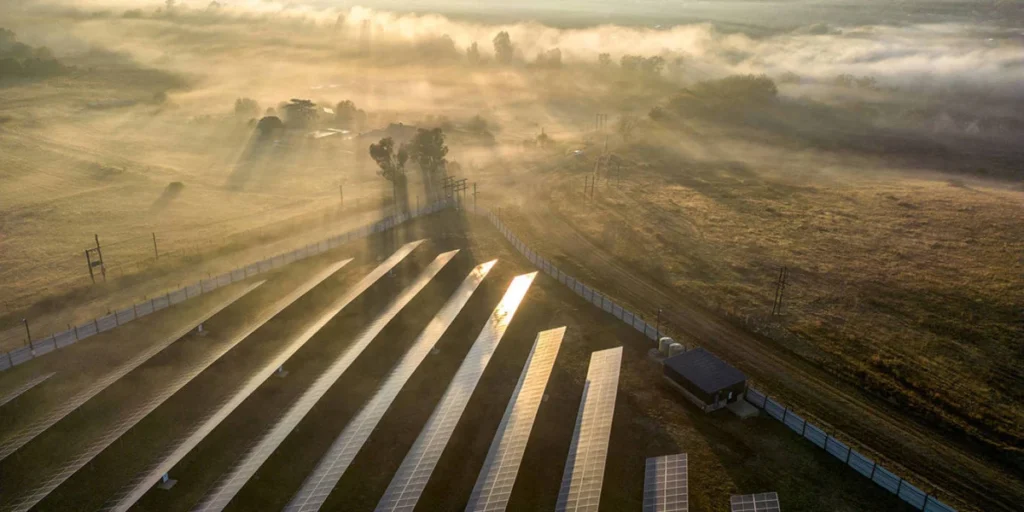
- Solar and Storage: China remains the world’s dominant player in the solar supply chain and battery storage technology. By tapping into low-cost Yuan-denominated credit lines, African nations can import these technologies at scale, significantly lowering the "levelized cost of electricity" (LCOE) for their domestic grids.
Official Responses and Strategic Positioning
Diplomatic corridors in Washington and Beijing have signaled a quiet acceptance of this multi-alignment strategy. During his post-summit briefing, the U.S. Secretary of State emphasized that "the United States does not ask African nations to choose sides, but rather to choose sustainable, transparent investment."
Conversely, Beijing’s Ministry of Foreign Affairs issued a statement highlighting the "Global Development Initiative," underscoring China’s willingness to provide "high-quality, low-cost financing" for Africa’s green energy revolution. This subtle competition to be the "preferred partner" gives African leaders the leverage to demand better terms, greater technology transfer, and local content requirements that benefit domestic workforces.
Implications for African Economic Sovereignty
The implications of this strategy are profound. If managed effectively, this pivot could catalyze a period of "energy-led industrialization."
1. Reducing Debt Vulnerability
By diversifying the currency composition of their debt portfolios—moving away from a sole reliance on dollar-denominated debt—African nations can mitigate the risks associated with currency volatility. If the U.S. dollar remains strong, the Yuan-denominated portion of a nation’s debt becomes a natural hedge.
2. Infrastructure Modernization
The combination of American-backed gas infrastructure and Chinese-backed solar-plus-storage grids provides a "baseload-plus-peak" energy solution. This allows for a more reliable power supply, which is the single largest barrier to manufacturing growth in Africa.
3. Diplomatic Autonomy
By acting as a bridge between these two economic spheres, African nations can move from being passive recipients of aid to active brokers of their own development. The ability to engage with both Washington and Beijing demonstrates a maturity in foreign policy that commands respect on the global stage.
Risks and Challenges
Despite the potential, this path is fraught with complexity. African governments must remain vigilant against "debt-trap" narratives and ensure that all infrastructure projects meet high environmental, social, and governance (ESG) standards. The risk of being caught in the middle if the US-China thaw proves temporary is real. Therefore, domestic policy must remain focused on long-term project viability rather than short-term political gains.
Conclusion
The convergence of high dollar borrowing costs and the availability of inexpensive Chinese capital presents a unique structural opportunity for Africa. By decoupling the financing of natural gas from the financing of solar and storage, and by leveraging the diplomatic space created by the recent US-China rapprochement, African leaders can effectively lower the cost of their energy transition.
The path forward requires bold, coordinated action. African ministries of finance must now move to integrate their national energy master plans with the available liquidity from both the East and the West. The goal should not be to align with one superpower, but to ensure that both contribute to the continent’s long-term prosperity. As the world watches the unfolding summits in Shenzhen and Miami, Africa’s ability to seize this moment will determine whether the next decade becomes one of energy-fueled growth or continued stagnation. The capital is there, the diplomatic window is open, and the energy needs are urgent. The time to act is now.



