

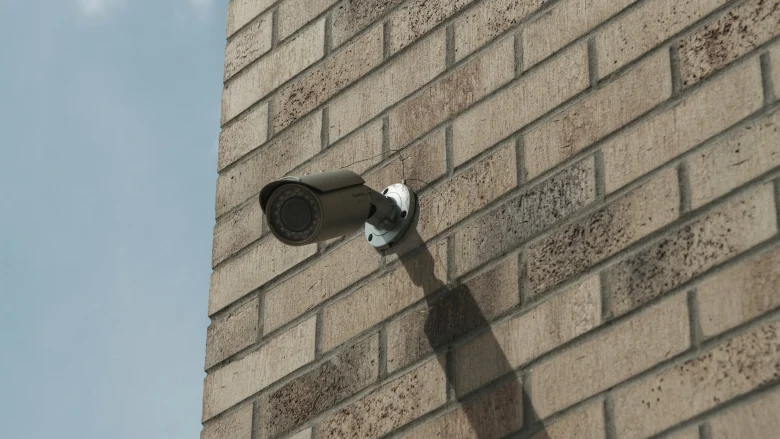
The security landscape is currently undergoing a seismic shift, characterized by a paradox: as technology becomes more capable, the complexity of managing it threatens to overwhelm the very organizations it is intended to protect. Security leaders are caught in a perpetual race to optimize their security posture while balancing tightening budgets against a barrage of vendor hype. In this high-stakes environment, the distinction between "innovation" and "distraction" has never been more critical.
As teams strive to build connected, intelligent site management ecosystems, they are increasingly forced to confront the fundamental architectural choice defining the next decade of security: edge computing versus cloud processing. Understanding the nuances of these two models is no longer just a technical exercise; it is a strategic imperative for any organization aiming to move toward a lean, intentional, and high-performance security stack.
Main Facts: The Evolution of Compute in Physical Security
At its core, the security industry’s digital transformation is a story of data movement and decision-making speed. For years, the industry relied on on-premises compute terminals—fixed, localized, and human-dependent. Today, the shift is toward decentralized intelligence.
Cloud processing involves transferring raw data from a sensor or device to a remote data center, where it is processed by massive, centralized AI models. It is the backbone of the SaaS revolution, favored for its ability to aggregate data across multiple locations and its low barrier to entry regarding hardware maintenance.
Edge processing, conversely, executes AI inference as close to the source of data as possible—directly on the camera, sensor, or actuator. While the concepts of edge and cloud have existed in various forms since the 1960s, their application in security is now converging. The rise of "physical AI" and IoT sensor fusion has pushed edge computing back into the spotlight, challenging the cloud-first mentality that has dominated the last twenty years.
Chronology: From Analog Silos to Hybrid Intelligence
The trajectory of security technology has followed a distinct path:
- 1960s–1980s: The Era of Localized Intelligence. Security was defined by on-prem hardware. Processing was limited to the immediate vicinity of the sensor. If a guard wasn’t watching a monitor, the data essentially ceased to exist in a meaningful way.
- 1990s–2010s: The Cloud Ascent. The maturation of internet infrastructure and the launch of platforms like Amazon Web Services (AWS) shifted the focus to the cloud. Organizations embraced this model because it eliminated the IT nightmare of managing localized server closets. It offered centralized management and the promise of "limitless" storage.
- 2020–Present: The Edge Renaissance. With the explosion of high-definition video and IoT devices, the sheer volume of data being sent to the cloud became a liability. Bandwidth costs skyrocketed, latency issues emerged, and security teams began to experience "alert fatigue" caused by noisy, cloud-aggregated data streams. We are now in the age of the "Hybrid Ecosystem," where the intelligence is distributed based on the specific requirements of the security use case.
Supporting Data: The Economics of AI and Latency
The decision to process at the edge versus the cloud is governed by two primary constraints: cost and time.
The Cost of Intelligence
Every AI request in a cloud environment is effectively a transaction. When a security camera sends a clip to a cloud-based AI engine for classification, it consumes tokens and incurs variable fees. At an enterprise scale involving thousands of cameras, these costs are not linear; they are exponential. By shifting the initial "heavy lifting" of AI inference to the edge, organizations can filter out "noise" (e.g., movement of trees or shadows) and only transmit meaningful, actionable alerts to the cloud. This reduces bandwidth consumption and lowers the total cost of ownership (TCO) significantly.
The Millisecond Metric
In physical security, speed is not just a performance metric—it is a safety requirement. If a camera identifies a breach, the time required to send that data to a cloud server, process it, and send a command back to an electronic lock can be the difference between a successful intervention and a security failure.
In a cloud-only architecture, network latency or a temporary internet outage can render the entire security system "blind" and "deaf." Edge processing ensures that the device can reason and respond autonomously. If the network goes down, the camera still knows it is seeing an intruder and can trigger the alarm locally. Milliseconds matter when you are trying to deter a threat before it escalates.
Official Perspectives: The Role of the Integrated Stack
Industry experts and security architects are increasingly moving away from the "Cloud vs. Edge" debate, framing it instead as a "Cloud AND Edge" integration strategy.
"The optimal setup is an edge-cloud hybrid," notes industry analysts who argue that the future of security lies in a tiered approach. In this model, the edge acts as the ‘tactical’ layer, handling immediate inference, sensor fusion, and rapid response. The cloud acts as the ‘strategic’ layer, handling data aggregation, long-term analytics, and the execution of high-level, non-deterministic AI models that require massive compute power.
This hybrid approach allows organizations to:
- Lower Total Cost of Ownership: AI is handled on-device where possible, minimizing data transfer fees and reducing the need for specialized IT staff to manage local server infrastructure.
- Ensure Reliability: Redundancy is built into the architecture. If the WAN goes down, local site security remains operational.
- Future-Proof Investments: By decoupling the application layer (mobile/web) from the processing layer (edge), organizations can upgrade their AI capabilities without having to replace their entire fleet of physical sensors.
Implications for Security Strategy
The shift toward edge-cloud hybrid architectures has profound implications for how security teams must plan their investments.
1. Moving Beyond "Alert Fatigue"
Teams that rely exclusively on cloud-based AI often find themselves buried under a mountain of false positives. Because cloud AI models are generalized, they may lack the contextual awareness of a specific site. Edge-based systems, which can be tuned to the specific environmental constraints of a location, provide more accurate, refined intelligence, allowing human operators to focus on legitimate threats.
2. The Death of the "Black Box" Integrator
Historically, security systems were installed by integrators who created complex, proprietary, and often fragile on-prem setups. Modern hybrid systems, characterized by standardized APIs and modular hardware, allow for a more "plug-and-play" ecosystem. This reduces the reliance on costly, bespoke installation services and empowers internal teams to manage their own stacks with greater agility.
3. Deterrence as a Design Philosophy
Effective security is not just about recording crime; it is about preventing it. A system that can autonomously interact with its environment—dimming lights, locking doors, or broadcasting audio alerts in the millisecond an intruder is detected—creates a "deterrence loop" that is far more effective than a passive recording system.
Final Synthesis: Building for Resilience
As organizations move forward, the metric for success should not be how much data is being sent to the cloud, but how well that data is being used to create a safer, more responsive environment.
The transition to edge-cloud hybrid systems is the natural next step in the evolution of physical security. While the cloud will remain the essential brain for enterprise-wide management and deep data insights, the edge will become the heart of real-time response. Security leaders who prioritize this balance—investing in edge devices that can reason and cloud platforms that can aggregate—will find themselves with a resilient, cost-effective, and future-ready security posture that can weather the challenges of a rapidly evolving threat landscape.
The era of blind reliance on centralized cloud processing is coming to a close. The future belongs to those who understand that in the world of security, intelligence is best when it is both immediate and interconnected.