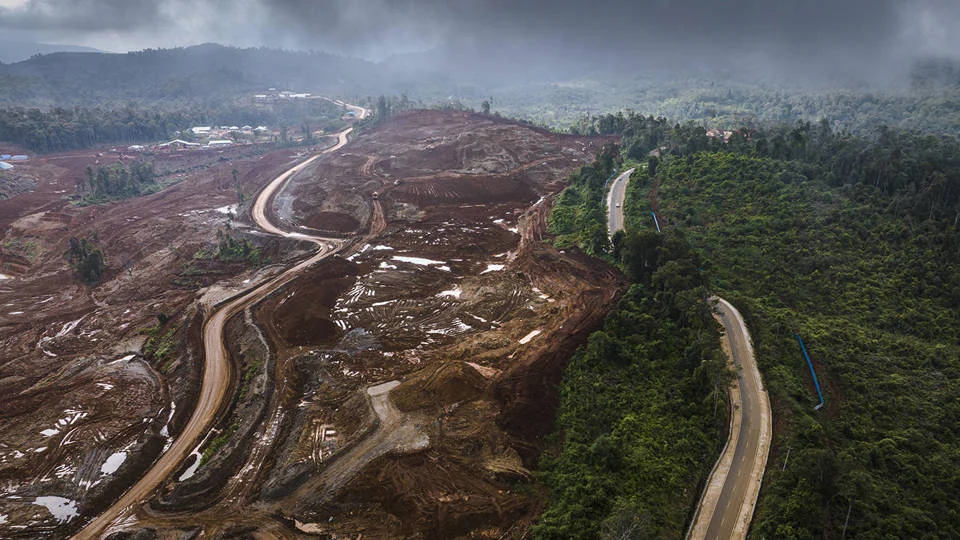
As the world accelerates toward a net-zero future, the demand for critical minerals—lithium, cobalt, nickel, and copper—has skyrocketed. However, beneath the veneer of green energy transitions lies a volatile, high-stakes geopolitical scramble. While international forums like the Intergovernmental Forum on Mining, Minerals, Metals, and Sustainable Development (IGF) champion "interdependence," the reality on the ground is a fierce competition that threatens to leave mineral-rich nations in the Global South trapped in cycles of exploitation, environmental degradation, and hollow economic growth.
To secure a just energy transition, the international community must move beyond aspirational guidelines. The solution lies in the consolidation of Global South policy and advocacy networks, shifting the power dynamic from reactive compliance to proactive, collective governance.
The Magnitude of the Challenge: Facts and Figures
The International Energy Agency (IEA) has issued a sobering forecast: to meet global climate targets, demand for critical minerals must triple by 2030 and quadruple by 2040. This surge has triggered a "gold rush" mentality, particularly in resource-rich nations in Africa, Southeast Asia, and Latin America.
Aware of the "resource curse"—a historical phenomenon where resource-rich nations experience poor economic growth and political instability—many governments are implementing aggressive protectionist measures. Chief among these is the use of export bans on raw materials, designed to force multinational corporations to invest in domestic downstream industrialization, such as smelting and refining facilities.
Yet, as Indonesia’s recent experience with its nickel sector demonstrates, industrialization is not a panacea. While processing facilities have created localized economic hubs, they have failed to move the needle on national prosperity. More alarmingly, the creation of these industrial "frontier" zones has often resulted in the designation of "sacrifice zones," where local ecosystems are decimated and indigenous communities are displaced without equitable compensation or democratic oversight.
A Chronology of the Mineral Race
The trajectory of current mineral governance has been shaped by a series of pivotal moments over the last decade:
- 2010s–Early 2020s: Mineral-producing nations began prioritizing "value-addition" policies, with Indonesia leading the charge by restricting raw nickel exports to encourage domestic refinery growth.
- 2024: The UN Secretary-General’s Panel on Critical Energy Transition Minerals released its landmark "guiding principles," attempting to frame mining through the lens of human rights, justice, and equity.
- 2025: The OECD Forum on Responsible Mineral Supply Chains saw intensified scrutiny, as civil society groups like Publish What You Pay (Indonesia) directly challenged governments on governance standards.
- 2026 (October): The IGF annual meeting in Geneva highlighted the growing tension between global sustainability rhetoric and the competitive, often predatory, nature of bilateral trade agreements.
Supporting Data: The Cost of Extraction
The disconnect between global standards and local reality is best illustrated by the inconsistency in trade policies. For instance, in the EU-Indonesia Comprehensive Economic Partnership Agreement, the European Union enforces stringent sustainability standards for palm oil but remains noticeably lenient regarding nickel. This "double standard" allows the environmental and social costs of nickel extraction—deforestation, water contamination, and labor rights violations—to be sidelined in favor of securing supply chains for electric vehicle (EV) batteries.
Data from the Natural Resource Governance Institute highlights that there is no "one-size-fits-all" solution. Strategies that work for Chile’s copper industry or the Democratic Republic of the Congo’s cobalt sector are often inapplicable to Indonesia’s nickel landscape. The necessity for tailored, evidence-based policy is the primary driver behind the South-South Transition Minerals Learning Platform, which allows officials to share data on how to leverage mineral wealth without sacrificing social stability.
Official Responses and the Governance Gap
Global initiatives, such as the African Union’s "Africa Mining Vision" and the "ASEAN Principles for Sustainable Minerals Development," serve as the intellectual bedrock for responsible mining. However, these regional frameworks are frequently undermined by bilateral agreements that prioritize market access over human rights.
When governments fail to hold corporations accountable, the burden of regulation often falls on civil society. A notable case involves the Sorowako nickel project, where local NGO WALHI and Friends of the Earth Japan successfully mobilized a coalition of over 100 organizations. By pressuring the shareholders of Vale Indonesia—including global giants like Sumitomo Metal Mining and Mitsui & Co.—they forced a level of transparency that the government had previously failed to extract.
This "transnational advocacy" model is gaining momentum. Organizations such as Mighty Earth and Climate Rights International have begun targeting the "off-takers"—the EV battery manufacturers and automakers themselves. By threatening the reputational risk of companies that source from environmentally destructive operations, these groups have successfully pushed firms like Weda Bay Nickel to align with international standards such as those set by the Initiative for Responsible Mining Assurance (IRMA).
Implications: Building a Resilient Future
The implications of the current mineral scramble are profound. If the status quo continues, the "green" transition will be built upon a foundation of "brown" practices in the Global South. The shift toward sustainable mining requires a fundamental restructuring of how these nations interact with one another and the global market.
Strengthening South-South Cooperation
The success of policy learning platforms proves that Global South nations have a deep, untapped reservoir of expertise. By standardizing the exchange of information on fiscal regimes, environmental monitoring, and community benefit agreements, these nations can strengthen their bargaining positions against multinational corporations that currently exploit regulatory arbitrage—the practice of moving operations to the jurisdiction with the weakest oversight.
Transnational Accountability
The power of advocacy networks lies in their ability to "bypass" the state. When national governments are captured by industrial interests or are desperate for foreign direct investment, civil society acts as a crucial check and balance. By linking local environmental impact studies with global supply chain disclosure requirements, activists can force corporations to adopt higher standards globally, not just in jurisdictions where they are forced to do so.
ESG as a Minimum, Not a Maximum
The Indonesian government’s recent efforts to draft Environmental, Social, and Governance (ESG) guidelines, prompted by the gap between its domestic regulations and global expectations, is a positive step. However, for these guidelines to be effective, they must be legally binding and subject to independent, third-party verification. The goal should be to turn these standards into a competitive advantage, where mineral producers who adhere to high environmental and human rights standards are rewarded with better access to ethical capital markets.
Conclusion: The Time for Integration
The race for critical minerals is not merely a technical challenge of geology and logistics; it is a political challenge of justice. The pieces of the puzzle—regional frameworks, South-South learning platforms, and transnational advocacy networks—are all present. What remains is the political will to synthesize these components into a unified front.
If the goal of the global energy transition is to prevent catastrophic climate change, it must be done in a way that does not trigger a "human rights catastrophe" at the extraction sites. By consolidating the power of the Global South, mineral-producing nations can ensure that the transition to green energy is not just a technological feat, but a moral one. The era of the "sacrifice zone" must end, and the era of equitable, sustainable resource management must begin. It is time to move beyond the lofty declarations of Geneva and into the concrete, collaborative, and courageous action required to secure a sustainable future for all.