

Introduction: The Invisible Shield of Global Trade
The maritime domain, covering over 70% of the Earth’s surface, serves as the lifeblood of the global economy. Approximately 90% of all international trade is transported via sea routes, navigating a complex web of oceans, straits, and coastal waters. However, this vast expanse is not merely a highway for commerce; it is also a theater for criminal activity that threatens the safety of crews, the security of vessels, and the stability of supply chains.
At the heart of the international effort to combat these threats stands the International Maritime Bureau (IMB) Piracy Reporting Centre (PRC). Since its establishment in 1991, the PRC has functioned as a 24-hour nerve center, acting as the primary point of contact for mariners facing the perils of piracy and armed robbery. By bridging the gap between distressed vessels and regional authorities, the Centre has evolved from a simple reporting hub into an indispensable pillar of modern maritime security.
The Chronology of Vigilance: Three Decades of Maritime Defense
Origins and Evolution (1991–2000)
The 1990s marked a period of increasing instability in key maritime corridors. Recognizing that piracy was no longer a historical footnote but a modern-day systemic threat, the International Chamber of Commerce (ICC) founded the IMB Piracy Reporting Centre in 1991. Initially conceived to provide a centralized database for incidents, the PRC quickly realized that data collection was only half the battle. The need for real-time intervention led to the creation of a 24/7 watch system, ensuring that a shipmaster under attack could reach a human voice—and, subsequently, local law enforcement—no matter the hour or time zone.
Expanding the Network (2001–2015)
As piracy hotspots shifted from the Malacca Strait to the Gulf of Aden and the Gulf of Guinea, the PRC adapted its operations. During the height of the Somali piracy crisis, the Centre became a lifeline for shipping companies. By refining its communication protocols, the PRC began issuing real-time warning broadcasts and email alerts, effectively turning commercial vessels into a decentralized network of intelligence gatherers. This era solidified the PRC’s reputation as the "gold standard" for maritime situational awareness.
The Digital Age and Modern Operations (2016–Present)
Today, the PRC utilizes advanced communication technology to maintain its round-the-clock watch. Its operational mandate has expanded beyond mere reporting to include proactive threat analysis. By leveraging the data collected over three decades, the Centre now provides the global shipping industry with predictive insights, allowing fleet managers to reroute vessels or implement "hardened" security measures before entering high-risk zones.
Supporting Data: The Anatomy of Modern Piracy
The IMB PRC does not operate on anecdotes; it operates on empirical, hard-won data. Every incident reported—whether a successful hijacking, an attempted boarding, or a suspicious approach—is meticulously logged, verified, and analyzed.
The Power of Reporting
The PRC’s data serves as the primary evidence used by international agencies, including the International Maritime Organization (IMO) and various naval task forces, to allocate resources. When shipmasters and owners report incidents, they are not merely filing a complaint; they are providing the "ground truth" that justifies naval patrols and increased coastal surveillance.
Key Insights from the 2025 Mid-Year Report
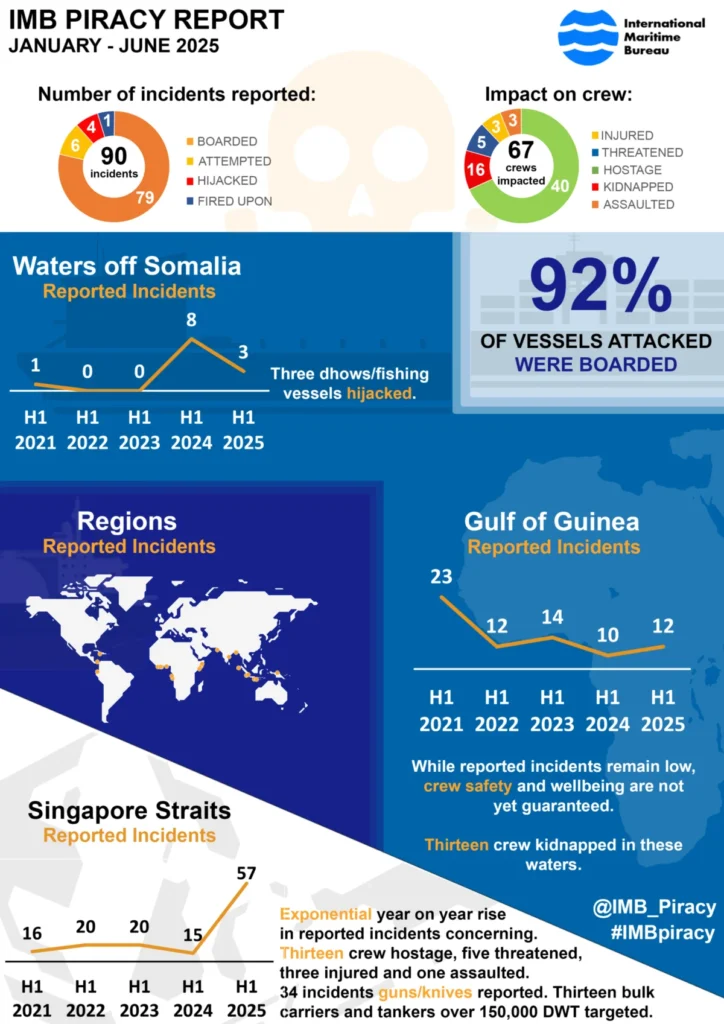
The recently released Piracy and Armed Robbery Against Ships report (covering January to June 2025) offers a stark look at the current state of maritime crime. While some regions have seen a decline in high-level hijackings due to international naval presence, there has been a persistent trend of low-level armed robberies in coastal anchorages.
Key takeaways from the current data include:
- The Persistence of Opportunity: Criminals continue to target vessels during nighttime hours, particularly those with low freeboards and slow transit speeds.
- Regional Trends: Detailed mapping provided in the report highlights the specific coordinates where incidents are most frequent, allowing for precise risk assessment.
- Under-Reporting Concerns: The PRC continues to stress that the figures represented in their reports are likely conservative, as fear of increased insurance premiums or operational delays sometimes leads to silence from shipowners.
Official Responses and Strategic Coordination
The efficacy of the IMB PRC relies heavily on its collaborative relationships with international agencies. The Bureau does not carry weapons, nor does it command warships; instead, it wields the power of information.
Bridging the Gap
When a vessel reports an incident, the PRC immediately broadcasts a warning to other ships in the vicinity, creating a "neighborhood watch" effect on the high seas. Simultaneously, the PRC coordinates with the nearest Maritime Rescue Coordination Centre (MRCC) and regional coast guards. This rapid relay of information is often the difference between a successful boarding and a foiled attempt.
The Director’s Perspective
Michael Howlett, Director of the ICC International Maritime Bureau, has frequently emphasized that maritime security is a collective responsibility. In his official communications, Howlett underscores that the PRC is only as strong as the reports it receives. "By reporting every incident, no matter how minor, shipmasters provide the necessary evidence to push governments to dedicate patrol vessels to these areas," Howlett notes. The PRC’s role is to ensure that this data reaches the right decision-makers in real-time, effectively moving the needle on global policy.
Implications: The High Cost of Silence
The implications of the IMB PRC’s work extend far beyond the safety of individual crews. They touch upon the macroeconomic health of the world.
Economic Consequences
Piracy is essentially a "tax" on global trade. When piracy rates rise, insurance premiums for shipping companies skyrocket. These costs are ultimately passed down to the consumer in the form of higher prices for fuel, food, and manufactured goods. By reducing the success rate of pirate attacks, the PRC plays a direct role in maintaining the affordability of international logistics.
Human Rights and Crew Welfare
The human cost of piracy is often overlooked in financial reports. Seafarers subjected to boarding or hostage situations suffer profound psychological trauma. The PRC’s efforts to provide timely warnings and facilitate rapid response are, at their core, a humanitarian endeavor aimed at ensuring that those who work at sea can return home safely to their families.
Geopolitical Stability
Maritime crime often thrives in areas with weak governance or porous coastal security. By documenting these incidents, the IMB PRC brings international pressure to bear on nations to improve their own maritime domain awareness. In this way, the PRC acts as an instrument of international accountability, encouraging states to uphold their obligations under the United Nations Convention on the Law of the Sea (UNCLOS).
Conclusion: A Call to Action
The IMB Piracy Reporting Centre stands as a testament to the power of coordinated information sharing. As maritime threats evolve—incorporating more sophisticated navigation, digital spoofing, and opportunistic boarding tactics—the need for a centralized, objective, and responsive watchdog becomes even more critical.
For the global maritime community, the mandate is clear: vigilance and transparency are the best defenses against piracy. Shipmasters and owners are urged to continue their cooperation with the PRC, treating it as an essential partner in their voyage planning and security protocols.
By maintaining this open channel of communication, the industry ensures that the "invisible shield" of the PRC remains robust, protecting the arteries of global trade and the men and women who keep them flowing.
Requesting Further Information
To access the comprehensive insights provided by the IMB, stakeholders are encouraged to request a copy of the 2025 Jan – June Piracy and Armed Robbery Against Ships report. This document serves as a critical resource for risk assessment and operational planning.
For more information, please contact:
Michael Howlett
Director, ICC International Maritime Bureau
Tel: +44 207 423 6960
Email: [email protected]
Official Website: icc-ccs.org



