By Nina L. Khrushcheva
October 13, 2026
In the long, dark tapestry of Russian history, state-sponsored brutality has rarely been subtle. From the Tsarist pogroms to the industrial-scale slaughter of Stalin’s Great Terror, the machinery of the Russian state has always operated under the guise of a grand, if often monstrous, teleology. There was a prevailing sense—among the victimizers and even, at times, the victims—that the country was being driven toward a specific horizon. Whether it was the forced industrialization of the Soviet era or the consolidation of autocratic power under the Czars, the suffering served an "end," however unjustifiable the means.
Today, however, the nature of repression in Russia has undergone a fundamental, nihilistic mutation. The current campaign of domestic purging is no longer fueled by the promise of a utopian future or the preservation of a grand ideological project. Instead, the repression Russians are enduring today has only one aim: to perpetuate the state that is executing it. It is a closed loop of survivalism, where the machinery of justice is repurposed solely to silence the remaining vestiges of independent thought.
The Arrest of Alexander Kynev: A Case Study in Fabricated Guilt
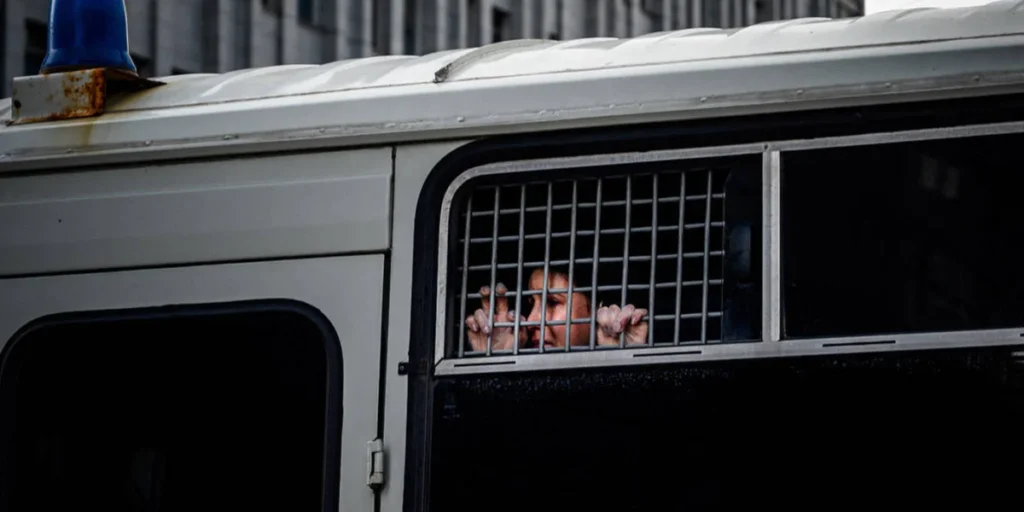
The recent arrest of Alexander Kynev, a prominent political analyst and academic, serves as the latest exhibit in this grim chronicle. On September 25, 2026, a Moscow court remanded Kynev to pretrial detention, leveling charges of "large-scale illegal drug production, sale, and trafficking."
To those familiar with Kynev’s decades-long career as a sober, methodical observer of the Russian political system, the accusation is not merely implausible—it is grotesque. Kynev has long been a fixture of the intellectual landscape, providing nuanced analysis on regional politics and electoral processes. He is not a revolutionary; he is an analyst. Yet, in the current climate, that distinction has become irrelevant.
The state’s case, as it stands, is devoid of transparency. No evidence of Kynev’s involvement in illegal drug networks has been made public. Instead, the legal system has bypassed the traditional facade of political persecution, opting for the "dirtier" route of criminalizing political dissent through fabricated narcotics charges. By stripping an intellectual of his professional identity and recasting him as a common criminal, the state achieves a dual goal: it removes a critical voice and simultaneously degrades his reputation in the eyes of a public conditioned to view drug-related crimes with particular revulsion.
Chronology: From Academic Inquiry to the Prison Cell
The trajectory of Alexander Kynev’s ordeal reflects the rapid narrowing of the "permissible" space for discourse in Russia over the last several years.
- Pre-2022: Kynev operated as a respected, albeit critical, voice in Moscow’s intellectual circles, frequently appearing on independent media outlets and collaborating with academic institutions.
- February 2022 – 2025: Following the escalation of the conflict in Ukraine, the "legal" parameters for criticism tightened. Kynev navigated these waters with cautious, professional distance, continuing his analysis of the regime’s regional grip.
- Early 2026: Observers noted an increase in pressure on independent academics. Several of Kynev’s peers were labeled "foreign agents," a designation that effectively serves as a precursor to more severe administrative and criminal harassment.
- September 2026: The escalation culminated on September 25, when authorities bypassed the "foreign agent" administrative route and moved directly to the criminal code, invoking charges that carry a mandatory sentence of 10 to 20 years.
- October 2026: As of mid-October, Kynev remains in pretrial detention, with his legal team reporting restricted access and a lack of access to evidence, suggesting that the trial will be conducted with the speed and predetermined outcomes characteristic of the modern Russian security apparatus.
Supporting Data: The Systematic Erosion of Civil Society
The arrest of Kynev is not an isolated event; it is a statistical inevitability within the current Russian framework. According to data provided by human rights monitoring groups, the number of politically motivated criminal cases has reached levels unseen since the mid-1980s.
The shift from charges of "extremism" to "criminal conduct"—such as the drug trafficking charge leveled against Kynev—represents a tactical shift. By labeling critics as criminals, the state avoids the unintended martyr-making that often accompanies political-prisoner status. The "criminalization of dissent" strategy involves several key pillars:
- Fabrication of Evidence: Using digital surveillance and coerced testimony to build "off-the-shelf" criminal cases.
- Judicial Complicity: The Russian judiciary, which has maintained a near 100% conviction rate in political cases, serves as the final seal of legitimacy on state-ordered reprisals.
- Media Laundering: State-aligned media outlets amplify the "criminal" narrative, ensuring that the public perceives the arrest as a law-and-order victory rather than a suppression of intellectual freedom.
According to reports from the Moscow Helsinki Group and other now-shuttered civil society organizations, more than 80% of individuals arrested for "crimes against the state" since 2024 have been subjected to closed-door proceedings, denying them the ability to present their own evidence or cross-examine their accusers.
Official Responses: The Silence of the Bureaucracy
The official response to the arrest of Kynev has been characterized by a chilling indifference. When approached by media outlets for comment, representatives of the Investigative Committee and the Prosecutor General’s Office have consistently invoked the "secrecy of the investigation," effectively shutting down any possibility of public accountability.
This silence is deliberate. It signals that the state no longer feels the need to justify its actions to the international community or even to its own populace. In previous eras, there was a performative element to justice—a desire to be seen as acting according to a codified, if flawed, legal framework. Today, the law is merely a tool of convenience. When the state claims that a political analyst is a drug trafficker, it is not asking for belief; it is demanding submission. It is a way of saying: "We can label you whatever we want, and you are powerless to stop it."
Implications: The Death of the Intellectual Class
The implications of this trend extend far beyond the individual fate of Alexander Kynev. For the Russian intellectual class, the message is unambiguous: the era of the "loyal critic" or the "independent expert" is over.
The purging of analysts like Kynev leaves a void in the country’s collective understanding of its own governance. When the people who study the machinery of power are imprisoned, the state loses the ability to self-correct. It retreats into a feedback loop of sycophancy and paranoia, where bad decisions are never challenged because the individuals capable of identifying them are either in prison, in exile, or silenced by fear.
Furthermore, the use of drug charges against high-profile intellectuals serves to atomize society. By framing these arrests as common criminal cases, the state prevents the formation of a unified front of opposition. It forces the academic community to distance itself from the victims, fearing that the "stain" of criminal charges might spread to their own institutions or families.
A Future of Stagnation
As Russia enters the late autumn of 2026, the case of Alexander Kynev stands as a grim marker of the state’s terminal phase. There is no grand vision here, no promise of a new dawn, and no justification beyond the preservation of the regime.
In the 20th century, even the most repressive regimes felt the need to drape their actions in the flag of ideology. They sought, however misguidedly, to convince the people that their sacrifices were for the "greater good." The current Russian state has abandoned even that pretense. It is a regime that exists for its own sake, consuming the intellect and the liberty of its citizens to feed its own survival.
As we look toward the months ahead, we should expect more of the same. The machinery of repression will continue to turn, grinding down anyone whose work suggests that the state is not a monolith of perfection. Alexander Kynev will likely be sentenced, his career will be erased, and the state will continue to function in its vacuum of accountability.
The tragedy, ultimately, is not just that the state is cruel—it is that it has become profoundly, pointlessly dull. It has traded the vibrancy of intellectual life for the sterility of the prison cell, ensuring that as long as the state remains in power, Russia will remain a country without a future. The "greatness" the regime claims to be restoring is, in reality, nothing more than the silence of a graveyard.