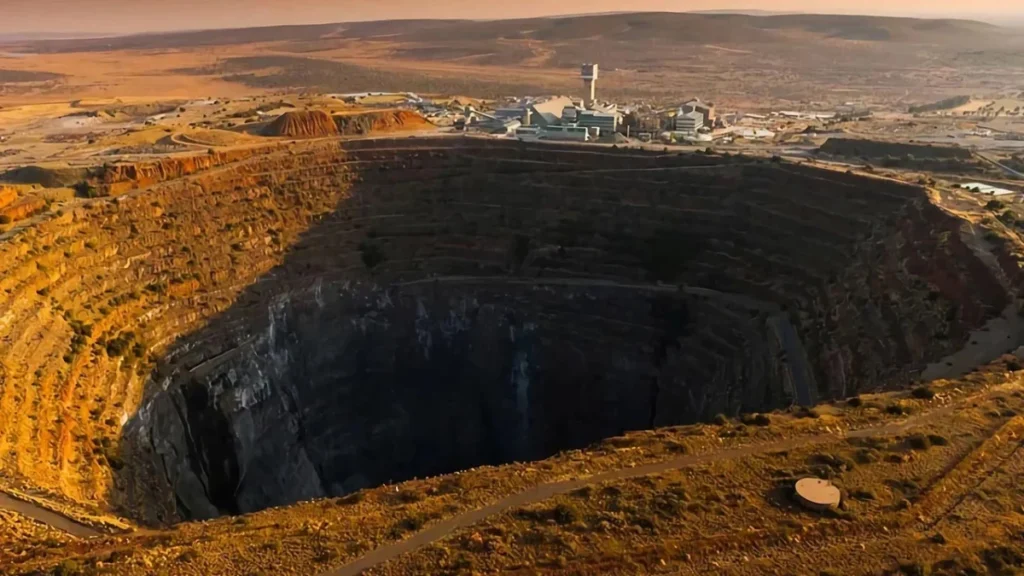
In a move that underscores the deepening crisis within the global diamond sector, Petra Diamonds has announced a comprehensive strategic review of its operations, placing the future of its South African Finsch mine in jeopardy. As the industry grapples with a prolonged downturn in the market for smaller, lower-value rough diamonds, the London-listed miner is prioritizing liquidity and capital preservation, signaling a significant shift in its operational focus toward its higher-value assets.
Main Facts: A Strategic Reappraisal
Petra Diamonds is currently evaluating the viability of its Finsch mine, a cornerstone of its South African portfolio. The company has explicitly stated that it is considering the suspension of all further capital expenditure at the site as a cost-cutting measure. This move is a direct response to the persistent weakness in the smaller-size diamond segment, which has hampered the company’s cash generation capabilities over the past nine to twelve months.
By potentially scaling back or mothballing the Finsch site, Petra intends to concentrate its financial and operational resources on the Cullinan mine. Cullinan, historically famous for producing some of the world’s most spectacular diamonds, remains a more resilient asset due to its output of large, high-value, Type II stones, which have demonstrated a greater capacity to withstand current market headwinds.
The miner has confirmed that a formal assessment of the financial situation at Finsch is underway and is expected to conclude by the end of the current month. The outcome of this review will dictate the mine’s future, with the company keeping all options on the table, including operational restructuring or potential divestment.
Chronology of Market Turbulence
The path to this strategic pivot has been marked by a steady erosion of demand for smaller diamonds. The timeline of the company’s recent performance reflects a sector under siege:
- Mid-2023: Early signs of price softening in the small-size diamond fraction begin to emerge, causing analysts to sound the alarm on margin pressure for miners heavily reliant on smaller, high-volume output.
- December 31, 2023: Petra Diamonds reports a net debt position of $284 million, reflecting the challenging macroeconomic environment and the costs associated with maintaining active mining operations.
- Q3 Fiscal 2024 (Ending March 31, 2024): Petra reports a 62% year-on-year increase in sales to $68 million, buoyed significantly by the sale of a rare 41.82-carat blue Type IIb diamond. Despite this top-line growth, the underlying reality remained fragile.
- April 2024: Following the fiscal quarter-end, the company formally announces the suspension of its full-year production guidance, citing the shift in operational strategy at Cullinan and the uncertainty surrounding Finsch.
- Current Status: The company is currently in a 30-day "cost-reduction assessment" period, with investors awaiting a final decision on the future of the Finsch asset.
Supporting Data: Debt and Inventory Pressures
The financial health of Petra Diamonds presents a complex picture of high-stakes gambling in the luxury sector. While the company achieved a 39% increase in sales compared to the preceding quarter—largely due to the liquidation of inventory and the sale of high-value stones—its debt burden has continued to climb.
As of March 31, 2024, the company’s net debt reached $298 million, up from $284 million at the end of the calendar year. This uptick in leverage, combined with a stockpile of 434,182 carats of rough diamonds (valued at approximately $29 million), illustrates the difficulty in converting inventory into liquid capital in a buyer’s market.
The decision to focus on the C-Cut region of the Cullinan mine—known for its high-value, Type II stones—is a tactical hedge against this market weakness. However, the trade-off is significant: these areas of the mine are of lower ore grade than the previously exploited CC1E region. Consequently, while the company hopes to improve the value of its sales, it is forced to accept a reduction in total volume (carats recovered), which complicates its ability to meet previous production targets.
Official Responses: Navigating the "Product Mix"
The leadership team at Petra, represented by interim joint CEOs Vivek Gadodia and Juan Kemp, has been transparent about the necessity of these measures. In a recent statement, they emphasized that the decision to prioritize the C-Cut region at Cullinan was a calculated move to stabilize the company’s product mix.
"This has already resulted in, and will continue to result in, a reduction in carats recovered from the CC1E region, which is at a much higher grade," the CEOs noted. "This decision has been taken to ensure the product mix at Cullinan mine is able to withstand the ongoing weakness in the smaller-size fractions. We are also evaluating the appropriate capital profile for Cullinan, recognizing the need to balance liquidity protection with future production resilience."
This commentary reveals a company attempting to walk a tightrope. By sacrificing quantity for quality, Petra is hoping to insulate its bottom line from the volatility of smaller stones, but it is simultaneously sacrificing the operational momentum that production volume typically provides.
Implications for the Diamond Industry
The situation at Petra Diamonds is a microcosm of the broader shifts occurring in the global diamond trade. Several implications arise from these developments:
1. The Death of the "Small Diamond" Premium
For years, the small-stone segment provided reliable cash flow for mid-tier miners. The current weakness, driven by a combination of macroeconomic cooling in key consumer markets like China and the increasing dominance of lab-grown diamonds in the affordable jewelry segment, has rendered this business model increasingly unsustainable.
2. Operational Consolidation
If Petra proceeds with suspending expenditure at Finsch, it could trigger a broader industry trend of "high-grading." Miners are increasingly forced to move away from high-volume, low-margin operations in favor of extracting only the highest-value gems. This could lead to a global tightening of supply for certain categories of diamonds, potentially forcing a price correction in the long term.
3. Investor Uncertainty
The suspension of full-year production guidance is a red flag for institutional investors. By abandoning its forecast, Petra is essentially signaling that it cannot reliably predict its output, let alone its revenue, for the remainder of the fiscal year. This uncertainty often leads to increased volatility in share prices and may necessitate further capital raises if debt levels continue to climb.
4. The "Type II" Advantage
The emphasis on Type II diamonds—stones characterized by their chemical purity and lack of nitrogen—highlights a flight to quality. In times of economic uncertainty, luxury consumers and investors gravitate toward "investment-grade" assets. Petra’s pivot to these stones is an acknowledgment that the mass-market diamond segment is no longer the engine of growth it once was.
Conclusion: A Future in Flux
As the end of the month approaches, the industry remains focused on the fate of the Finsch mine. Should Petra choose to suspend operations or divest, it would mark the end of an era for the mine and a turning point for the company’s identity. The transition from a volume-focused miner to a value-focused boutique producer is fraught with risk, but for Petra Diamonds, it may be the only path to survival in a market that no longer rewards the status quo.
The company’s ability to navigate this transition will depend on whether its high-value strategy at Cullinan can generate enough cash to offset the loss of production from Finsch and service its $298 million debt load. For now, the global diamond sector watches closely, as Petra’s strategic retreat may well serve as a harbinger for other players in the mid-tier mining space.