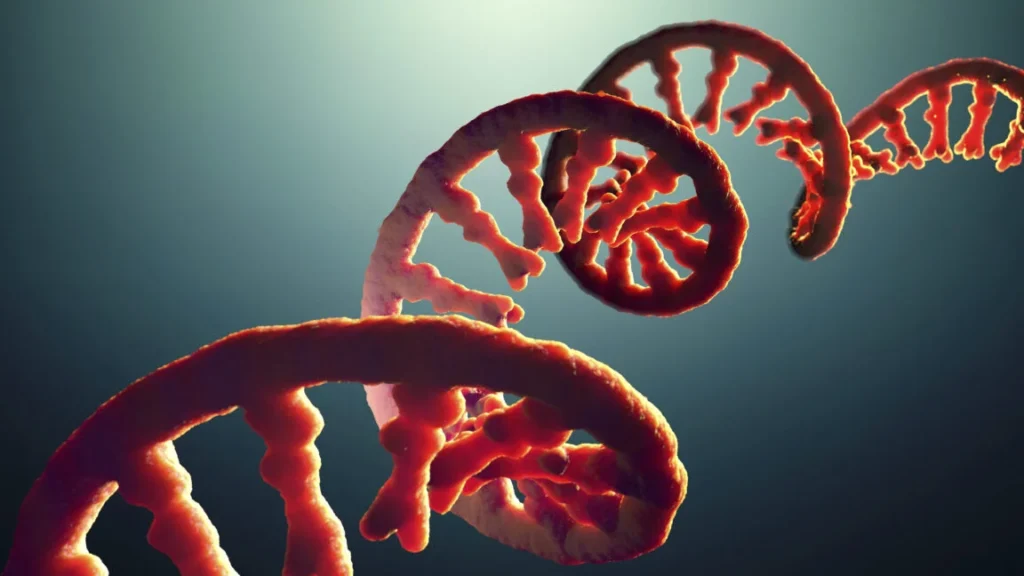
For decades, the field of genetics was governed by a central, rigid dogma: the traits of an offspring were a binary lottery determined by the DNA inherited from both parents. While mothers were often cautioned about the impact of their diet, stress levels, and environment on the developing fetus, the father’s biological contribution was largely viewed as a static delivery system—a mere "wriggling vessel" for his half of the genetic code.
However, a groundbreaking body of research is dismantling this long-held perspective. Emerging evidence suggests that sperm is far more than a passive carrier of DNA. Instead, it appears to act as a sophisticated biological logbook, recording a father’s life experiences—from his exercise habits and diet to his exposure to environmental toxins and psychological trauma—and transmitting that information to his future children.
The Treadmill Test: Decoding Athletic Inheritance
On a bright afternoon in a laboratory in Jiangsu, China, biochemist Xin Yin oversees a peculiar experiment. He is training mice on a miniature treadmill. As the device speeds up, the mice run with remarkable stamina, showing significantly less lactic acid buildup than their sedentary counterparts.
These mice, however, are not the product of selective breeding or performance-enhancing drugs. They are the offspring of fathers who were given rigorous exercise routines long before conception. The "athletic" trait was not encoded in the DNA sequences of the parents; rather, it was a biological memory of the father’s physical activity.
"I was very surprised when I first saw the data," says Yin. Upon analyzing the sperm of these exercising rodents, his team discovered a surge in microRNAs—tiny regulatory molecules that control gene expression. When the researchers injected these specific molecules into unrelated embryos, the resulting offspring displayed the same physical fitness as those born to the active fathers, effectively proving that the father’s lifestyle had been chemically imprinted on the next generation.
A Chronology of Discovery: From Observation to Mechanism
The suspicion that paternal life could impact offspring dates back to the 1960s, but it remained a peripheral, often dismissed, theory for decades. It wasn’t until the early 2000s that scientists began to apply rigorous experimental models to the phenomenon.
- 2000s–2010s: Researchers began documenting links between paternal health and offspring outcomes, including studies showing that children of men with obesity or high-sugar diets were more prone to metabolic disorders.
- 2016: A pivotal study led by Colin Conine and Upasna Sharma at the University of Massachusetts Chan Medical School unveiled a major piece of the puzzle. They discovered that sperm do not just store RNA in the testes; they actively acquire it during their maturation journey through the epididymis—a coiled tube where sperm are stored.
- 2020: Two landmark studies successfully "transferred" paternal traits to offspring by injecting epididymosomes (small, RNA-carrying bubbles found in the epididymis) from stressed or alcohol-consuming mice into the sperm of unaffected animals, recreating behavioral and metabolic symptoms in the pups.
- 2024–2026: Recent research has finally begun to bridge the gap between correlation and causation. Scientists have now confirmed that these paternal RNA fragments successfully penetrate the egg and, at biologically relevant doses, influence the gene activity of the developing embryo.
Supporting Data: The Molecular "Logbook"
The mechanism behind this inheritance is rooted in epigenetics—the study of how gene activity is turned on or off without altering the underlying DNA sequence. While DNA acts as the hardware, epigenetic markers serve as the software that dictates how that hardware functions.
For years, researchers struggled to understand how a father’s environment could override the "reset" button that nature hits during fertilization. When an egg is fertilized, most chemical markers (like methyl groups) are wiped clean to allow the embryo to develop from a blank slate. However, small RNAs appear to evade this erasure.
Studies have identified that environmental stressors—such as heavy drinking, pesticide exposure, childhood trauma, and poor nutrition—cause distinct fluctuations in the payload of small RNAs present in the epididymosomes. As sperm travel through the epididymis, they absorb these RNAs, which essentially act as "instructions" for the developing embryo. These instructions can modulate the activity of inhibitory enzymes, such as Argonaute proteins, which subsequently cascade into widespread changes in how the embryo’s genes are expressed, particularly those related to placental function and neurological development.
Scientific Skepticism and the "Dilution" Problem
Despite the growing body of evidence, the scientific community remains cautious. Skeptics, including geneticist Kevin Mitchell of Trinity College Dublin, point to the "dilution" problem. A sperm cell is orders of magnitude smaller than an ovum; the amount of RNA it contributes is, as researcher Oliver Rando describes, "a drop in the egg-cell ocean."
"I’m really skeptical," Mitchell notes, echoing the sentiment of many who struggle to see how such a minuscule amount of material could cause systemic changes in a growing fetus. Furthermore, identifying the origin of specific RNA fragments in a fertilized embryo has historically been a technical nightmare.
However, recent advancements, such as the 2024 study by Raffaele Teperino’s lab at Helmholtz Munich, have provided a glimmer of proof. By using mouse strains with distinct mitochondrial DNA variations, the team was able to definitively track paternal RNA fragments within the early embryo, confirming that the father’s molecular signal does indeed survive the fertilization process.

The Human Implication: Rebalancing Responsibility
The implications of these findings extend far beyond the laboratory mouse. While human studies are notoriously difficult to conduct due to the myriad confounding variables in our lives, observational data suggests similar patterns. Men who smoke, consume excess sugar, suffer from obesity, or carry the psychological scars of a traumatic childhood show consistent fluctuations in their sperm’s RNA profile—fluctuations that mirror the developmental and metabolic risks observed in their children.
This research challenges the historical bias that has placed the burden of prenatal health almost exclusively on women. "Now it’s almost all on women," says Teperino. "When a couple is planning a family, the doctor gives the woman a list of rules to follow. This is not valid anymore—we need to at least give recommendations to both."
If the father’s lifestyle choices—his diet, stress management, and physical health—are indeed encoded in his sperm, then preconception health becomes a dual responsibility. This is not to suggest that fathers are solely responsible for the health of their children, but rather to recognize that the biological legacy of a parent is not limited to the DNA they pass on.
Future Horizons
The field is now moving toward a more nuanced understanding of how these RNAs function. Current theories suggest that the effects might be mediated through the placenta, which acts as the interface between the father’s "programming" and the child’s development. If paternal RNA influences placental gene expression, it could explain why certain metabolic and behavioral conditions—such as anxiety, weight management issues, and glucose control—tend to run in families beyond what can be explained by shared home environments or inherited DNA.
As research continues, the scientific community is shifting from asking if these effects occur to how they can be mitigated. If we can identify the specific environmental triggers that lead to detrimental RNA signatures, we may eventually be able to offer targeted interventions for prospective fathers, ensuring that the legacy they pass to their children is one of health and resilience rather than inherited stress.
The story of our genes is still being written, and it is becoming increasingly clear that the author is not just the past, but the choices made in the present.