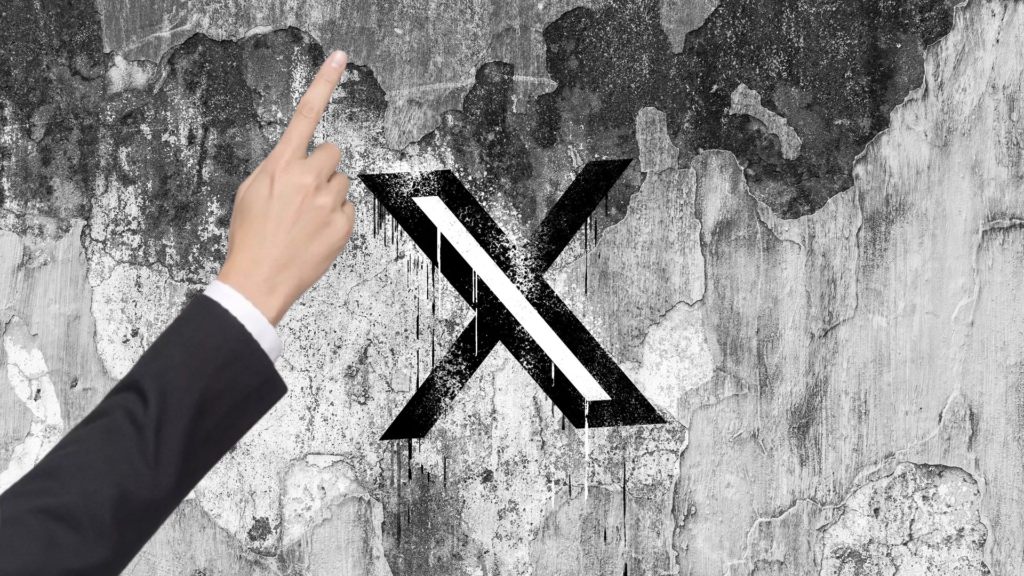
In the ever-evolving landscape of social media, platform operators are perpetually caught in a high-stakes balancing act: how to extract maximum monetization from a user base without driving them toward the "uninstall" button. This week, X (formerly Twitter) pushed that balance to its breaking point. Users across the platform reported a startling, unsolicited interface element: a disembodied, graphic hand pointing aggressively at the "Promote" button while they are in the process of drafting a post.
While interface nudges—such as bright, pulsating buttons or persistent subscription prompts—have become standard industry practice, X’s latest maneuver has moved beyond the realm of "mildly annoying" into what many users are describing as an intrusive, jump-scare-level disruption. As the platform navigates a significant leadership transition, this bold, some might say jarring, design choice has ignited a firestorm of debate regarding user experience (UX) design, the desperation for ad revenue, and the future of the platform’s product strategy.
A Chronology of the Disruption
The phenomenon began to gain widespread traction on the evening of October 26, 2026. Within a 24-hour window, hundreds of users began documenting the appearance of the graphic, which appears to animate into the frame to highlight the "Promote" button.
The timing is particularly curious. With Halloween approaching, some observers initially speculated that the, at times, startling animation was a thematic "prank" or a seasonal campaign. However, the lack of official communication from X regarding any "spooky" UI updates suggests a more clinical, growth-oriented motive.
By the morning of October 27, the discourse had moved from confusion to outright hostility. Journalists, power users, and casual observers alike took to the platform to express their frustration, often using the very tool they were criticizing to voice their dissent. Many users reported that the hand appeared at inconvenient moments, effectively obstructing their ability to finish drafting their thoughts, leading to concerns that the feature is not just an eyesore, but a functional impediment to the primary purpose of the app: communication.
The "Nikita-Coded" Legacy and Product Strategy
The emergence of this specific tactic has drawn immediate comparisons to the growth philosophies of Nikita Bier, X’s former head of product. Bier, who left the company in August 2026 after a turbulent tenure, was known for a "move fast and break things" approach that prioritized aggressive user acquisition and engagement metrics over traditional UI/UX refinement.
Dylan Abruscato, president of the TBPN podcast, described the intervention as the "most Nikita-coded thing I’ve ever seen." The term "Nikita-coded" has since become a shorthand among tech enthusiasts for tactics that are highly obstructive but statistically effective at driving clicks, even if they come at the cost of brand affinity or user sentiment.
This design philosophy—that the "friction" of a pop-up is a secondary concern to the "conversion" of a user—appears to be the new hallmark of X’s product direction. The question now remains: how much disruption can a user tolerate before the platform’s utility is eclipsed by its own marketing tactics?
Leadership Transition: A New Era Under Peter Sellis
The timing of this interface update coincides with a major shakeup in X’s executive ranks. On October 26, 2026, Peter Sellis, formerly of Snap and Discord, announced his arrival as the new head of product at X.
In a post that served as both a debut and a statement of intent, Sellis noted: "I’m joining the team at X to lead Product. I am a huge believer in SpaceX’s mission to extend human consciousness to the stars, so it’s time to make shitposting multiplanetary."
Sellis inherits a platform that is struggling to balance the vision of owner Elon Musk with the reality of a shrinking advertiser pool and a vocal, often dissatisfied, core user base. While it remains unclear if the "pointing hand" was a direct mandate from Sellis or a residual project from the previous product team, the timing suggests that the platform is doubling down on aggressive, performance-based marketing tactics to boost its bottom line.
The Economics of Engagement Farming
Underlying the visual annoyance of the pointing hand is a critical economic reality: X is desperate to convert casual users into paying advertisers. The "Promote" feature is a cornerstone of the platform’s revenue strategy, allowing users to pay to boost their reach. By targeting users while they are mid-thought—a high-intent moment—the platform is attempting to maximize its conversion rate.
However, the efficacy of this strategy is debatable. Marketing science suggests that "in-your-face" tactics often lead to "banner blindness" or, worse, active resentment. When a platform interrupts the creative process with a sales pitch, it risks devaluing the content creation experience. If users feel that their personal posts are merely inventory for an ad-sales machine, they may be less likely to invest time in the platform.
Furthermore, there is a technical risk: user reports indicate that the hand appears even when users are writing about sensitive or satirical topics, such as "engagement farming" itself. This lack of contextual awareness could lead to brand safety issues, as users may inadvertently "promote" posts that are critical of the platform or contain inflammatory content, creating a misalignment between the advertiser’s intent and the content being boosted.
Implications for the Future of UX
The "pointing hand" saga serves as a case study in the tension between product growth and user experience. As tech companies face increasing pressure from shareholders to show immediate revenue growth, the temptation to implement "dark patterns"—design choices that trick users into doing things they might not otherwise do—becomes significantly higher.
For X, the implications are twofold:
- The Erosion of Trust: Every time a platform introduces an obstructive element, it chips away at the goodwill of its power users. While these users are often the most vocal, they are also the most vital for platform health.
- The "Feature vs. Bug" Dilemma: By refusing to clarify whether this is an intended feature or a technical quirk, X leaves itself vulnerable to criticism. If it is a feature, it signals a shift toward a more aggressive, less user-centric design ethos. If it is a bug, it suggests a lack of quality control during a sensitive leadership transition.
Official Responses and Next Steps
As of this writing, X has not issued an official statement regarding the pointing hand animation. Requests for comment sent to the company’s press office remain unanswered.
Industry analysts suggest that the company is likely monitoring the data closely. If the "promote" conversion rate spikes significantly, the hand will likely stay—perhaps even becoming more permanent or customizable. If the churn rate or user complaints reach a threshold that threatens the platform’s stability, the feature will likely be quietly retired or "A/B tested" into oblivion.
For now, users are left with a choice: ignore the hand and continue their digital lives, or adapt to a platform that is increasingly showing its hand—literally—in the pursuit of profit.
Conclusion: A Platform at a Crossroads
The "hand" that appeared on X this week is more than just a quirky UI element; it is a manifestation of the current state of social media. It represents a pivot toward hyper-aggressive monetization, a testament to the influence of growth-at-all-costs product philosophy, and a warning to users that the interface they once knew is becoming a secondary priority to the metrics that drive the platform’s valuation.
As Peter Sellis settles into his role, the X community will be watching closely to see if this design choice is an outlier or a harbinger of things to come. In the race to "make shitposting multiplanetary," X may find that the biggest hurdle to its success is not the competition, but the user experience itself. Whether this gamble pays off remains to be seen, but for now, the hand remains pointed, a persistent reminder that on X, everything—even the user’s own thoughts—is a potential product to be sold.