
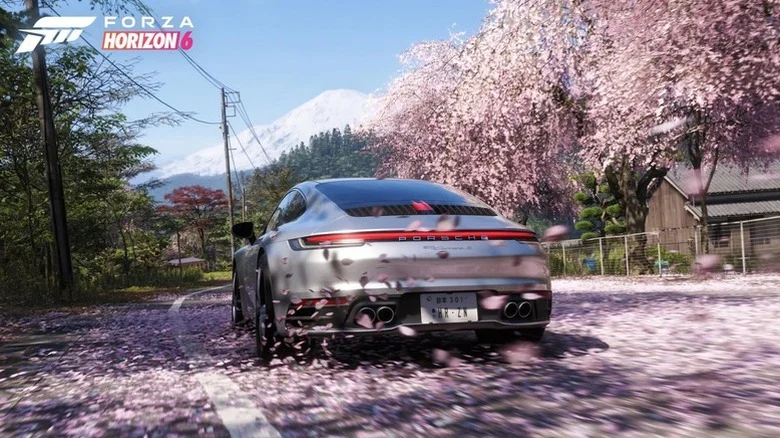
The gaming industry is reeling this week following a catastrophic security failure that has seen unencrypted footage and playable assets from Forza Horizon 6 leaked across the internet. As of Monday, YouTube has become a repository for high-fidelity captures of the game’s open-world environments, vehicle customization suites, and gameplay mechanics, weeks ahead of its scheduled retail debut. This incident represents one of the most significant pre-release data breaches in Microsoft’s recent history, casting a long shadow over the launch of what was intended to be the premier racing title of the year.
The Breach: A Snapshot of the Chaos
The leak began circulating early Monday morning, with multiple YouTube channels and streaming platforms hosting extensive gameplay footage. Unlike low-quality "off-screen" phone captures that often plague AAA titles, this footage appears to be pulled directly from a high-resolution PC build. The clarity of the assets, including complex weather effects, vehicle physics, and UI elements, suggests that the leakers gained access to an unencrypted development or pre-release version of the software.
While Microsoft and developer Playground Games have been swift in issuing takedown notices under the Digital Millennium Copyright Act (DMCA), the decentralized nature of the internet has made containment difficult. The footage has already been mirrored across social media platforms, forums, and pirate-adjacent communities, sparking intense speculation regarding how such a sensitive build of the game could have bypassed internal security protocols.
A History of Vulnerability: Examining Precedent
The Forza Horizon 6 incident is not an isolated event; rather, it is the latest chapter in a long-standing struggle between AAA publishers and the sophisticated ecosystem of data miners, leakers, and digital pirates. To understand the gravity of the current situation, one must examine the historical context of similar breaches.
The Death Stranding 2 Precedent
In March, the industry witnessed a similar, albeit less damaging, breach involving Death Stranding 2. An unencrypted copy of the PC version was uploaded to Steam platforms, inadvertently made accessible days before its official commercial release. The file was promptly scraped and distributed across piracy sites. However, the impact was somewhat mitigated by the fact that the title had already been available to PlayStation 5 users for over a year. The "newness" factor was already absent, and the primary damage was limited to the PC-specific ecosystem. In contrast, Forza Horizon 6 is a global, simultaneous launch; there is no existing player base to soften the blow of a total, day-zero leak.
The Hitman 2 Debacle
The history of digital rights management (DRM) vulnerabilities dates back further. In 2018, the gaming community watched as the Denuvo copy protection for Hitman 2 was dismantled mere days before its official launch. The vulnerability was not found in the final retail build, but in the early access version provided to preorder customers. Crackers were able to exploit the lack of server-side validation in the early build, effectively rendering the DRM useless before the game even reached the general public. This event served as a wake-up call for developers: even authorized early access periods can be turned into a "Trojan Horse" for unauthorized distribution if the underlying code is not properly secured.
The Economic Implications: Measuring the Cost of Piracy
The potential financial fallout for Microsoft is significant. Forza Horizon 6 is scheduled for a staggered release, with the $120 Premium Edition slated for May 15, followed by the standard release on May 19. The availability of high-quality, playable content ahead of these dates threatens to cannibalize preorder revenue and potentially dampen the hype cycle that is essential for modern AAA sales.
The 20 Percent Revenue Benchmark
A seminal 2024 study regarding the efficacy of Denuvo and other DRM solutions provided a sobering metric for the industry: when a cracked version of a title is made available within the first seven days of its release, the publisher can expect an average reduction in total revenue of approximately 20 percent. This figure accounts for lost sales, increased refund requests, and the degradation of the brand’s perceived "must-buy" status during the critical first week of availability.
While the 2024 study focused on post-release piracy, security analysts suggest that pre-release leaks often carry a higher "multiplier effect." A pre-release leak does not merely lose sales to piracy; it disrupts the entire marketing narrative, ruins the element of surprise for fans, and allows potential customers to decide whether the game is worth their investment based on unfinished or buggy builds. The loss of "day-one momentum" is an intangible but vital economic factor that, when combined with direct piracy, could push the revenue impact for Microsoft well beyond the 20 percent threshold established by the study.
Industry Response and Security Protocol
As of this writing, Microsoft has remained largely tight-lipped regarding the specific mechanics of the leak. In official communications, representatives have stated that they are "investigating the unauthorized distribution of proprietary assets" and are working with platforms to remove infringing content.
Industry experts suggest that the breach likely originated from a distribution error within the company’s internal testing servers or a compromised account belonging to a third-party partner. The prevalence of "leaks" in the gaming industry has forced companies to shift from a strategy of "prevention" to one of "containment."
Strengthening the Perimeter
Developers are now increasingly relying on:
- Server-Side Authentication: Ensuring that key game assets are not stored locally and require a constant "handshake" with secure servers.
- Day-Zero Patches: Holding back critical game data until the final moment, requiring a massive download upon release that makes "pre-leaked" files obsolete.
- Internal Watermarking: Embedding unique, non-visible code into every pre-release build to track the origin of a leak back to the specific employee or partner who leaked it.
The Human Factor: The Ethical Dilemma
The conversation surrounding the Forza Horizon 6 leak has also reignited the ethical debate within the gaming community. Is the act of leaking an unreleased game a form of "consumer advocacy" that exposes the product before a purchase is made, or is it a criminal act that threatens the livelihoods of thousands of developers?
For the developers at Playground Games, the leak is more than a financial concern; it is a creative one. Years of work, intricate environmental design, and complex audio engineering are being presented to the public in a format that was never intended to be seen. The lack of day-one patches means that the leaked footage likely exhibits bugs, performance issues, and graphical artifacts that have already been fixed in the final version. This misrepresentation of the product’s quality can cause long-term damage to the franchise’s reputation.
Conclusion: A Turning Point for AAA Security
The Forza Horizon 6 breach serves as a stark reminder that in an age of hyper-connectivity, the walls of the "walled garden" are becoming increasingly porous. As game files grow in size and complexity, the surface area for potential leaks increases proportionally.
Whether this incident leads to a permanent shift in how Microsoft handles its development and distribution pipelines remains to be seen. However, one thing is certain: the era of "trust-based" pre-release distribution is coming to an end. As publishers face the reality of a 20 percent revenue risk, the pressure to implement more draconian DRM and restrictive testing environments will only intensify. For now, fans of the series must weigh the temptation of the leaked footage against the reality that such actions undermine the very games they hope to enjoy for years to come.
The industry will be watching the May 15 launch closely. If the sales figures for the Premium Edition remain robust despite the leak, it may prove that brand loyalty can survive even the most catastrophic security failures. If the numbers falter, the Forza Horizon 6 leak will be remembered not just as a news story, but as a cautionary tale that forever changed the economics of AAA game development.