By Kaarin Moore
Published May 11, 2026
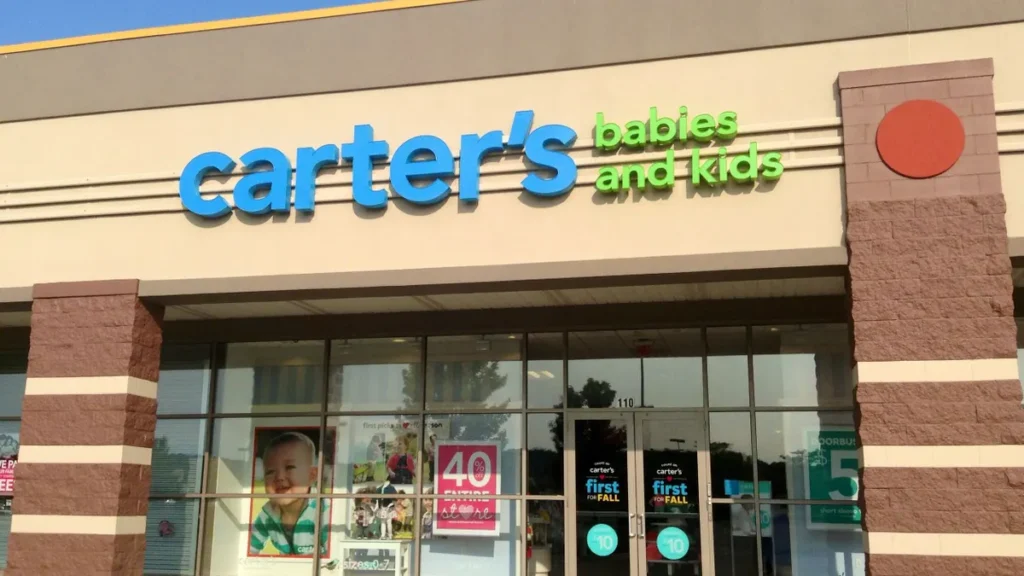
In a move that underscores the escalating financial pressure facing American apparel retailers, children’s clothing giant Carter’s has officially entered the legal fray regarding international trade policy. During a recent earnings call, Richard Westenberger revealed that the company has filed for approximately $130 million in refunds from the U.S. government, citing charges related to the International Emergency Economic Powers Act (IEEPA). This development highlights the deep-seated friction between major retailers and federal trade policies, as companies struggle to reconcile supply chain costs with the realities of a shifting global economy.
The Core Conflict: Navigating the Tariff Burden
The heart of the issue lies in the complex and often volatile nature of import duties. For decades, Carter’s has operated as a global importer, with a well-established supply chain that spans multiple continents. Historically, the company maintained a predictable expenditure on import duties, typically paying slightly over $100 million annually—an amount that translated to an effective tariff rate of approximately 13%.
However, recent shifts in trade policy have radically altered this landscape. The imposition of supplemental duties has effectively ballooned the company’s baseline costs by more than $200 million. This surge has pushed the effective tariff rate well above 35%, a figure that poses a significant challenge to the company’s gross margins and overall profitability.
Westenberger, addressing analysts, noted that the impact of these tariffs on Q1 results is far from straightforward. The company is currently navigating a "new normal" where the cost of doing business is no longer tied solely to production and logistics, but to the unpredictable swings of geopolitical trade disputes.
Chronology of Financial and Operational Strain
To understand how Carter’s arrived at this juncture, one must look at the recent timeline of the company’s operational adjustments and executive shifts:
- Fall 2025: Carter’s announces a major restructuring plan, including the layoff of approximately 300 corporate employees—roughly 15% of its corporate workforce. Simultaneously, the company declares its intention to shutter 150 North American storefronts over the next three years to streamline operations.
- Early May 2026: The company announces a significant leadership change. Sharon Price John, a seasoned veteran of the retail industry known for her tenure at Build-A-Bear, is tapped to serve as the new CEO and President, effective June 15.
- Mid-May 2026: During the Q1 earnings report, the company reveals its $130 million IEEPA-related tariff refund filing, marking a formal challenge to the current trade tariff framework.
This chronology paints a picture of a company in a state of flux, attempting to balance aggressive cost-cutting measures with the legal pursuit of capital currently tied up in government coffers.
Supporting Data: The Pressure on Margins
The company’s outlook for the second quarter of 2026 remains cautious. Executives have signaled that gross margin rates are expected to compress further, reflecting higher net incremental tariff costs. While Carter’s intends to mitigate these pressures through a combination of strategic pricing adjustments, supply chain optimization, and heightened operational productivity, the path forward is narrow.
Financial projections indicate that Carter’s expects low-single-digit net sales growth for the coming quarter, with an adjusted operating income ranging between $11 million and $13 million. These figures, while stable, illustrate the razor-thin margins that have become common in the children’s apparel sector, where price sensitivity among consumers remains high.
"We’re cautious that we’re out of the woods when it comes to tariffs," Westenberger admitted. "It’s possible that new tactics could be employed by the government to reinstate the previous IEEPA-level tariffs, or even higher levels of tariffs on imports across a range of our sourcing countries."

Official Responses and the Broader Industry Context
Carter’s is far from alone in its fight. The company has joined a growing coalition of major retailers—including Lululemon, Reebok International, Dollar General, Ollie’s Bargain Outlet, and Kohl’s—that have filed lawsuits seeking refunds for what they characterize as over-collected duties. These companies argue that the IEEPA, while intended to address national security or emergency situations, has been applied in a manner that disproportionately burdens the retail sector and, by extension, the American consumer.
The legal arguments primarily center on whether the government exceeded its statutory authority in applying specific tariff tiers. If these companies succeed in court, it could represent a massive windfall for the retail industry and a significant blow to the administration’s trade enforcement strategies.
Strategic Implications: A Company in Transition
The filing for a $130 million refund is not just a financial maneuver; it is a signal of the broader strategic shift taking place within Carter’s. With the departure of former CEO Douglas Palladini after only a year in the role, the board has looked to the experience of Sharon Price John to provide stability.
Operational Realignment
The store closure program and corporate layoffs indicate that the brand is preparing for a future that is more digital-first and less dependent on physical footprint. By reducing its retail presence, Carter’s is attempting to shed the overhead costs that have become increasingly difficult to justify in an era of fluctuating import costs.
The Leadership Challenge
Sharon Price John inherits a company that is essentially at a crossroads. She must navigate a volatile regulatory environment while managing a brand that holds significant cultural equity but faces stiff competition from mass-market retailers and e-commerce disruptors. Her success will likely depend on her ability to integrate the lessons learned from her tenure at Build-A-Bear—specifically in brand storytelling and experience-driven retail—into a company that is currently heavily focused on navigating legislative hurdles.

Long-Term Outlook
The uncertainty surrounding tariffs is likely to persist throughout the remainder of 2026. If the government maintains or increases its current tariff levels, retailers like Carter’s will be forced to choose between absorbing the costs, which risks eroding shareholder value, or passing those costs on to consumers, which risks losing market share.
As the legal battles proceed, the retail industry will be watching closely. The outcome of the IEEPA-related lawsuits will likely define the pricing power and supply chain strategies of major apparel brands for the next decade. For Carter’s, the $130 million in question is more than just a refund—it is a critical piece of the puzzle for maintaining its competitive edge in a landscape that is increasingly defined by global trade tensions rather than traditional retail fundamentals.
In the final analysis, the story of Carter’s in 2026 is a microcosm of the American retail experience: a struggle for efficiency in a world where the rules of trade are being rewritten in real-time, and where the most successful companies will be those that can master both the boardroom and the courtroom.